"Being itself is a comparison…"
(Osip Mandelstam).
The green suburbs that became city districts made a major contribution to Königsberg's green lacework. Between 1905 and 1910 the old city absorbed Kalthof, Tragheimsdorf, Vorder- and Mittelhufen, Lawsken, Ponarth, Schönfließ, Amalienau, Gross Ratshof, Karolinenhof, Mühlenhof, Neue Bleiche and Rosenau. By 1 December 1910 these territories covered 24.11 km2 and had 30,868 inhabitants. By 10 June 1927 they were joined by Juditten, Devau, Kummerau, Neuhufen, Friedrichswalde, Maraunenhof, Ratshof and Speichersdorf, so that another 40.2 km2 passed to Königsberg. By 15 November 1928 Ballieth, Metgethen and Jerusalem (418 ha, 253 inhabitants) had been brought within the city limits, and by 1 January 1929 Gross Holstein and Spandienen (820 ha, 391 inhabitants). In 1933 came Altenberg (278 inhabitants), Beydritten, Charlottenburg, Lauth, Moditten, Quednau, Palmburg, Seligenfeld and Neuendorf (7,138 ha). Altogether the suburbs added 7,416 ha with 13,190 inhabitants to the "inner city".
Let us look at the kinds of green spaces that had taken shape by the early 20th century in some of the city districts laid out on the "garden city" model.
Ponarth (Ponarth)
This southern suburb, two kilometres from Königsberg, has a very long history: two thousand years ago a Prussian settlement of the same name stood here. In 1609 Elector Johann Sigismund granted the lands of Ponarth to the town of Löbenicht.
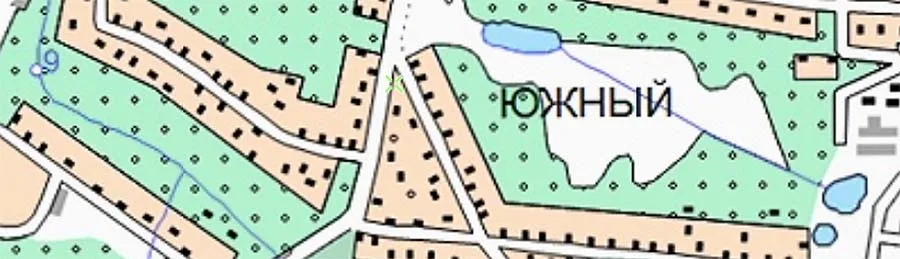
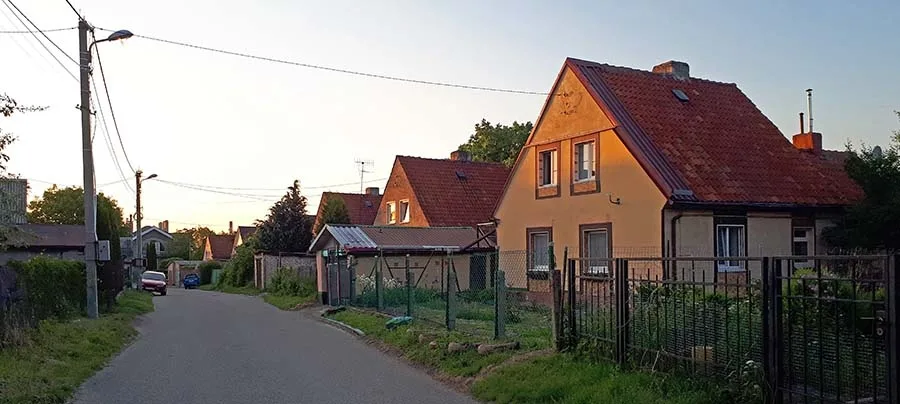
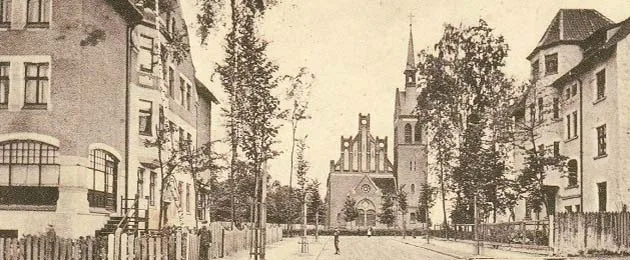
In the early 20th century Ponarth was an industrial district of uniform standard housing – two- and three-storey apartment buildings and small detached houses – where the main workshops of the Ostbahnhof (Eastern Station) were located. It was far less green than Königsberg's wealthy districts of villas and mansions, with only a few small parks, squares and house plots with fruit gardens. And yet, perhaps because Ponarth was built by the same construction firm as the rather prestigious Hufen, this small district compared favourably with the city's other working-class districts in its landscape and architecture.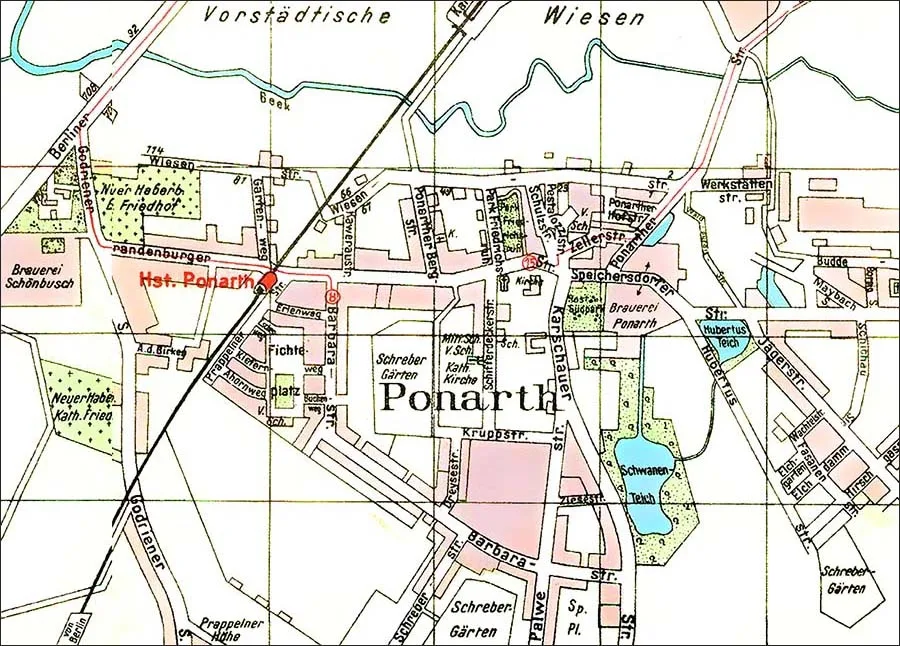 Ponarth on a map of Königsberg.
Today old Ponarth is part of Kaliningrad's Baltiysky District, adjoining Kievskaya Street.
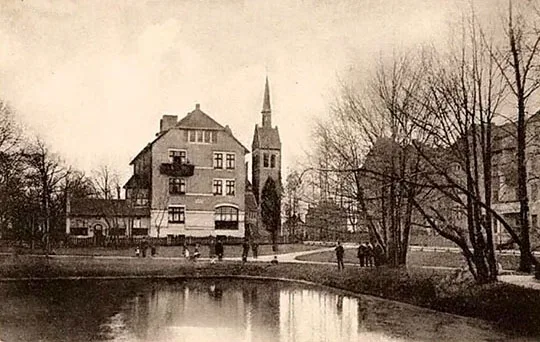
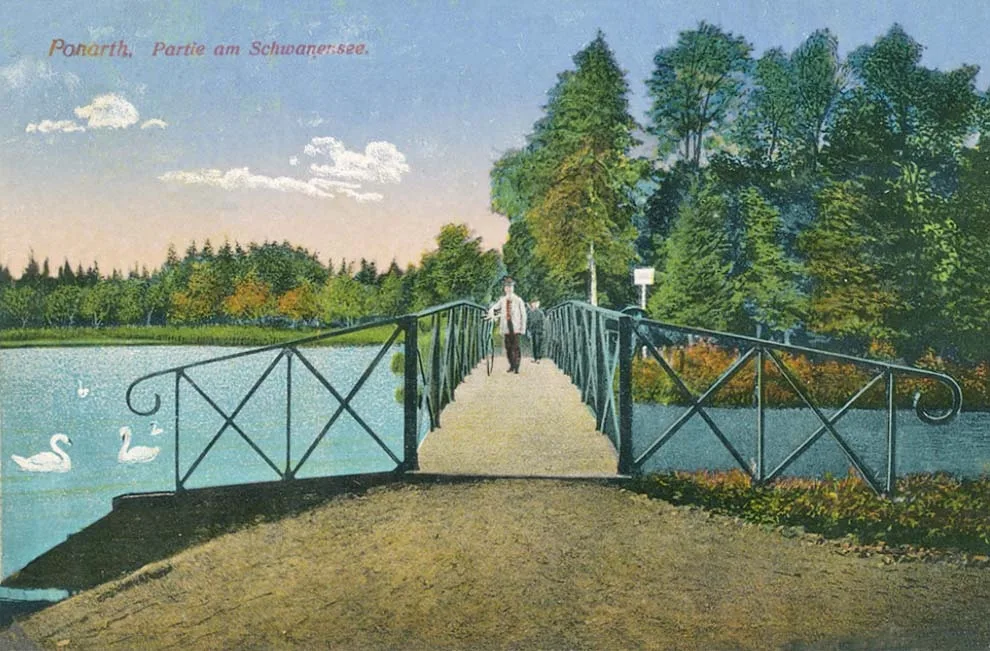
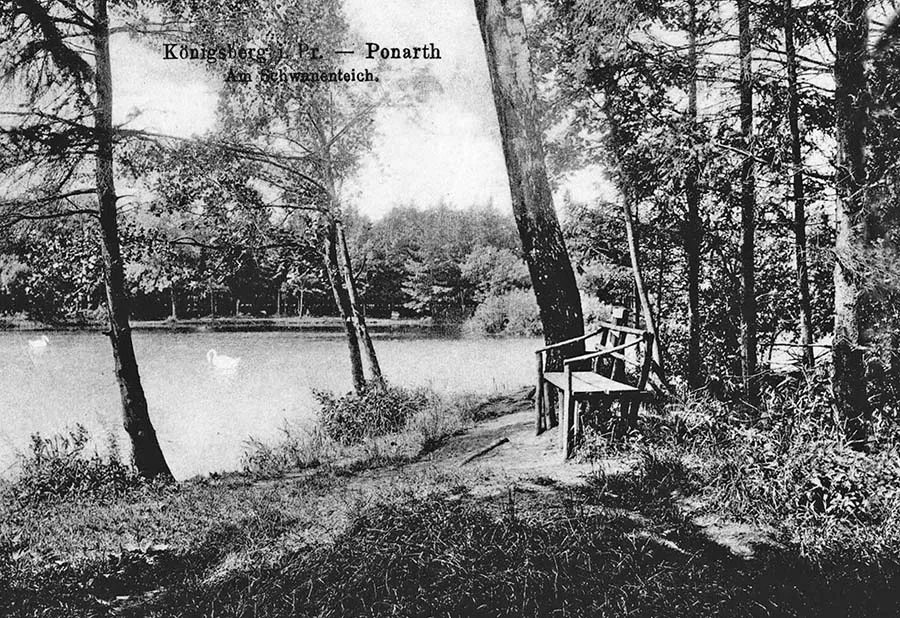 The Swan Pond in Ponarth.
At the end of the 19th century, next to one of the largest breweries not only of Königsberg but of all East Prussia, called "Schönbusch", founded in 1871 on the southern edge of the broad Pregel valley, Ponarth was adorned by a magnificent former manor garden with a well-known roadside inn, a hotel and old trees. The inn served a very popular draught beer called "Miller's Garden". Today (2008) the corner of Suvorova and Kievskaya Streets is a dense thicket that bears little resemblance to a park.
Almost adjoining the brewery garden was the green cemetery of the Haberberg Protestant parish – now Yuri Gagarin Park.
After 1900 a small Südpark (South Park) with a restaurant of the same name appeared in Ponarth – today it is the public garden by the Sudostroitel House of Culture.
North of today's Kievskaya Street, from 1907 the small Friedrichsruhe park was laid out, based on an old apple orchard (now the public garden on Velikolukskaya Street). The green Fichte Platz, named after the famous philosopher Johann Gottlieb Fichte (1762–1814), who attended Kant's lectures, lived in Königsberg from 1791 and from 1807 was a professor at the local university, is called Oktyabrskaya Square in Kaliningrad.
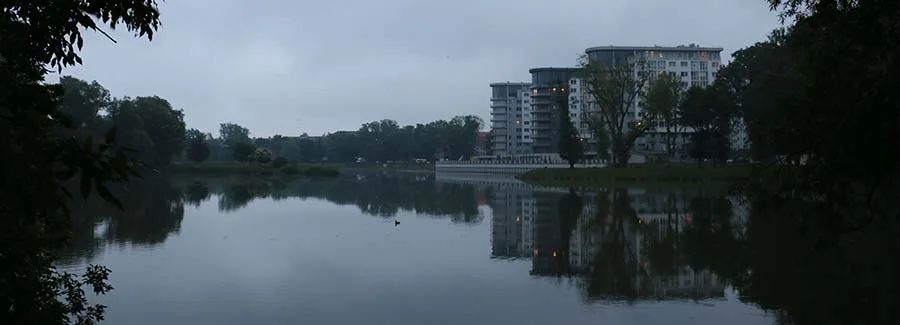
Two ponds – the smaller Hubertusteich and the larger Schwanenteich (Swan Pond) – were surrounded by greenery and turned into recreation areas.
In the 1930s Ponarth was surrounded by land set aside for its residents' allotment gardens, the Schrebergärten. There was even a large colony of these small private gardens within the district itself, supplying fruit and vegetables to the residents of the local apartment blocks.
A 1910 guidebook to Königsberg notes: "… by 1907 Ponarth was charming".
Translated from Russian with the help of AI (Claude, Anthropic), October 2026.