"Being itself is comparison…"
(Osip Mandelstam).
A major contribution to Königsberg's green lacework was made by the leafy suburbs that became city districts. Between 1905 and 1910 the old city absorbed Kalthof, Tragheimsdorf, Vorder- and Mittelhufen, Lawsken, Ponarth, Schönfließ, Amalienau, Gross Ratshof, Carolinenhof, Mühlenhof, Neue Bleiche and Rosenau. By 1 December 1910 these areas covered 24.11 km2 and had 30,868 inhabitants. By 10 June 1927 they were joined by Juditten, Devau, Kummerau, Neuhufen, Friedrichswalde, Maraunenhof, Ratshof and Speichersdorf, so that another 40.2 km2 passed to Königsberg. By 15 November 1928 the city limits took in Ballieth, Metgethen and Jerusalem (418 ha, 253 inhabitants), and by 1 January 1929 Gross Holstein and Spandienen (820 ha, 391 inhabitants). In 1933 came Altenberg (278 inhabitants), Beydritten, Charlottenburg, Lauth, Moditten, Quednau, Palmburg, Seligenfeld and Neuendorf (7,138 ha). In total the suburbs added 7,416 ha with 13,190 inhabitants to the "inner city".
Let us look at the kinds of green spaces that had taken shape over time, by the beginning of the 20th century, in some of the city districts laid out on the "garden city" model.
Juditten (Juditten)
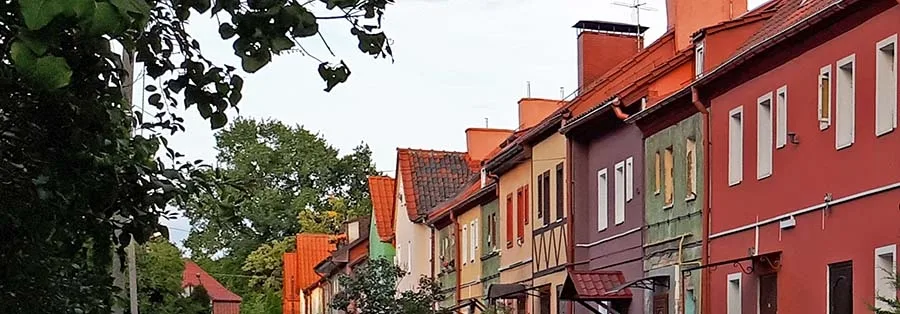
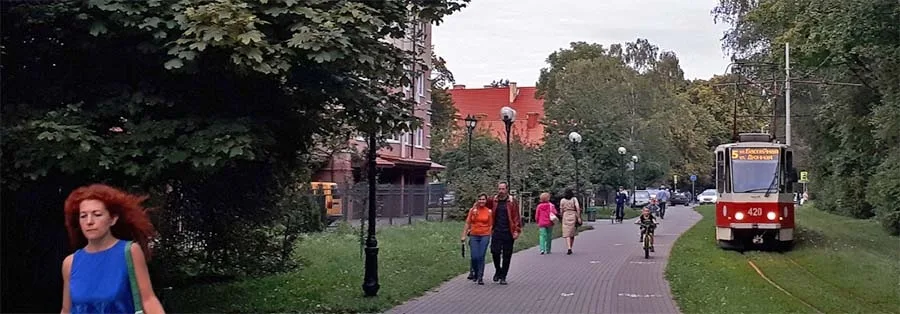
This remote western suburb of small villas surrounded by green gardens was incorporated into Königsberg only in June 1927 and was developed by the building company Villenkolonie Juditten.
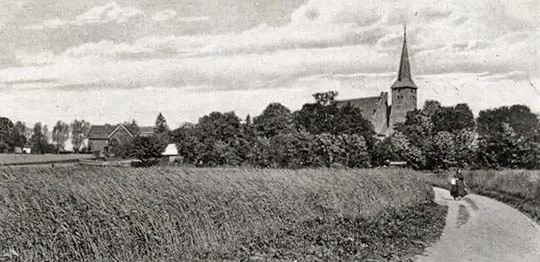
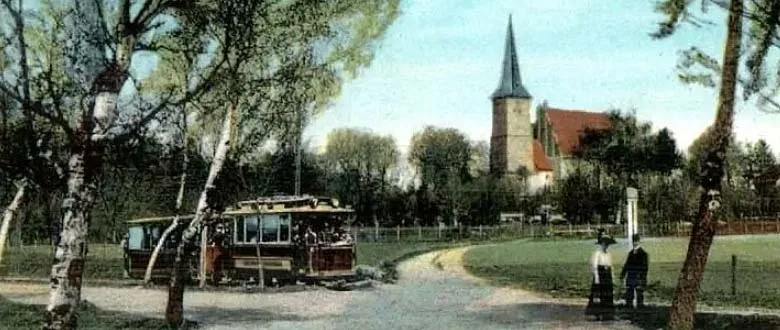
At the end of the 13th century a fortified church with stone walls five feet thick was built in the hamlet of Juditten. Today the Juditten church is the oldest building surviving in Kaliningrad. Only four 13th-century churches in East Prussia remained standing into the 20th century: the native pagan Prussians, fiercely resisting the invaders, destroyed and burned Christian churches, and so the church in Juditten, built in those times, evidently served as a fortress as well.
Although fierce fighting took place in this part of Königsberg in the spring of 1945, the Juditten church was not damaged and from 1945 to 1948 served the German Protestant congregation as its church; it was later used as a warehouse.
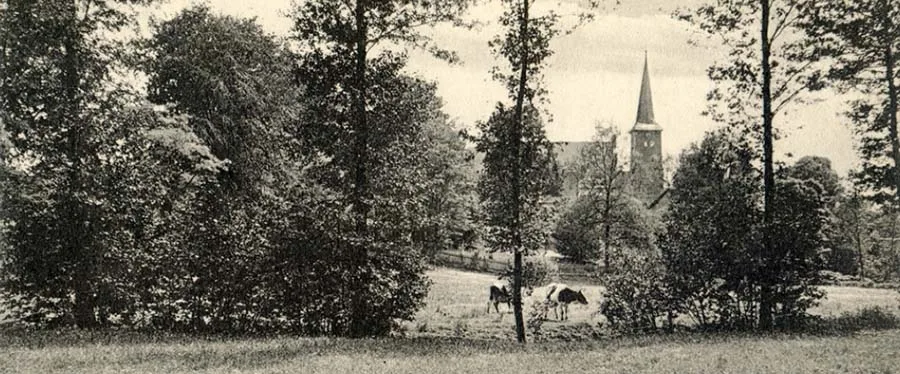
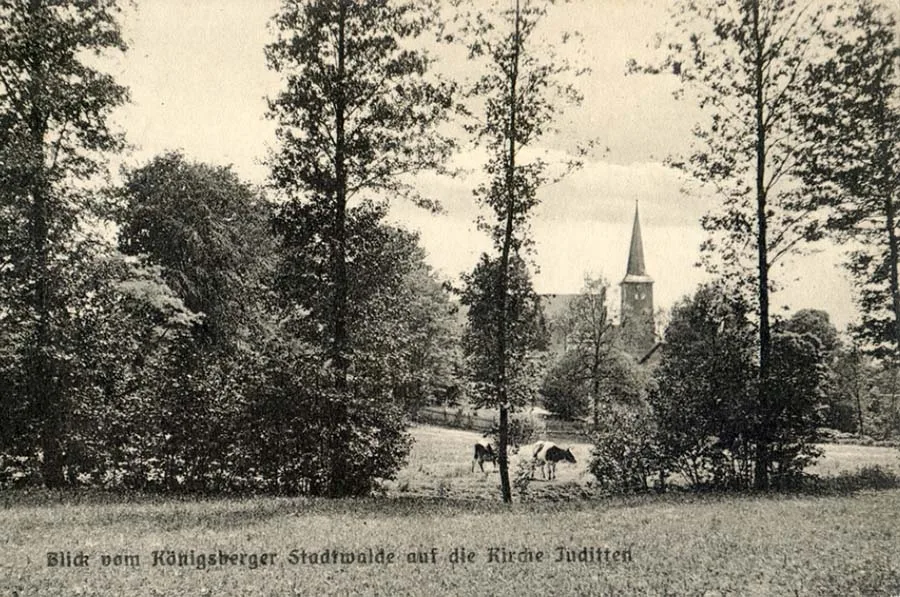 Juditten and its church.
In the post-war years many churches that had survived the war undamaged were dismantled, their stones and bricks used as building material, and no one was held responsible for their destruction, not even of those placed under protection as historical monuments. In the 1960s the Juditten church and the adjoining cemetery were devastated and looted.
In the mid-1980s an Orthodox community was founded in the Kaliningrad Region, and the ruins of the church were handed over to it. Almost completely rebuilt and consecrated in December 1986, the building became the first functioning Orthodox church in the region's 40 years of post-war history.
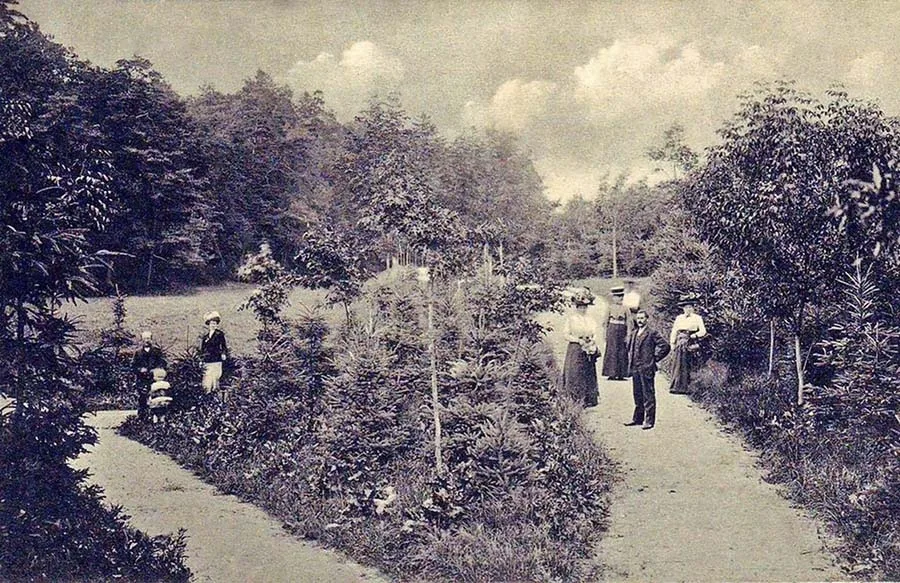
To the north-west of the church lay a well-kept, attractive woodland park, part of which was occupied by a small park with a more elaborate layout. Today an impressive green stand of hornbeams, beeches, chestnuts and pines survives along Tenistaya Alley; it is bounded on the west by Nikolskaya Street, and its northern part almost reaches Prospekt Mira.
The history of this woodland park, which at the beginning of the 20th century was still called Pfarrwald (Parish Forest), goes back to fairly distant times.
Until the middle of the 18th century a dense forest stretched in this direction from the fortress gates of Königsberg all the way to the town of Fischhausen (Primorsk), serving as the hunting grounds of the electors and kings. The woods teemed with game: deer, wild boar and elk. Different parts of this forest had different names: closer to the city, the Kaporner Heide; further away (around Kostrovo / Blüdau), the Blüdauscherforst; and in the western part the town forest of Fischhausen was called the Fischhauserstadtwald.
In the 16th century, not far from the present northern edge of the woodland park, there was an estate which is known to have belonged in the 17th century to the landowner Bernhard Charisius. After Elector Frederick III once visited him while hunting, in 1697, Charisius named his estate and the surrounding forest that belonged to him Friedrichswalde (Frederick's Forest).
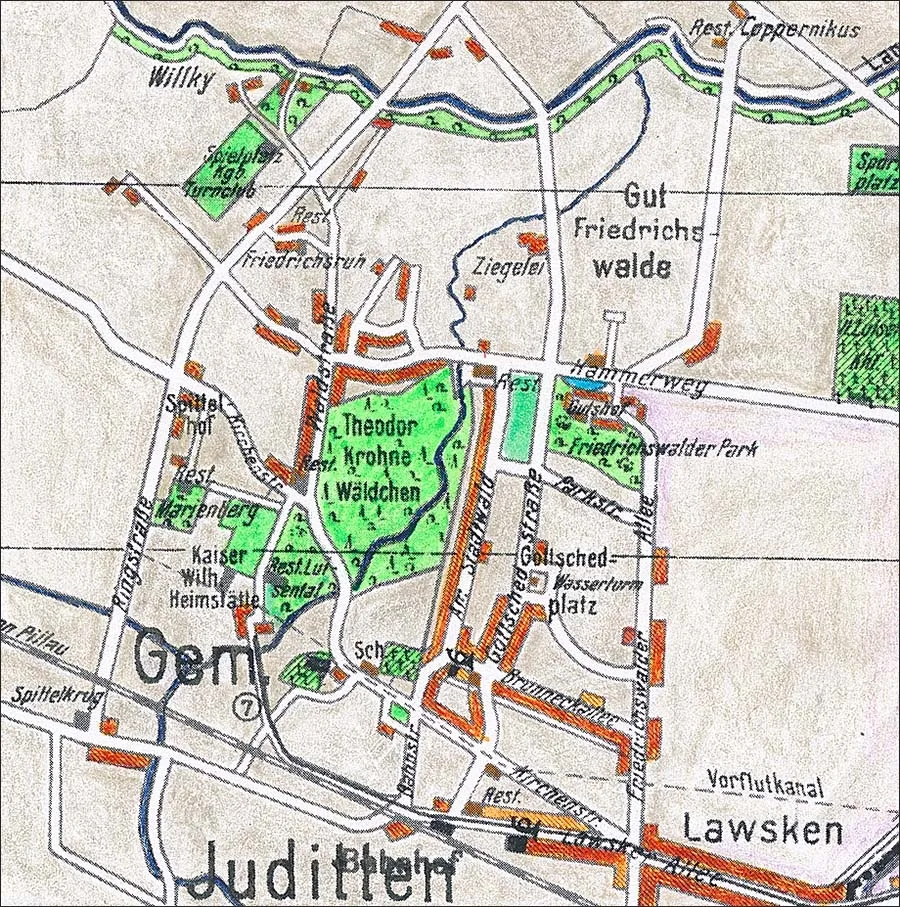 The green areas of Juditten on a map of Königsberg.
The area of present-day Mendeleyeva Street (part of Kaliningrad's Central District), not far from pre-war Juditten, was still covered with dense forest in the middle of the 19th century.
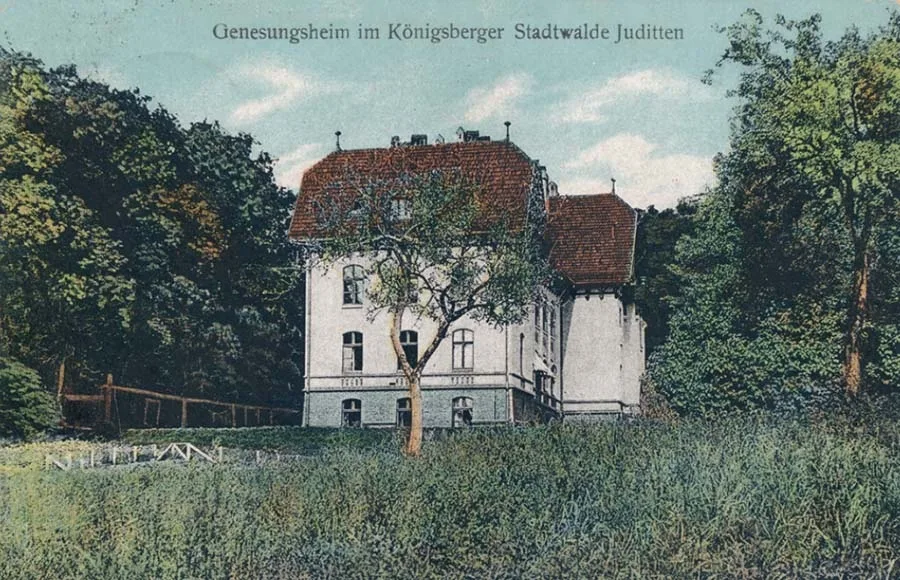 Old people's home in the Juditten woodland park.
At weekends and on holidays this forest was always full of townspeople out for a walk; moreover, it was here that city festivities were very often held. The remnant of this forest that survived near the village of Juditten still existed as a green island at the beginning of the 20th century, but its original density was lost with the construction of the road to the Amalienau district and of Hammerweg (now Prospekt Mira). The woodland became an urban woodland park, as shown by the corresponding layout of the area clearly visible on the 1927 map, and evidently it was at this time that it received the name "Parish Forest" (see above).
In 1760 the land near the church in the western part of the woodland was bought by the wine merchant Schindelmeister; it was later owned by Kommerzienrat Christoph Richter, and in 1814, in memory of Queen Louise, who had died young, his small estate was named Luisental (Louise's Valley). Later, another site in this area would be named after the queen who had won the hearts of the people of Königsberg: in 1875, not far from Juditten, one of the twelve forts (No. 6) that encircled Königsberg by the end of the 19th century was built – the Fort Königin Luise.
As is well known, in the 19th century many estates in and around Königsberg became, for various reasons, "pleasure gardens" – Etablissements.
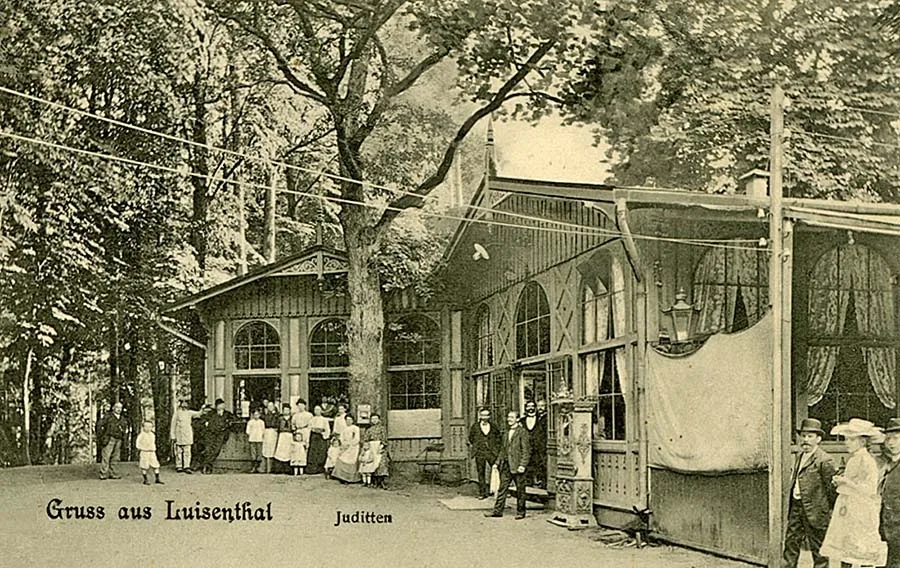
Luisenthal also became such a garden: the former manor house evidently served as a restaurant, and a 1910 guidebook to Königsberg mentions "a new restaurant in Luisenthal Park". Some trees still (as of 2008) indicate where the park lay within the woodland: the exotic black locust with its fragrant white flowers, and the horse chestnut, which traditionally features among the trees adorning Königsberg's parks.
In 1898 the town forest (such was the status of the green area north of the church), together with Luisenthal Park, covered 20.632 ha. At the beginning of the 20th century, in the south-western part of the town forest, stood a building housing a home for war invalids, the Kaiser Wilhelm Heimstätte, which was under the patronage of Emperor Wilhelm II (this building now houses the regional tuberculosis clinic, 5 Dubovaya Alleya Street).
Closely linked with the development of the suburb of Juditten and its incorporation into Königsberg is the name of a city official who chaired the city council from 1878 to 1913: Theodor Ludwig Clemens Krohne (1846–1925).
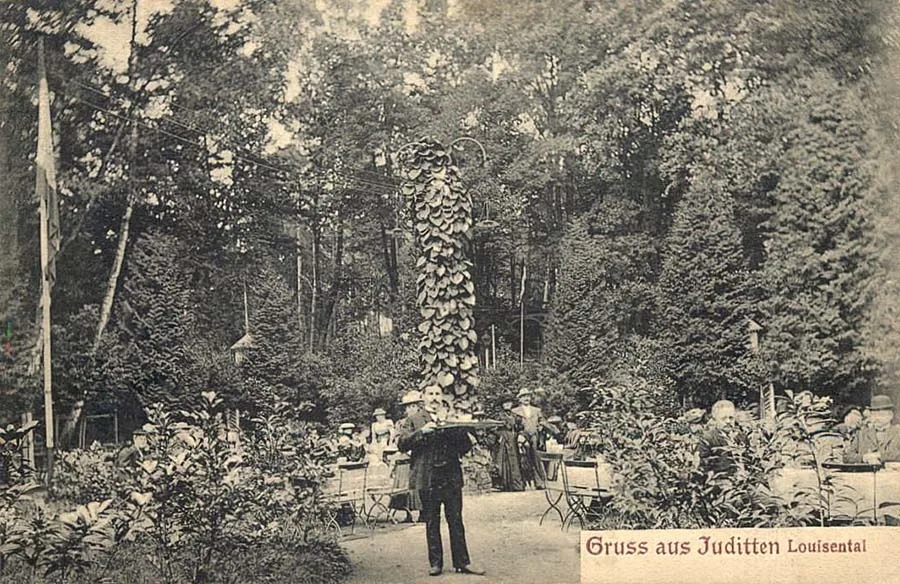 Luisenthal. Greetings from Juditten!
With the intensive development of the suburb, the forest in Juditten came under threat, and it was saved from encroachment only thanks to Theodor Krohne's determined conservation efforts. After these events the Juditten woodland park was named in honour of the rescuer of this historic green area, an honorary citizen of the city: Theodor-Krohne-Waldchen (Theodor Krohne's Grove). Theodor Krohne's name was associated with many of the city's notable undertakings of the time – the expansion of Königsberg's territory, the building of the concert hall on the Castle Pond and the start of work on the promenade around it – but perhaps his greatest achievement was preserving 20 ha of historic woodland park for the city.
At the beginning of the last century this grove was saved from development and has survived to our time, but after half a century of neglect it is in a poor state.
The paths of the woodland park are overgrown, dense self-sown hornbeams and maples distort its historic layout, and the deep shade beneath the tree crowns prevents a grass cover from forming and causes the soil to become waterlogged. Soils deprived of grass cover are prone to erosion, and ravines and gullies are beginning to form. In the lower, southern part of the park several beeches, chestnuts and other old trees survive, but self-sown maples predominate; higher up, on the hill, old trees have also survived (in all, 40–50% of the trees in the woodland park are old), but the easily regenerating hornbeam has filled all the space between them. Above and to the north of Tenistaya Alley, which crosses the woodland park, lies the bright, open space of a pine grove with a few surviving pines and frequent stumps of those that are gone; it is surrounded by a hornbeam and beech stand running down a steep slope to the deep hollow of a stream. This stream rises from the Drinking Water Canal, drains the city blocks, crosses the whole park from north to south and carries its waters, at times very dirty, to meet the Mendeleyevsky Stream, joining it in the southernmost part of the park, and then on into the Pregolya.
Construction work has been going on in the woodland park for many years: a school has been built, and a new sewer main is under construction, its building site burying part of the green space of the degrading park.
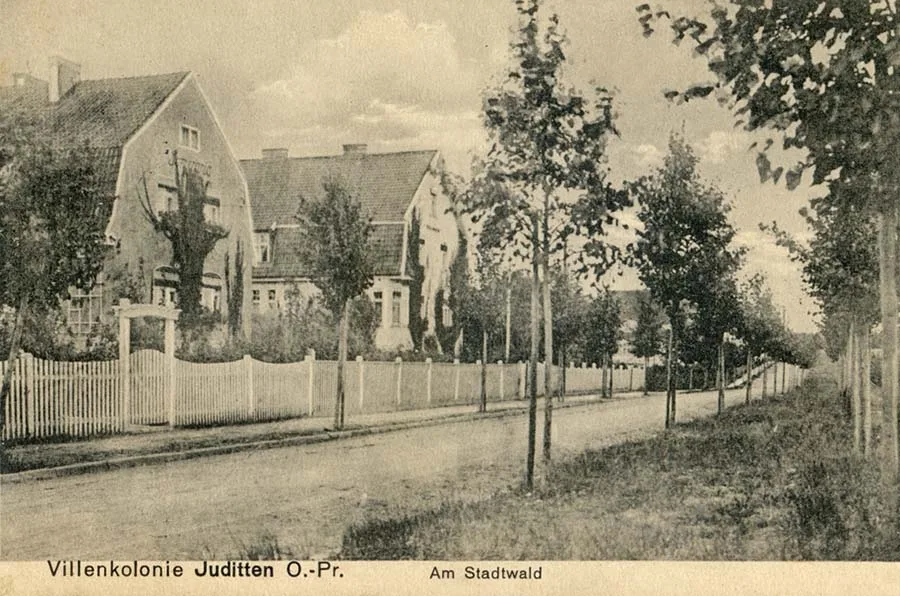 Tikhonenko Street at the beginning of the 20th century.
…And yet the woodland park – with the charming dusky shade of its hornbeams, the sunny pine grove with the sudden chirring of grasshoppers, hot sand and fragrant lilac flowers of thyme, and the majestic stand of beeches resembling an abandoned temple – is still one of the largest green patches on the map of Kaliningrad.
…In Königsberg's city parks (the former Botanical Garden of the Albertina University, the Municipal Nursery, the Tiergarten) one of the most handsome forms of beech was often used – the copper beech. In the now nameless woodland park, in front of the beech grove, stands a mighty copper beech. For some incomprehensible reason neither the park nor this defiantly beautiful tree is wanted by the city, and this former Parish Forest is not wanted by the St Nicholas Church either. For sixty years it has stood neglected and, perhaps, owing to the degradation of the woodland, it will soon again face the threat of development from which it was saved about a hundred years ago…
Green Juditten, with its gardens and front gardens, had in the pre-war period three more small public green areas: the Spittel Park (Spittel-park), the former manor park of the Spittel estate, which lay near present-day Prospekt Pobedy (now a wasteland); and the green Gottsched Square (Gottsehed Platz) halfway along the street of the same name (now a public garden on Serzhanta Mishina Street). The square was named in memory of Johann Christoph Gottsched, who lived in the 18th century, the son of the pastor of the Juditten church; he studied at the University of Königsberg and later became a famous literary critic, poet and idol of the German public of his day, but as a young man he had to flee to Leipzig in Saxony, because the Prussian king Frederick William I, who prized tall soldiers, could have pressed him into his army… The third and largest of these green areas was a nameless manor park lying between Gottschedstraße (now Serzhanta Mishina Street) and Friedrichswalder Allee (now Mendeleyeva Street; built over).
Translated from Russian with the help of AI (Claude, Anthropic), October 2026.