LEGENDS OF PRUSSIA in the blog of Tatyana Kolivay.
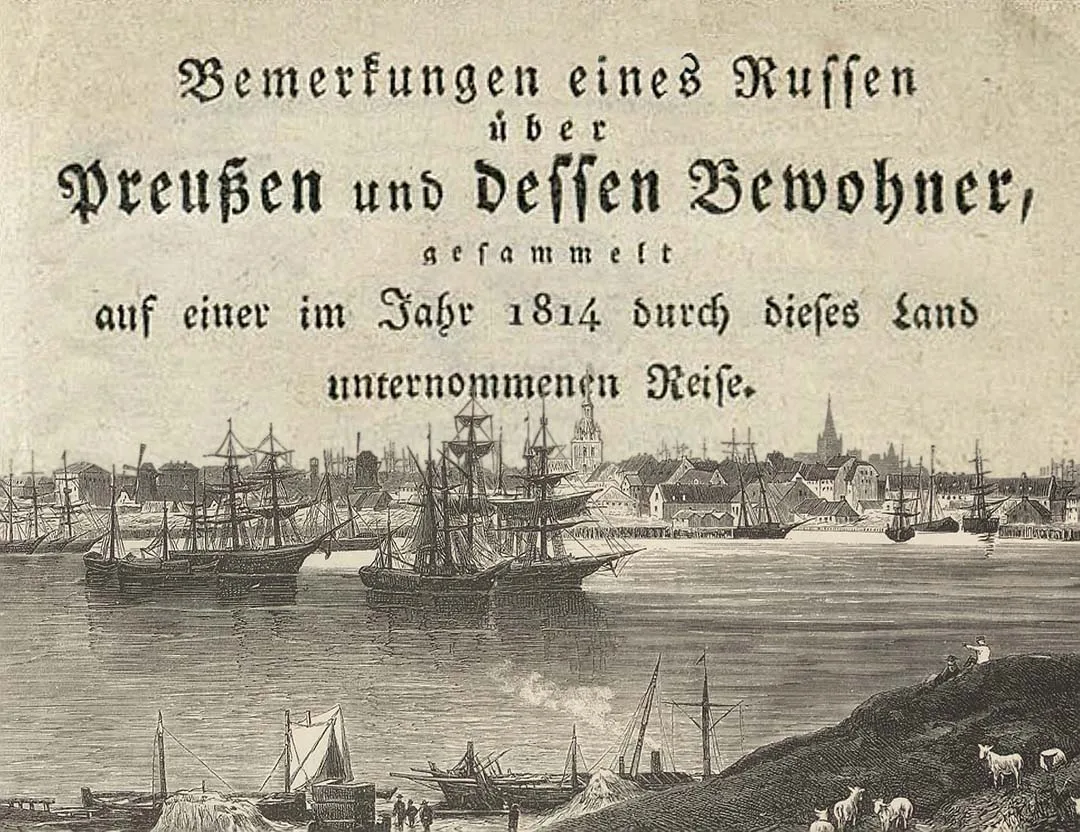
Prussia is seldom visited by travellers eager to broaden their knowledge of it. To a certain extent, therefore, it is still terra incognita. The few pilgrims who have written about Prussia give, for the most part, an entirely false picture of it. Almost all of them portray it as a desolate, dreary wilderness whose inhabitants stand on the same level of culture as their neighbours, the Poles and the Russians. The French, for their part, believe that everything here is dreadful. Thanks to my favourite pastime, the study of history, I have had occasion to read the Prussian chronicles, some of which have long since become bibliographical rarities: those of Simon Grunau, Caspar Hennenberger, Paul Weissel and Christoph Hartknoch. In each of these old books I found a paradise called Prussia, upon which nature generously pours out her blessings. And so in 1814 I undertook a journey through Prussia, which gave me an excellent opportunity to sort out the contradictory claims of my predecessors.
[ 1814 ]
The Prussian border. — Arrival in Memel. — The town's situation. — Architecture. — Way of life. — The fair sex. — Pleasure outings by water and by land. — A perilous voyage. — The Curonian Lagoon. — Sandbanks. — The legend about them. — Trade. — Smuggling. — The abduction of customs officers. — A trip to Lithuania. — A splendid view from Prökuls. — By boat to Heydekrug. — Russ. – Salmon fishing. — The Neman. — The Lithuanians. — Their customs and manners. — The Lithuanian Niederung. — The Salzburgers.
I breathed a sigh of relief when, after a long and tiresome customs inspection, the barrier at Polangen1 finally came down behind me and I crossed the Prussian border. A happy feeling came over me at the thought that I was once again on free German soil, where one may put one's thoughts into words without fear, where the spiritual nourishment every educated person needs is neither forbidden nor treated as contraband, and where no narrow-minded censor decides what I should and should not read. So farewell, dear Courland! I shall keep the memory of your kind inhabitants, and the arbitrariness of the customs officers, who caused me many a vexing moment, I shall soon forget beneath this friendlier sky.
With the best will in the world, the entry into Prussia could not be called pleasant, for the endless sands that begin in Courland stretch without a break all the way to Memel. There is absolutely nothing for the eye to rest upon. Sleep, which easily overcomes you in a slowly crawling carriage, is therefore a blessing. But at last I reached my destination: the deep silence, broken only by the creaking of the carriage, turned into a loud, lively bustle, and a hospitable inn welcomed the wanderer, wearied not by the road but by boredom.
Memel lies on a bleak, dreary plain washed by the Baltic Sea and the Curonian Lagoon, on both banks of the Dange2, a small, slow-flowing but deep river that at this point flows into the channel connecting the lagoon with the sea.

There are no gardens, no promenades, no green meadows, no shady woods anywhere around. Everywhere there is sand, and nothing but sand and monotonous waters, on whose horizon rise the majestic dunes of the Curonian Spit.
Memel is irregularly built, but it is not a bad town. Some of its streets would be quite worthy of a capital, but, as in all seaports, good taste rarely shows itself where urban architecture is concerned. Lindenstrasse is undoubtedly the finest of all the streets; it is planted with four rows of lime trees, in whose shade the townspeople like to stroll, since it is the only promenade. The hotel Das Argelandersche Haus3, which stands on this street, is distinguished by its elegant architecture and comfortable interiors.
On the bank of the Dange stands the house of the merchant Consentius, where the King and Queen of Prussia lived in 1807. It is built in the Italian style, with a flat roof, and decorated with noble taste. Its resemblance to the Crown Prince's Palace in Berlin, where the King now resides, made the royal couple's stay in this house easier for them.
Despite its remote location, Memel is a very pleasant place even for those who stop here only briefly. The extraordinary activity that reigns here at every hour of the day affords the traveller a great deal of entertainment. A multitude of large seagoing ships moving along the river as they load and unload, smaller vessels carrying provisions and goods, shipowners, labourers, Lithuanians, Russians, Jews, Poles and Englishmen jostling about in a lively throng; here ships are being caulked, goods packed, customs officers bustle about, and on the outskirts of the town a hundred windmills turn ceaselessly. And when the sea begins to storm and the pilots hurry to bring ships into the harbour, the whole spectacle becomes all the more captivating.
A Russian or a German who intends to visit England should spend some time in Memel in order to get used to certain customs and to the manner of the English, which at first repel any non-Briton.
The people of Memel, who conduct their foreign trade almost exclusively with the English, are so enamoured of the customs and manners of these islanders that they imitate them at every opportunity, and there is no shortage of comical situations. People speak only English, especially in the large trading houses; they eat, drink, play and amuse themselves in the English manner; they have the same whims as the English and are just as rude and unsociable. A stranger who, thanks to his letters of recommendation, has been invited into society may be left to himself for hours, and no one will even think of striking up a conversation with him. Those present behave as if he were not there, and every question he asks is cut short with a monosyllabic answer. Only when the company learns that the newcomer has come from a trading town may he be asked, in the English manner, how much this or that person is worth – that is, what capital he commands. The women rarely join in the conversation, especially at table: they leave as soon as the meal is over and the time comes for drinking without measure or purpose.
When I do venture a glass or two, I allow myself only light French wines, but the port and Madeira usually served here after dinner are, as a rule, so heavily laced with rum that one truly has to be born in this glorious town to drain several bottles of this potion without any consequences for one's health.
At last the carousing is over, the ladies reappear, and with them tea and, unexpectedly, cards. If you do not wish to play the part of a silent dummy once again, you are obliged to take part in the game, in which you can lose several hundred roubles. This goes on until late at night, and after enjoying a cold supper and a generous helping of punch you go home to digest what you have eaten. And the next day repeats the previous one. That, with some variations, is what society life looks like here.
I also attended several ladies' parties, about which there is little to add. The ladies speak French badly, sing badly, play the pianoforte very indifferently and torment the strings of the guitar mercilessly. The women here are completely innocent of any hint of systematic education, and conversation with them is therefore anything but attractive.
The young gentlemen present are utterly unbearable: if German women pretending to be Frenchwomen arouse sympathy rather than anything else, German men posing as Englishmen are repulsive.
At the same time, the representatives of the fair sex here may rightly claim to be called beautiful: their stature, bearing, complexion and figures are beyond all praise. In fairness, one cannot fail to admire their taste and the elegance of their dress, either. But when it comes to intellectual development, the beauties – give me credit for my delicacy – do not shine. They are not to blame for this: they do not lack the capacity for self-education, but they have no opportunity to cultivate their minds. In Memel there are no scholars, apart from the few who must be there ex officio4, no artists, no bookshops, no collections of paintings or works of art – absolutely nothing that could refine taste, occupy the mind or soften manners. The theatre here is indescribably wretched. The people of Memel feel this themselves and seldom go to it. So the good women have nothing left but to busy themselves with their finery, their cards and the town gossip, which is retold to anyone willing to listen.
The amusements here are boat trips on the Curonian Lagoon and walking barefoot over the dunes, knee-deep in sand. There is indeed much that is pleasant about the boat trips, although they are not always safe, since the weather at sea is changeable and a storm may blow up at any moment. But how anyone can consider it a pleasure to walk under a scorching sun in clouds of sand across endless dunes remains a mystery to me. And yet, so as not to seem impolite, I had to take part in this so-called pleasure.
Clemmenhof is the only place near Memel where the surroundings, if not exactly beautiful, at least offer enough shade. But it is not often visited, because the people of Memel do not like shade.
A voyage on the Curonian Lagoon almost became my last. The fine weather prompted the company to which I belonged to go on a boat trip, and we boarded an open vessel fitted with a mast, a sail and a rudder. We sailed quite a long way across the lagoon, as the wind was favourable.
Soon the sky began to cloud over. The wind changed, a storm rose, the waves grew high, and we began to fear for our lives.
We wanted to reach the nearest shore as quickly as possible, but alas, our intention was not easy to carry out: we found ourselves in a desperate situation. It turned out that while we were sailing, the helmsman had come across the supply of spirits we had brought with us and now lay on the deck, dead drunk. The ladies threw themselves into our arms, the pitching of the vessel grew stronger by the minute, and death in the waves began to seem inevitable. Then the wind heeled the boat over so sharply that the sails lay on the water.
Suddenly one of the men leapt to the rudder, pulled it towards himself with the enormous strength that only the fear of death can give, and so kept the boat from capsizing completely. Luckily for us, the wind had just eased a little, so we were able to take in the sails quickly, and to this circumstance alone we owed our rescue.
A few hours later the storm died down, a favourable wind blew, and towards evening we arrived safely in Memel. There the weather had remained fine all day and the sky perfectly clear, and nobody here had the slightest idea of the danger we had recently been in.
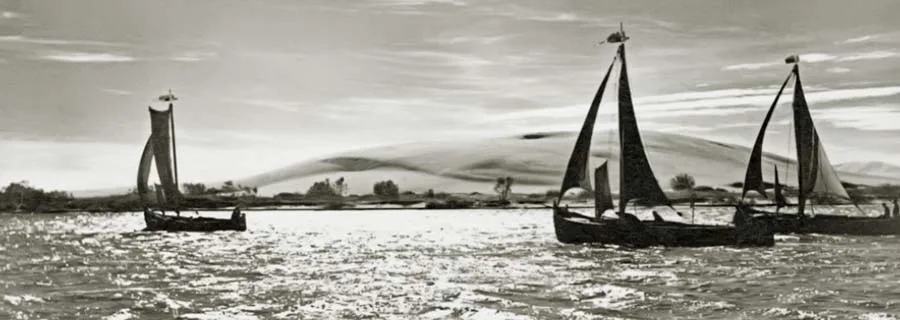
The Curonian Lagoon has earned a bad reputation among sailors, since it is notorious for its unpredictability. A great many vessels have been wrecked here. Storms and gales often rage on the lagoon while the Baltic Sea itself remains perfectly calm. Not for nothing does a Prussian national curse run: "May the Curonian foul weather fall upon you!"
It seems to me that the high dunes of the Curonian Spit are to blame for the violent storms that make this inland sea so dangerous. This strong wind, rising so suddenly, reminded me of the foehn5 on the Swiss lakes. The waves on the lagoon strike shorter and sharper than at sea, which is why travellers unaccustomed to sailing in such conditions very soon begin to suffer from seasickness.
Almost in the middle of the lagoon there is a sandbank stretching across its entire width. It lies only a few feet below the surface, so that in this dangerous spot sailors must take care and apply all their skill in order not to run aground.
A folk legend tells of the origin of this sandbank as follows:
"Once upon a time a giant lived on the Lithuanian shore of the lagoon. That shore was marshy because of the frequent floods of the Neman, which flows into the sea here, and the giant disliked this very much. His beloved, a giantess, lived on the spit, which was made up of high sand hills, and whenever she strode across the seven-mile-wide lagoon to visit her giant, she always got her boots wet on the muddy shore.
So the giantess decided to raise her beloved's shore. To do this she filled her apron with sand and set off to stride across the lagoon with it. Unfortunately the load was too heavy, the giantess's apron tore, and all the sand spilled into the water. That is how the sandbank came into being."
It should be noted that in this legend the woman does everything. Among peoples where the female sex is more passive, the giantess would have been left in peace and the task of carrying the sand would have been given to her suitor.
Trade is of great importance to Memel, but its exports cover only a few items, of which timber is by far the most important. Hewn beams, masts, round timber, shipbuilding timber, boards, laths and battens are shipped out in enormous quantities. As far as boards are concerned, Memel is in fact the chief trading centre of the Prussian state. In addition, grain is exported, though not much, as well as potash, feathers, bristles, raw hides, flax, hemp, linseed and hempseed, and, in limited quantities, coarse cloth of local manufacture. Other exports are of minimal importance. At least 9/10 of all exported goods go to England; exports to other countries are very small. Memel used to send grain to England in sacks made of shirt linen. Since the import of linen into British ports was prohibited, linen was smuggled in this way; but as England now obtains enough linen from Scotland and above all from Ireland, this source of income has disappeared for Memel.
Smuggling in Memel is carried on on an enormous scale and quite openly. This is due to the proximity of the Russian border.
Most merchants keep large warehouses on the estates of neighbouring landowners, and the landowners undertake the transport and illegal conveyance of the goods across the border, earning more in this way than from farming. Colonial goods, which in Prussia are usually taxed more heavily than in Russia, are smuggled in from the Russian side, while manufactured wares are illegally conveyed from Memel to Russia. Until Russia introduces a better customs system, this smuggling trade will always remain an important source of income for Memel. The inhabitants of Russia have a great demand for manufactured goods, barely a hundredth of which are produced in the country itself; nevertheless, most goods are banned from import, and others are taxed so heavily that this attracts profit-seeking traders and tempts them into dubious ventures.
Moreover, the countless army of customs officials receives such a miserable salary that these people would have to possess superhuman virtues to remain incorruptible. Besides, the Cossacks who guard the border against smugglers are not averse to entering into "business" relations with them.
And finally, how can a border several hundred miles long between the Prussian and the Austrian6 states be closed so securely that smugglers cannot slip through it? That alone would require a considerable staff of officials. If the Ministry of Finance lowered customs duties by a quarter and paid the customs officers better, the Russian state would gain millions. But of course stricter supervision of the customs officers would also be needed at the same time, because as long as there remains room for the "human factor" in their dealings with the merchants, any reforms are useless.
Incidentally, the local merchants make no secret of the fact that they engage in smuggling. They talked about it quite freely during our walks on the dunes and even showed me warehouses of smuggled goods.
Smuggling played an especially important role during the time of the general trade barrier. It was then carried on with such cunning that all the vigilance of the local French consul, directed at combating this shameful practice, proved futile.
The way such operations were pulled off testifies to the enterprising spirit of the people of Memel. I should like to tell of one incident that became widely known here. Soon after the French consul arrived, a ship appeared in the roadstead that was English by every sign. On the pretext of a headwind it did not enter the harbour. The consul ordered the captain to send him the ship's papers. On seeing them he realised that they were forged and that the cargo on board was English property. The consul at once sent several customs officers to the ship to seize the cargo. Several non-commissioned officers went with them as back-up, to prevent any possible resistance on the part of the sailors.
This was exactly what the English had been counting on. As soon as the Frenchmen were on board, armed sailors attacked them, took them prisoner, then weighed anchor and put out to the open sea. I was told that the smuggled goods were unloaded from the ship onto the shore during the night, while the Frenchmen were carried off to England. Taught by this incident, the consul began to allow Memel's vessels to remain in the roadstead, although it was precisely from there that most of the smuggling was conducted, and confined his attention to the harbour alone. This illicit trade, together with the presence of the Prussian royal court here in 1807, brought the town a prosperity that would be hard to find in any other town of its size.
I had already been in Memel for two weeks, and my stay was dragging on because I could not set off for Königsberg until I had received the letters of recommendation I needed. So I decided to while away the time by making a short trip to Lithuania. I had been told so many good things about it that I wanted to get to know this region better. A young scholar from Königsberg who happened to be delayed here offered to accompany me on this trip, which was all the more agreeable as he spoke Lithuanian.
For the first five miles from Memel the road runs mostly through inhospitable heathland, interrupted only by a few fertile ploughed fields near the village of Prökuls7.
From the churchyard in Prökuls, which I visited while the horses were being fed, a wide and exceedingly beautiful view opens up, which is quite surprising in this otherwise dreary country.
Beyond the harbour one can see extensive sown fields, then the lagoon with its green shore and, finally, the Curonian Spit with its white dunes, which from here look like a chain of Alpine glaciers.
Not a single person from Memel drew my attention to this wonderful view, which seems to me proof that a man who lives close to nature does not notice it, preferring the sight of a well-stuffed purse to beautiful landscapes.
Between Memel and Heydekrug8 one comes across many small streams, some of which flow quite turbulently into the lagoon. Near Heydekrug, an important market town, the country becomes fertile, and everything here points to the proximity of one of the richest regions of Prussia. My companion, who knew these parts well, advised me to send my carriage back to Memel, since with so many canals and rivers it would be easier and more pleasant to travel by water. I followed his advice and did not regret it.
We hired a boat to Russ9, a pretty little town only a mile from Heydekrug. Our journey along a broad canal took us through fertile meadows whose lush growth of grass amazed me. The soil and vegetation seemed to me as rich as in Zeeland. Even the cattle grazing here and there on the banks of the canal were, to my astonishment, in no way inferior in size to Dutch cattle. At last we reached the wide-spreading Russ10, the largest of the three main arms of the Neman, which flows into the lagoon here. The Russ is a river of the first rank, deep and majestic, flowing among meadows without bringing sand with it or forming islands. The clear, bright expanse of water, the green, flowering banks and the rich pastures with countless herds of the finest cattle form a most charming idyllic picture. I felt incredibly at ease here.
The little town of Russ is of great importance to the timber merchants of Memel, since they all keep offices here for receiving, processing, sorting and forwarding to Memel the consignments of timber that arrive from Polish Lithuania.
The town is therefore very lively and wealthy. Another important source of income is salmon fishing, which is so abundant in these parts that Tilsit, Memel and Königsberg are amply supplied with this delicious fish from here.
Salmon are caught in a side channel of the river, some distance from the town, in the following way: the channel is blocked across its whole width by a wooden weir with enough openings to let the water through, but too small for the fish to slip through them. This weir rises about three feet above the water, and behind it, at some distance, a second weir rises eight or nine feet above the water level. When the salmon, following its instinct, swims upstream and reaches the first weir, it leaps over it. But the second one is too high for it, and since it never turns back, it has to stay within the enclosure, where the fishermen cast their nets from time to time to catch the fish that have gathered there. The fishing takes place in spring and autumn, so I had no opportunity to see it.
We spent the night in a very decent inn where we were well looked after. At the same time we managed to arrange with a local boatman to take us to Tilsit the next day. Since we asked him to put in to the bank wherever we wished, we had to pay rather dearly for his services, although rowing against the slow current is no great effort. We had, however, the advantage of being able to dispose of our time entirely as we pleased, which is very valuable on a journey devoted to getting to know a country.
The Neman, as the Poles and Russians call it, or the Memel, as the Germans call it, is a mighty and majestic river which, judging by appearances, is no smaller than the Danube, though far from being as swift. The Neman rises near Kozana (Kozana), becomes navigable ten miles on this side of Grodno and flows into the Curonian Lagoon through three arms, not counting small channels and canals. The mightiest of the three arms is the Russ; the other two are called the Timber11 and the Gilge12.
The Neman is the main route for export goods and hence the source of the prosperity of Tilsit, Memel and Königsberg, since all the goods of the greater part of Polish, now Russian, Lithuania reach these towns along it.
Because of its location, Tilsit specialises in intermediary trade, whereas Memel has concentrated almost the whole timber trade in its hands, and Königsberg the grain trade. The reason for this seemingly strange division of labour was explained to me as follows: the Russian Lithuanians lack sufficient seafaring skills to navigate the stormy Curonian Lagoon in their clumsy vessels (wittinas), and so at the beginning of the 18th century Countess Truchsess zu Waldburg, at her own expense and for the benefit of Königsberg's trade, had a canal dug that connected the Neman with the river Deime, which flows into the Pregel. Along it one can travel from Memel and Tilsit to Königsberg while bypassing the lagoon13.
But this canal is not wide enough for the huge timber rafts. Therefore, in the southern arm of the Neman, the Gilge [when the timber is floated towards Königsberg – ed.], they are taken apart log by log and bound together into new, smaller rafts, which of course takes a great deal of time and labour. On the other hand [in the direction of Memel – ed.], the rafts can float without stopping as far as Russ, where the Memel merchants have their offices. There the deals are struck, after which the raftsmen who sold the timber return home by land. Grain sellers find the best buyers in Königsberg, and as return freight they usually carry from there [to Tilsit, Heydekrug, Memel etc. – ed.] salt, herring, iron and luxury goods.
The Emperor of Russia and the King of Prussia once wanted to make the Neman navigable along its entire length, and for this purpose each of the monarchs donated 200,000 thalers. The ill-fated war, which put an end to many good undertakings, prevented the implementation of this plan, which was meant to develop Lithuania and enrich Königsberg.
As far as Tilsit the Neman flows through meadows and fields that have few equals in fertility. The land here is crossed everywhere by canals and is completely flat. Boundless, colourful meadows with reapers, pastures where countless herds of well-fed cattle and exquisitely beautiful horses graze, and in the background countless haystacks still left over from last year's harvest – all this together makes an extremely attractive picture which, though it cannot compare with the sublime natural landscapes of Italy and Switzerland, is, without exaggeration, in no way inferior to the most beautiful places of Zeeland and West Friesland.
In many places where the land lies below the water level, mighty dykes were built on the Neman long ago to drain the land.
It is said that this river, which has no shallows and no heavy ice drift, sometimes causes great destruction with its spring floods. Great attention is therefore paid to the maintenance of the dykes, and any deliberate damage to them is suppressed by imposing severe punishments on offenders. Thus, when I wanted to break off a willow twig from a bush on a dyke, the helmsman warned me not to do so, because it was punishable by imprisonment.
The land between the Russ and the Gilge covers an area of about fifty square miles and is so fertile that it is too rich even for growing wheat. The emphasis here is on meadow cultivation and vegetable growing. The vegetables and fruit from the local gardens are of such quality that they are sent to Königsberg itself. A little anise and barley are also grown. The meadows are mown three times a year and yield such excellent hay that horses are well fed without oats even during the hardest work. Even the pigs are fed on this hay. These lands have the advantage that neither rich landowners nor Catholics nor Jews live here. Anyone who has quarrelled with the nobility or is an enemy of the two religious groups mentioned will find a quiet haven here where he will not see those he dislikes. There are no towns here either.
The inhabitants of this area, and of the Lithuanian part of Prussia in general, are originally an Old Prussian tribe that has preserved its distinctive customs and its dialect, a sister of the Old Prussian language, which is now – apart from some two hundred words – completely lost.
The Prussian Lithuanians differ so much in customs, language and appearance from the formerly Polish, now Russian, Lithuanians that there is not even an outward resemblance between them. The Prussian government's careful respect for the distinctive character and peculiarities of its various peoples is fine proof of its humanity. Preachers and schoolteachers, who are very well paid, must preach and teach in Lithuanian, and even officials are obliged to keep records in Lithuanian.
At the government's demand, Bibles, hymn books and school textbooks are printed in this language and must always be available in sufficient numbers in the bookshops, so that no one goes without them.
The Lithuanians have tall, noble figures. They are slender, and their proud bearing makes them seem even taller. They have expressive, often somewhat sly features. As a rule they have blue eyes, dark chestnut hair and a fresh complexion. The female sex is almost always beautiful, though less slender than the male. Rarely have I seen so many blooming girls glowing with health as here. Their liveliness and cheerfulness are just as striking. But as for the ladies' dress… – I have never seen anything more fantastic!
They cover their beautiful chestnut hair with a kerchief, but know how to tie it in a hundred different ways, so that sometimes the ends form a pair of imposing dog's ears. The kerchief, however, is an everyday part of the costume; the festive headdress is a coloured or black cap shaped like a sugarloaf with its pointed top cut off, or a cap shaped like a military shako, or a turban-like cap crowned with a peculiar wheel-shaped twist on top.
A woman's bosom is covered not by a kerchief but only by a close-fitting shirt that covers part of the neck. The laced bodice in a light colour, usually pink or greenish, would look rather nice if the sleeve seams of the shirt were not trimmed with broad, garishly bright ribbons that offend the eye with their clashing combination of colours.
They do not wear skirts; instead, the women have a piece of finely checked cloth on their hips which reaches down to the knees and is held by a narrow belt wound around the waist. If the ladies bend down to pick something up from the ground, or a gusty wind starts a mischievous game with this part of their clothing, a bashful soul must look away so as not to have to blush for these naive, artless beauties. On the shapely, slender leg is drawn either a blood-red stocking with green gussets or a grass-green one with scarlet gussets; blue stockings are worn less often.
The shoes have three-inch heels. On holidays the women throw over their shoulders a square of coloured cloth resembling our ladies' shawls.
The local men's clothing is very modest. Around a simply cut coat, which has entered men's fashion under the name of litewka and is called a zhupan here, they tie a narrow woven sash or a leather belt. The Lithuanians wear very wide trousers and, instead of boots, especially in summer, sandals.
In the character of these true children of nature there is not only much light but also much shadow, as is always the case with uneducated people. If the vices of the enlightened world are foreign to them, they also lack those virtues of humanity which are merely the fruit of upbringing. The Lithuanians are clever, calculating, thrifty, hard-working, persevering, brave, serious, proud, neat and hospitable. But they are also suspicious, deceitful, selfish, secretive, stubborn and inclined to drunkenness beyond all measure.
Compassion is so foreign to them that, on seeing someone in mortal danger, they will haggle with him over the price of his rescue before lending a helping hand. I have seen many examples of their drunkenness, so I can affirm that here they are far ahead of the Russians, with the sole difference that, unlike the Russians, they will never drink away their last shirt. A Lithuanian works with all his might to earn money for drink, but he will never, as a Russian will, sell his household goods or anything he needs in order to be able to pay for liquor. And whereas a Russian can be tempted by drink to do anything at all, a Lithuanian, even when drunk, will never do what he would not do when sober.
As for sensual love, Lithuanian men are as a rule not debauched, which is probably connected with their frequent consumption of alcohol, which, as is well known, weakens the reproductive powers. On the other hand, they are tolerant of female virtue, so that a girl who has strayed can count on finding a husband just as well as one who has kept her innocence until the wedding. The fair sex shares the merits and failings of the men, but the women observe more decorum in drinking spirits, which they pour into a bowl and eat with spoons like soup. On the other hand, they are more sensual than the men and quite indulgent towards propositions of a dubious nature. What I saw convinces me that in this respect their morals are rather free.
The Lithuanians are still full of superstitions. They firmly believe in the existence of witches, ghosts and the evil eye, they believe in lucky and unlucky days, and they regard fortune-telling and sorcery as matters of faith.
An important role in their superstitions is played by gnomes, or earth spirits, which they call puskaitens, regarding them both as guardians of the house and as petty mischief-makers. They even make libations to them, which I saw with my own eyes. Also, when the fire in the hearth rises in billows, they never fail to throw salt into it, believing that the house spirit makes his wishes known through the salt.
Although Lithuanian sellers cheat their customers without a qualm and know how to profit from other people's difficulties, they regard theft as a great disgrace and do not tolerate thieves among themselves. In this respect they are the complete opposite of the Russians, who are true virtuosos at stealing and sometimes make use of their nimble fingers without any need at all.
No Arab can love horses more than a Lithuanian does. They are born horsemen, and a Lithuanian boy, barely weaned from his mother's breast, is already sitting on a horse. A Lithuanian makes even the shortest journey on horseback. On horseback he rides to woo his bride, to his own wedding and to his neighbours on business, and likewise in the saddle he accompanies his dead on their last journey. He spends every free minute with his four-legged friends, but, admittedly, he has good reason to delight in these wonderful animals, for nothing more beautiful than Lithuanian horses is to be found. They have a splendid conformation: strong, clean, well-set legs and a noble, lean head.
The Lithuanian language, since it is not used or cultivated by scholars, is very poor in words, but very figurative and florid, and it also has a pleasant sound. Its vocabulary has no superfluous consonants, which makes pronunciation easier.
The expression lak laima latet – "so Laima has woven it" – could hardly be rendered more briefly, more melodiously or more meaningfully in any other language in the world than in Lithuanian.
Although the Lithuanian is a devout Lutheran, he has nevertheless preserved the memory of his old gods, whose names, at least, he still remembers, even if he no longer worships them. He has Laima, the goddess of fate; when thunder rolls, it is Perkunas raging; and the god of death, Pikollos, takes the dead to himself.
Interestingly, the Lithuanian language, like Greek, has a dual number. It is especially well suited to poetry, and almost every Lithuanian, like an Italian, is an improviser.
Singing is extremely important to this people: as a rule, a song begins as an impromptu, yet it nevertheless keeps its meaning and stays on the given theme. Above all it is the girls who practise their talent for improvisation. Whenever they gather, they take turns singing songs which they call dainos. Those who know the language assure us that these songs are full of poetry. Their theme, as a rule, is love.
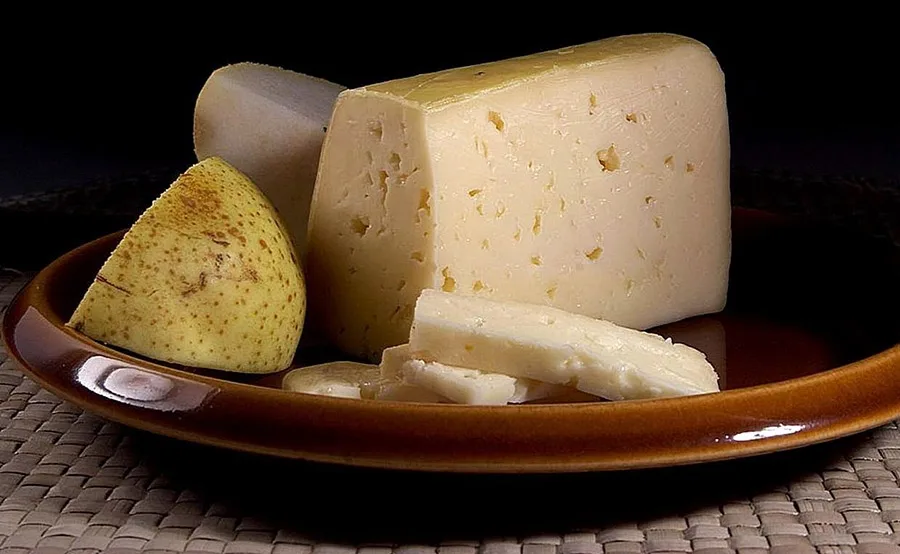
The Lithuanian economy is marked by order and practicality. Not one dilapidated hut, not one crooked fence, not one littered ditch did I find along my whole way. Everywhere I noticed prosperity and the most impressive signs of industry. Since the Lithuanians have little arable land but more meadows, they are mainly engaged in cattle and horse breeding – and with great success. But they do not process their milk properly, and perhaps that is why they are not as rich as the Dutch farmers. The Lithuanians make butter but almost entirely neglect cheese-making. They use the milk for raising foals, calves and pigs. It cannot be denied that they gain far less from this than they would if they made cheese from it.
Their cattle rival the Frisian breed in size and beauty and give a great deal of rich milk. The Lithuanians do not need oxen for fieldwork, so when the bullocks reach three or four years of age they sell them for slaughter. These young animals fetch a very good price, because the meat has a quite special flavour and is in great demand.
Giving foals milk to drink, above all sour milk and buttermilk, is, as experience shows, a mistake. The young horses grow quickly and become handsome, but they have no stamina at all, sweat easily and tire quickly. The government has even tried to instruct the Lithuanians about this, but they insist on doing what they do and laugh at good advice, because they consider all Germans without exception to be stupid.
The Lithuanians supply Tilsit, Königsberg and Memel with butter, as well as with fruit and vegetables, which they bring to these towns by boat. Having to travel so much by water makes them good skippers.
The female sex is very skilled at spinning and weaving. I saw several samples of excellent fine linen here, but as a rule linen is made only for their own use, since the soil is not favourable to growing flax. The Lithuanians are very skilled at making all kinds of ribbons. Particularly beautiful are their silk garters, decorated with flowers, ornamental patterns and letters in gold and silver, which are very elegant. They usually give them to their relatives and loved ones, but also make them to order for sale. Such elegant gifts have been presented by Lithuanian women to the family of the Russian Emperor and to members of the Prussian royal family.
I was quite surprised to see on a Lithuanian girl's loom a garter on which a French motto had been woven, although the young weaver, like her mother, did not even understand what the letters were, much less know that it was French. By the way, the women do not confine themselves to women's work: they chop wood, row boats, fish and readily busy themselves with horses, which does not look altogether decent, given their clothing described above.
The Lithuanians' food is simple but nourishing and filling. They eat black but tasty bread, a lot of meat and sauerkraut, and even more fish. There are also several national dishes of which they are very fond. Thus, pies made of wheat flour, milk and eggs are very tasty, as are "kisel" – a decoction14 of flour, butter and milk – and "shaltenos", a kind of small pastries filled with meat or cheese and fried in butter. Apart from home-distilled spirits, the Lithuanians' drinks are two kinds of beer: a thin beer resembling ordinary kvass, and a double beer for special occasions and feasts called "allaus". Both kinds of beer are tasty and wholesome. Coffee, tea, wine and sugar are almost unknown to them even by name.
The simplicity of the Lithuanians' customs and their complete ignorance of luxuries are probably explained by the fact that there is no educated class among them. They have no nobility, no large landowners, no scholars, no masters. They live far from the towns, which they visit two or three times a year only to sell their goods, so the temptations of the town remain unknown to them. Popular enlighteners are hardly likely to change their way of thinking either, because outside the province Lithuanian is not easily understood. Their pastors and schoolteachers are usually the sons of pastors and teachers.
The sons study for several years in Königsberg and then inherit these posts from their fathers. They never travel further than Königsberg; the rest of the world remains unknown to them.
As soon as they can support a family, they marry the daughters of preachers from their own district, and since this has been so since the beginning of the Reformation and continues to be so, this people and its customs remain unmixed. Strictly speaking, this applies only to the Lithuanians living along the Neman, the Tawe15 and the Friedrichsgraben as far as Tilsit. This territory of 60 to 70 square miles is called the Niederung here – "the lowland"16 – and its inhabitants, unlike other Lithuanians, are called Curonians because they live near the Curonian Lagoon.
The uplands of Lithuania make up the greater part of this large province. Several important towns are situated here, including Memel, Tilsit, Insterburg and Gumbinnen, in which, besides Lithuanians, many German inhabitants live, so that the language and customs there are no longer so archaic. This province, which had been turned almost into a desert by the plague of the early 18th century17, was resettled by Frederick William I with 30,000 Salzburgers who had been driven from their homeland for their religious convictions.
These settlers wonderfully rewarded the humane gesture of the statesman king, for all of them without exception were law-abiding, hard-working people who brought here the culture of their homeland. Even today the Salzburgers' farming is a tribute to good husbandry. One can see at first glance that the fields of the settlers from Salzburg are better cultivated than others. These colonists live almost entirely within their own community, without mixing with anyone. Love of their homeland is so deeply imprinted on their minds that after several generations these refugees still feel like strangers in the hospitable country that received them with open arms and granted them prosperity and all the rights of its citizens. Nevertheless, the Salzburgers are loyal to their new homeland and feel quite happy, but the land of their ancestors is still dear to them, and they keep themselves apart from their other new fellow citizens.
LEGENDS OF PRUSSIA in the blog of Tatyana Kolivay.
TRANSLATOR'S NOTES
1. Palanga (Lithuanian: Palangà; until 1917 – Polangen, Palangen, German: Polangen) is a town and resort in Klaipėda County in western Lithuania. The name may derive from a Baltic root meaning "low, marshy place".
2. The Dangė (archaic Danga; Lithuanian: Dangė) or Danė (Lithuanian: Danė) is a river in Lithuania flowing through the Kretinga District, the Klaipėda District and the city of Klaipėda in Klaipėda County in the north-west of the country. It flows into the Curonian Lagoon.
3. When Memel became the Prussian royal residence in 1807/08, the merchant Argelander took the Prussian princes into his family, while the royal couple lived in the house of the merchant Consentius, later the town hall. The plot had a street frontage 80 metres long and a depth of 150 metres, so there was plenty of room in the garden for Queen Louise's children. Their playmate was Wilhelm Argelander, later the famous Bonn astronomer. The house was demolished around 1890, and a post office was built on its site.
4. ex officio – by virtue of office (Latin).
5. Foehn (German: Föhn) is a strong, gusty, warm and dry local wind blowing from the mountains into the valley.
6. Here there is evidently a misprint in the original, and the Prussian–Russian border was meant.
7. Prökuls – Priekulė (Lithuanian: Priekulė, German: Prökuls) is a town in the Klaipėda District of Klaipėda County, Lithuania, and the administrative centre of the Priekulė Eldership. Population approx. 1,500. It lies on the bank of the river Minija, 22 km from the city of Klaipėda.
8. Heydekrug (Heydekrug) – today Šilutė (Lithuanian: Šilutė) – is a town in Lithuania, the centre of the Šilutė District. It was founded as a fish market by Georg Tallat in 1511 on the territory of East Prussia.
9. The little town of Russ (today the town of Rusnė in Lithuania) on an arm of the Neman (German: Ruß).
10. The river Russ – Rusnė (Lithuanian: Rusnė, German: Russ) – is the part of the Neman from the head of the river Gilge to the island of Rusnė of the same name. Until the 19th century the Rusnė, together with the Gilija (today's Matrosovka), was considered an arm of the Neman, but after a series of hydraulic engineering works carried out on the river, including the relocation of the Gilija's head by means of an artificial canal, it lost its significance as a separate geographical unit. Today the name Rusnė is used for this part of the Neman very rarely, mainly in Lithuanian sources.
11. The Golovkinsky Canal (Timber) (German: Timber) is a canal in the Kaliningrad Region.
12. The Matrosovka (archaic Gilija, Gilge; German: Gilge) is a river in Russia flowing through the Slavsk District of the Kaliningrad Region. It is the left arm of the Neman.
13. In 1671 the Great Elector of Brandenburg and Duke of Prussia Frederick William (1620–1688) concluded a contract with the master builder and quartermaster general Philippe de la Chièze for the construction of a canal connecting the rivers Gilge and Deime. After his death in 1673 his wife Katharina de la Chièze (1650–1703) continued the work he had begun. After her remarriage, also known as Katharina Truchsess zu Waldburg, she was granted the right to levy tolls on the canal for her efforts. In 1710 the Friedrichsgraben canal became state property.
14. Vzvar (Ukrainian: uzvar; decoction, brew) is a drink obtained by prolonged heating of water or beer with herbs, roots, fruit or berries.
15. The Tovarnaya (Tava, Tawelle) is a river in the Slavsk District of the Kaliningrad Region. It is the right arm of the Matrosovka, belongs to the Baltic Sea basin and flows into the Curonian Lagoon. The official name of the river, Tovarnaya, is used in reference books and on maps. Fishermen and local residents often use the name Tava.
16. Niederung (Elchniederung). The Elchniederung district (German: Landkreis Elchniederung, literally "Elk Valley") is a former district of East Prussia. The district was located in the north of East Prussia and bordered on the Heydekrug district to the north, the Tilsit district to the north-east, the Ragnit district to the east, the Insterburg district to the south-east and the Labiau district to the south; to the west its natural boundary was the shore of the Curonian Lagoon.
17. During the Great Northern War (1700–1721) a severe outbreak of plague occurred in Eastern and Central Europe, peaking from 1708 to 1712. This epidemic was probably part of a pandemic that struck a vast area from Central Asia to the Mediterranean.
Translated from Russian with the help of AI (Claude, Anthropic), October 2026.