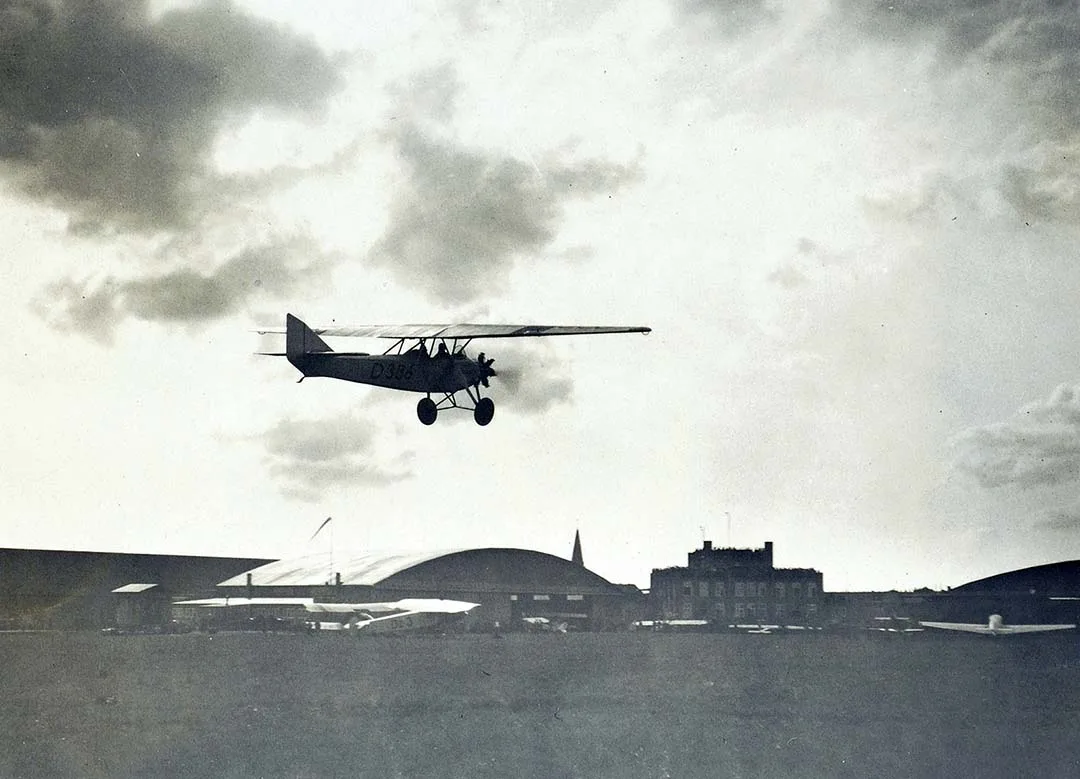
The first time round, the start of the three-day air race over East Prussia, organised by the German Aviation Association and scheduled for 17–19 February 1929, was postponed by two weeks because of frosts unusual for the time of year. On the appointed date, owing to heavy snowfall and an unfavourable weather forecast, the take-off had to be postponed again — from Sunday, 3 March, to Monday, 4 March. Even then the pilots' safety was the absolute priority!
Only German-built aircraft with a maximum take-off weight of no more than 400 kilograms that had passed all the necessary technical tests could take part in the competition. In the end, only two German flying aces1 were admitted to the race:
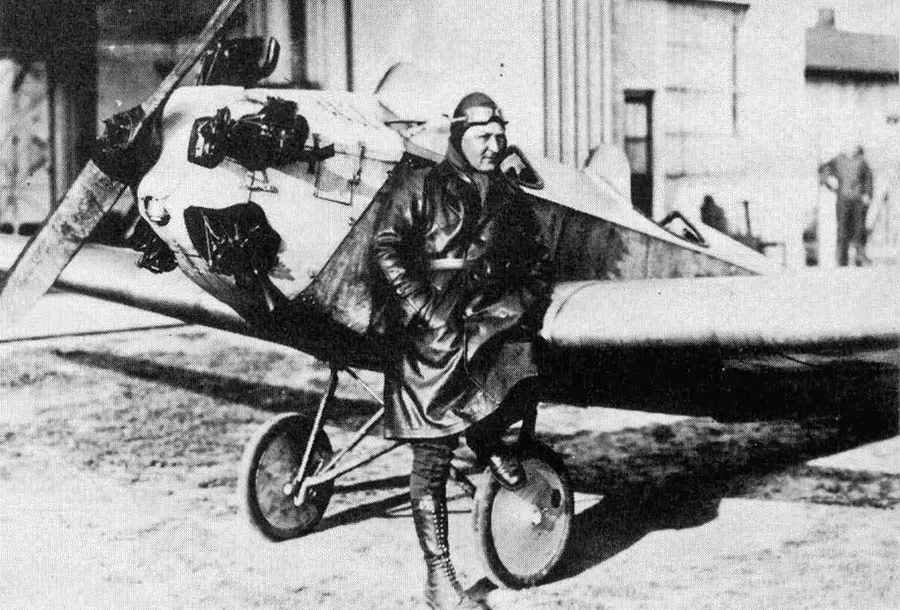
Theodor "Theo" Jakob Croneiss (Theodor „Theo“ Jakob Croneiss, pictured above) from Fürth, in a BFW M.23C low-wing monoplane2 built by Bayerische Flugzeug-Werke AG Augsburg.
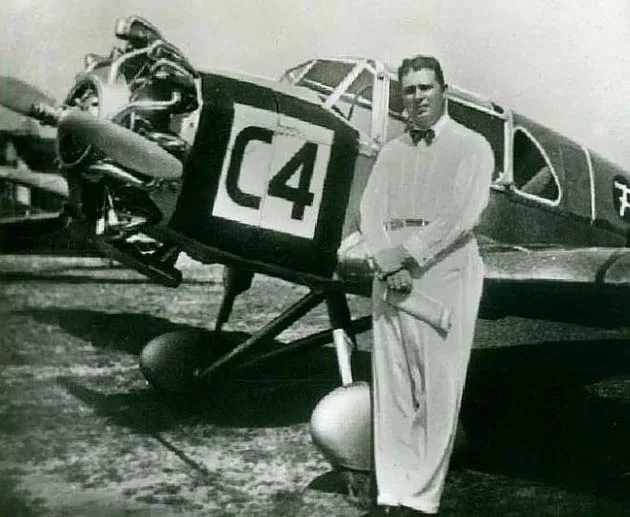
Friedrich "Fritz" Wilhelm Siebel (Friedrich „Fritz“ Wilhelm Siebel, in the photo below) from Stuttgart, in a Klemm L.25I low-wing monoplane built by Klemm GmbH Böblingen.
Besides the pilots, the race was joined by the observers Fitzek and Habemeyer, representing the association. The former took the free seat behind Croneiss. Habemeyer was the second crew member of Siebel's aircraft.
In the 1920s Friedrich Siebel founded the company Körner & Siebel in Berlin, and in 1927 he acquired a stake in the Klemm light aircraft works in Böblingen. He later ran an aircraft factory in Halle, afterwards named Siebel Flugzeugwerke after him.
Another aircraft, belonging to the Akademische Fliegergruppe Darmstadt, was highly rated by experts for its flight performance but had not managed to pass all the necessary technical tests by the time of the start, and so could not take part in the race.
Despite the strong wind, snowstorm and poor visibility, on 4 March at the appointed hour the aircraft took off from Königsberg's Devau airfield for the first day's flight of 383 km, with landings in Marienburg and Allenstein, before returning to Königsberg.
The turning points were set at Elbing3, Marienwerder, Deutsch Eylau, Osterode and Bartenstein. The pilots had to pass them at a height of 50 metres.
Siebel was the first to reach Marienburg, but was overtaken by Croneiss near Marienwerder and, worse still, lost his map, cap and flying goggles on the flight to Allenstein. In Allenstein he quickly managed to make a rough copy of the map Croneiss was using. That day, however, Croneiss landed in Königsberg 38 minutes ahead of him.
The route of the second and longest stage of the race, 484 km long, ran from Königsberg, with turning points at Bartenstein and Rastenburg, to an intermediate stop in Allenstein. From there the pilots were to fly via Marienburg to Danzig and then return to Königsberg. On the return leg to Königsberg, which included a flight over Elbing, heavy snow began to fall. Once again Croneiss was the first to land in Königsberg, this time with an 18-minute lead.
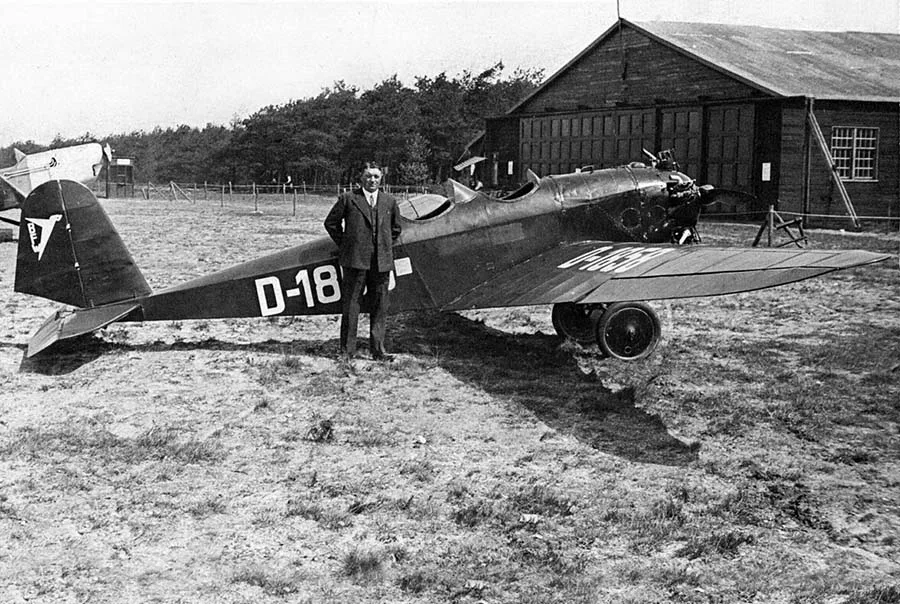 The BFW M.23C low-wing monoplane that brought victory to Theodor Croneiss.
The final stage of the competition was 466 km long. Starting in Königsberg, the pilots were to fly via Tilsit, Rastenburg, Allenstein and Elbing and then return to Königsberg.
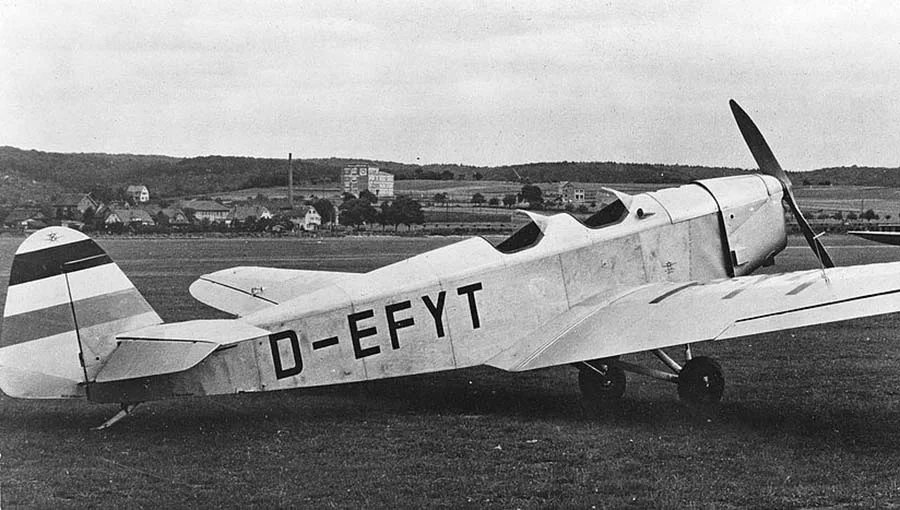 The Klemm L.25I in which Friedrich Siebel took part in the race.
Because of thick fog Siebel could not find the airfield in Tilsit and had to make an emergency landing on a frozen pond near the town. On the way back, more than an hour behind at Elbing, Siebel, because of the fog, flew at low altitude along the Elbing–Königsberg railway line. Owing to the adverse weather, however, he was forced to make an emergency landing near Grunau, close to Heiligenbeil. He arrived in the capital of East Prussia almost two hours late.
Croneiss and Siebel each received 2,500 marks for successfully completing the three-day race, plus a special prize of 6,000 marks each. The winner, Croneiss, who became chairman of the board of Messerschmitt AG in April 1942, was awarded the honorary prize of the German Aviation Association and prizes from the cities of Marienburg and Tilsit, while Siebel received prizes from Danzig and Insterburg. The two observers, Fitzek and Habemeyer, also received prizes.
The "Ostpreußenflug 1929" air race became famous for its extraordinary difficulty and the outstanding achievements of its participants.
The original text by Jürgen Ehmann (Jürgen Ehmann) was published in October of last year (2025) in the pages, and later on the website, of the newspaper Preußische Allgemeine Zeitung.
Translator's notes
1. Ace — a master of aerial combat (from French as — "ace", the card that beats all others — the best at what one does). The word was first applied to pilots during the First World War.
2. Low-wing monoplane — an aircraft whose wings are attached to the lower part of the fuselage.
3. All the East Prussian towns mentioned in the text now have other names: Allenstein — Olsztyn (Poland), Bartenstein — Bartoszyce (Poland), Danzig — Gdańsk (Poland), Deutsch Eylau — Iława (Poland), Insterburg — Chernyakhovsk (Russia), Königsberg — Kaliningrad (Russia), Marienburg — Malbork (Poland), Marienwerder — Kwidzyn (Poland), Osterode — Ostróda (Russia), Rastenburg — Kętrzyn (Poland), Tilsit — Sovetsk (Russia), Heiligenbeil — Mamonovo (Russia), Elbing — Elbląg (Poland).
LEGENDS OF PRUSSIA on Tatyana Kolivay's blog.
Translated from Russian with the help of AI (Claude, Anthropic), October 2026.