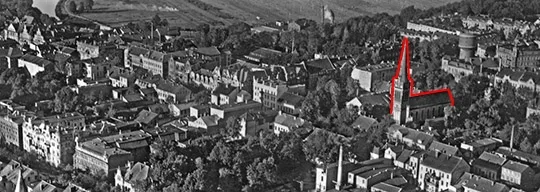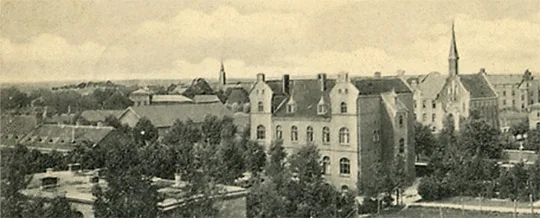
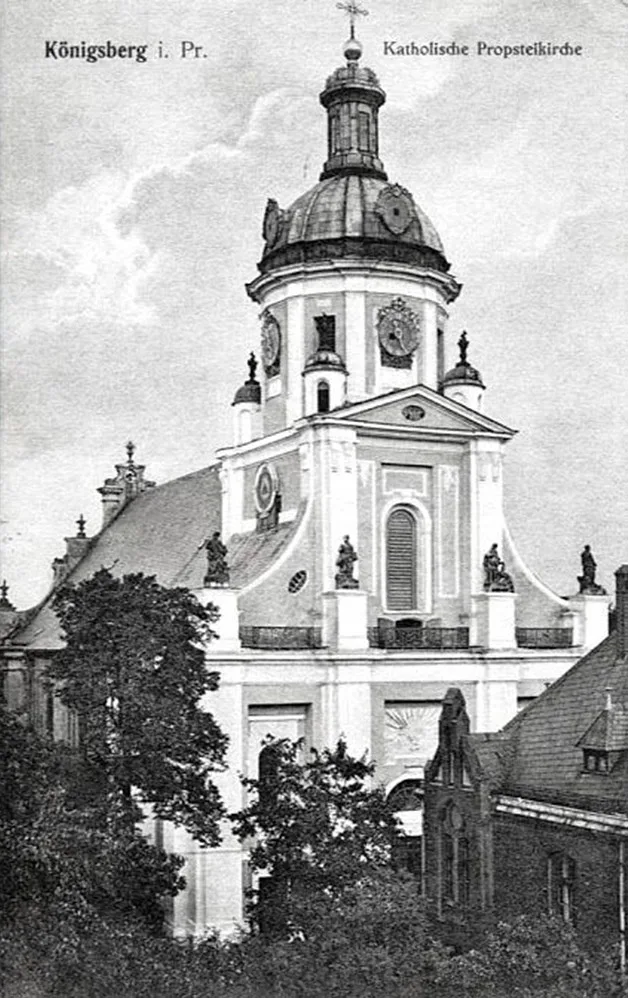
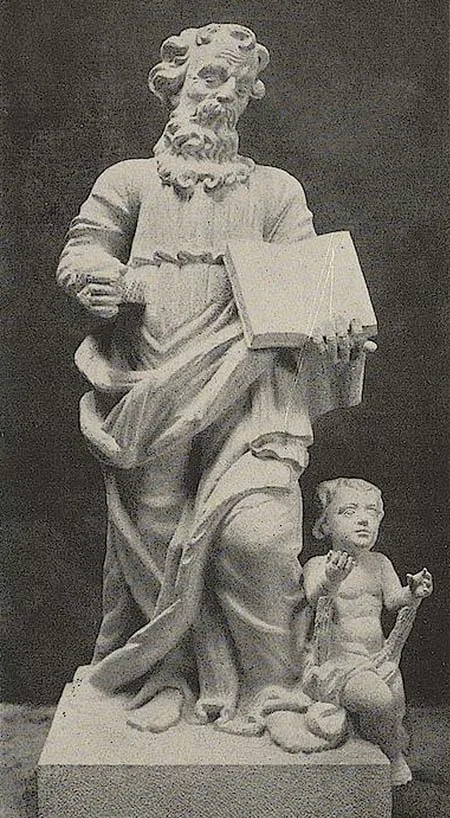
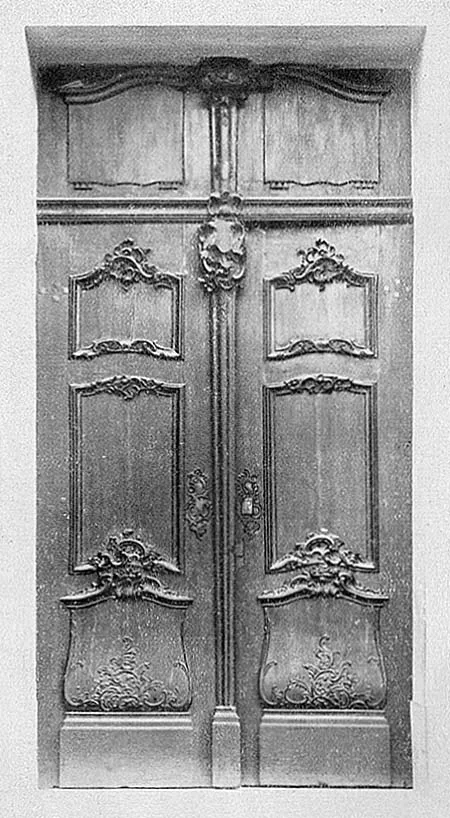
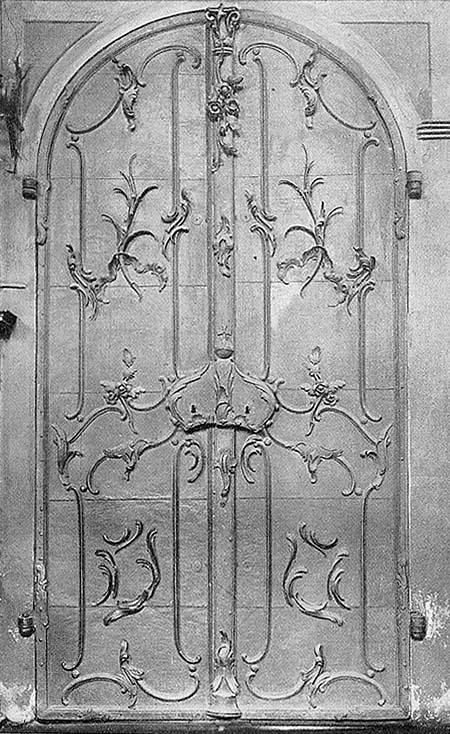
The church was a rectangular building with a built-in tower, which had a round cupola and a gable on the west. In front of the gable stood stone sculptures of the Evangelists, carved in sandstone by Andreas Schmidt in 1775 (see below) and later replaced by copies. The entrance door of the church had fine carving and dated from the time of construction. On the north was the baptismal chapel with a relief of the Baptism of Christ (1775). Tall round-arched windows were set in rectangular recesses.
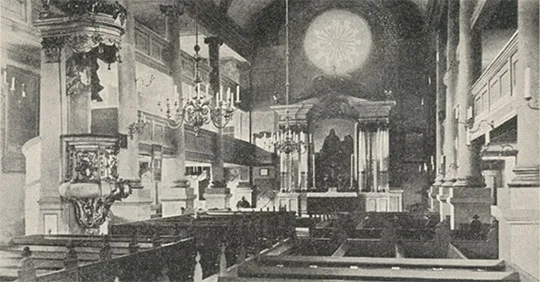
The pulpit stood in the central nave on the north side. There were 18th-century paintings, one of them a copy of Rembrandt, "The Descent from the Cross", "Judith with the Head of Holofernes", etc. A font of 1752. An organ of 1790.

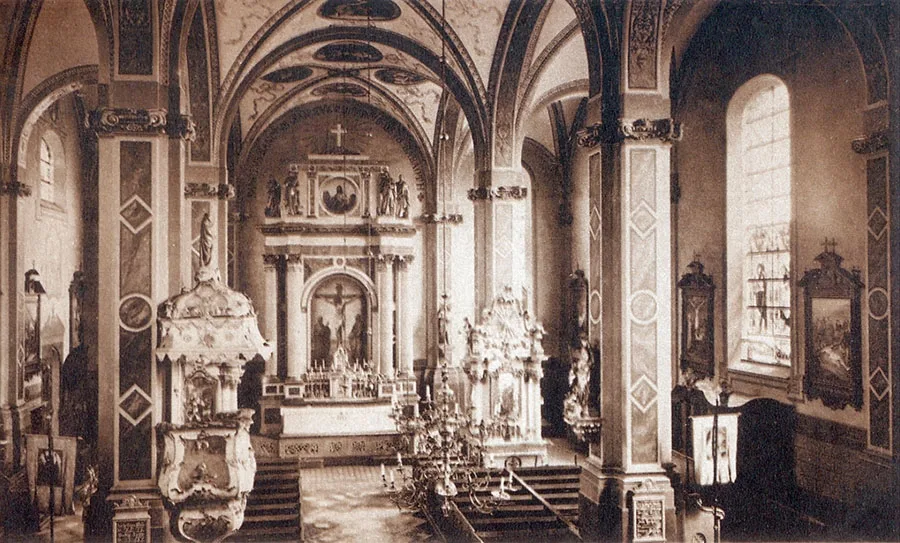
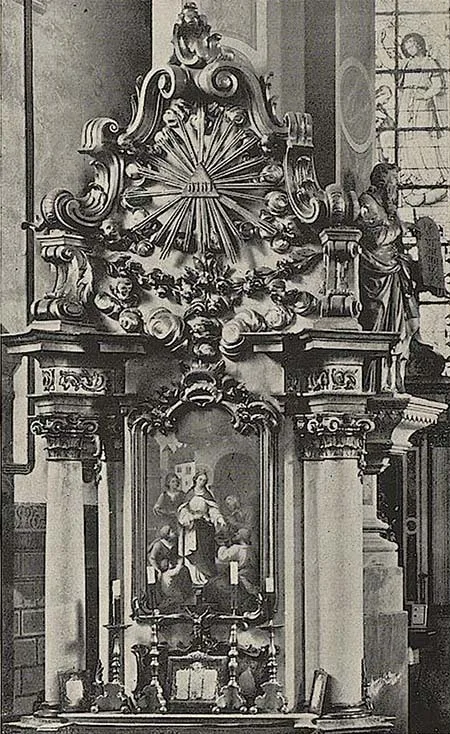
Inside, the church had three naves divided by columns supporting vaulted ceilings with paintings made in 1892–93. The altar in the centre held a painting framed by columns.
The Catholic Church was destroyed in August 1944 during British air raids. It was then further damaged in April 1945 during the storming of Königsberg by Soviet troops.
After the war it was a roofless shell of a nave and a tower without its cupola, with its upper floors destroyed. Nevertheless, the building was placed under state protection.
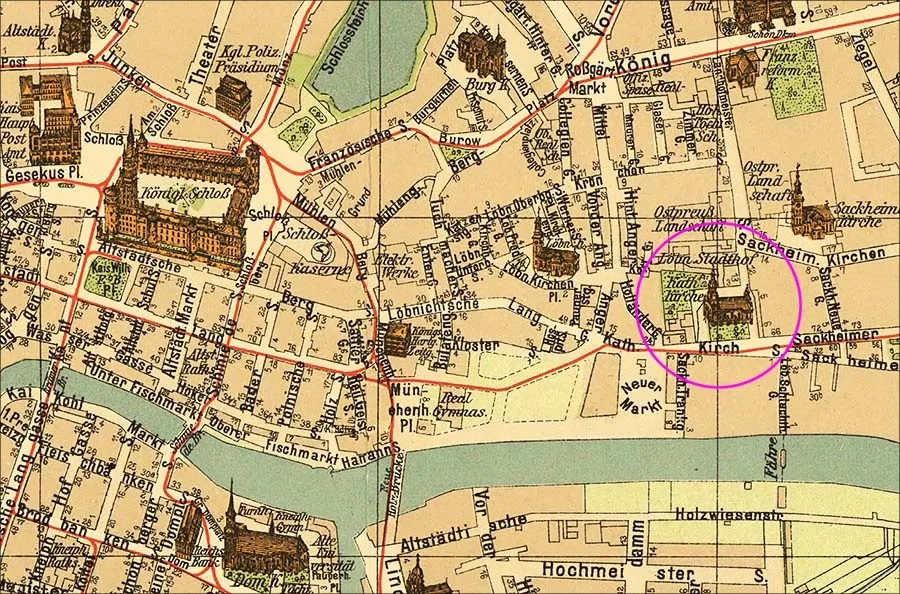 The Catholic Church on a section of a map of Königsberg.
But lack of maintenance left it in a dangerous condition. In 1961, after inspecting the church, a commission concluded that the Catholic church building could not be restored because of through-cracks in the walls, missing structural elements and subsided, deeply cracked foundations. On this basis the commission applied for the building to be removed from state protection.
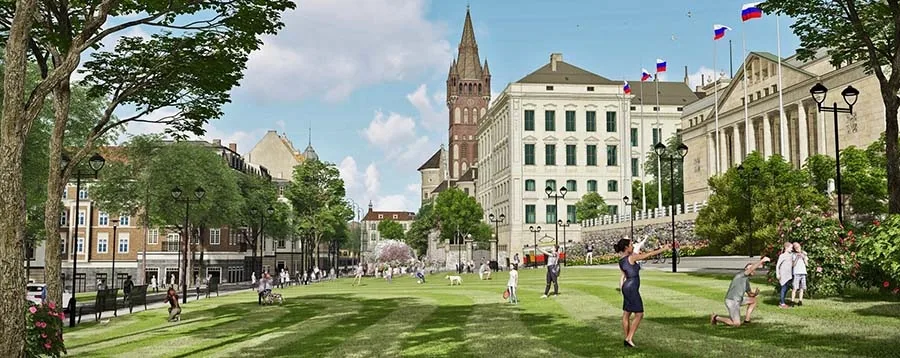
After that the church was steadily and unhurriedly destroyed. Its ruins were finally cleared away by the mid-1960s. Moskovsky Prospekt now partly runs across the site where the church stood.
* * *
In the 1950s the East Prussian expellees' newspaper Ostpreussen-Warte, published in Göttingen in Lower Saxony, ran a series of sketches entitled "Corners of Königsberg" by Herbert Mühlpfordt, a former Königsberg physician and passionate local historian. Some of them were translated long ago by Tatyana Kolivay and are available on our website, others are still waiting their turn. Below we present an episode of the saga most directly connected with the Catholic Church.
Catholic Church Square
Turning off busy Königstraße into quiet Landhofmeisterstraße, you might have thought it ended in a cul-de-sac at the Catholic Church (Katholische Kirche), whose austere yet elegant building could be seen at its end. But that was not so: at the end of the street you could easily pass between the old houses onto Catholic Church Square. And this was yet another idyllic corner of our home town.
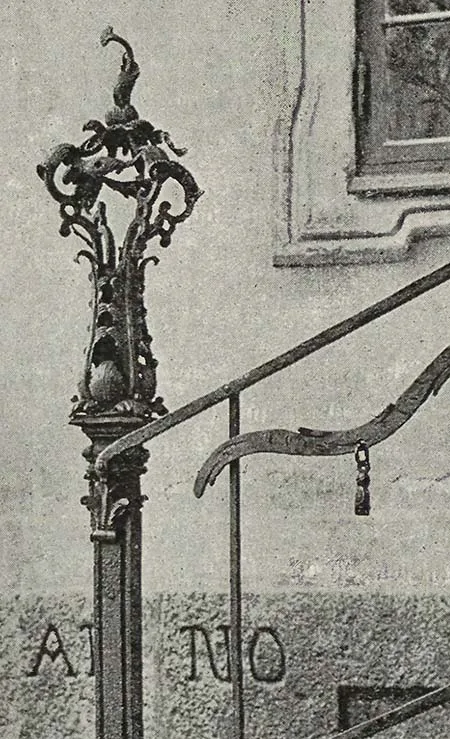
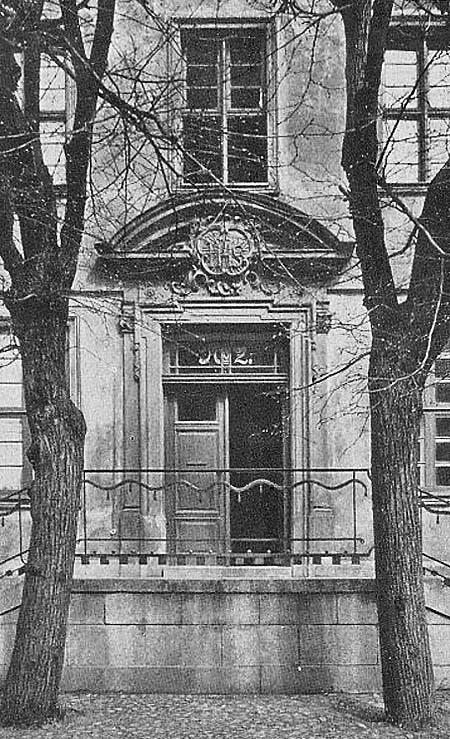
To the east and west of the church two wide flights of steps led down into Sackheim, whose bustle and noise were hidden behind the imposing church building. The surrounding greenery made a pleasant backdrop. On the north side of the square stood the delightful Baroque building of the Chaplaincy (Katholische Kaplanei), with a hipped roof, a handsome portal and an expressive pediment. The outside flights of steps leading up to the porch at the main entrance were adorned with wrought-iron railings decorated with Rococo tassels that seemed to jingle merrily with every breath of wind. The balusters were even more skilfully made (see below).
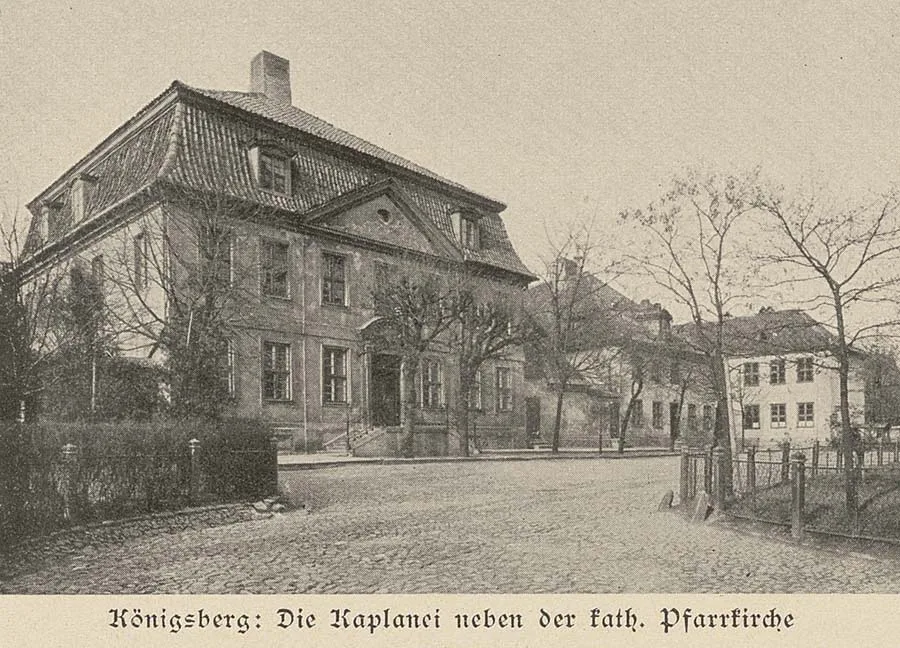 The Chaplaincy, which stood next to the church.
On the west side the square bordered the Chaplaincy garden, which contained a garden pavilion in the form of a small house with a dome and pilasters.
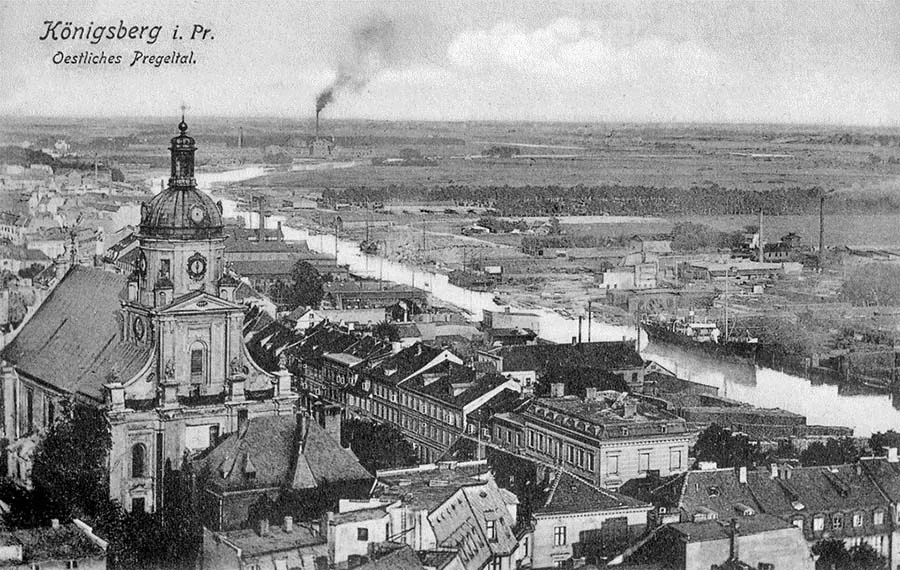 The Catholic Church against the backdrop of Sackheim and the Pregel.
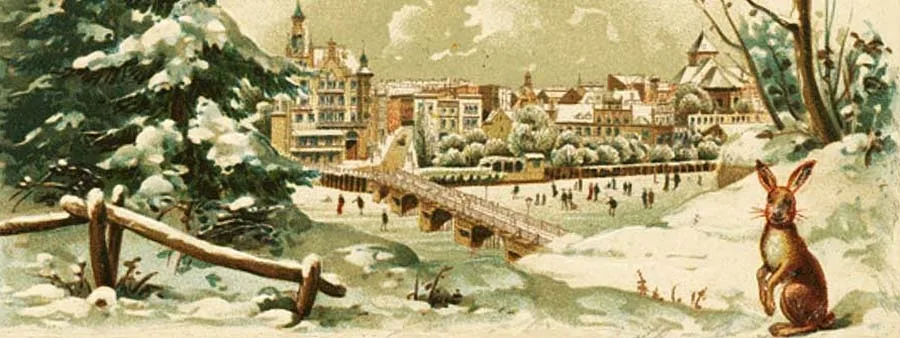
Beyond the garden fence here lay the Löbenicht Stadthof (Löbenichtscher Stadthof), popularly known as "Hare's Corner" (Der Kohlhasenwinkel / the hare's corner in the cabbage field).
Now let us look at the church from this idyllic corner!
The old Catholic church, founded in 1614, the one that still had no tower, burned down. Between 1765 and 1777 it was rebuilt by the architect Johann Samuel Lilienthal (1724–1799). Among the private donations for the building was a considerable sum from Privy Council member Franz Friedrich Saturgus (1697–1754). Having made a huge fortune during the first period of the Russian occupation of Königsberg by supplying grain to the Russian army, he could afford grand gestures. We shall speak more about this capable man elsewhere.
The church was built under the influence of the austere and economical official Berlin architectural style and therefore looked somewhat cold and severe. However, the fine cupola of the tower, with its huge mass, created the desired effect, its power overshadowing the other details.
Translated from Russian with the help of AI (Claude, Anthropic), October 2026.