Prussia left an extraordinarily rich archaeological heritage. In the 18th and 19th centuries, one of the most significant archaeological collections in Europe was assembled in Königsberg. In the first half of the 20th century it numbered, according to various sources, between 250,000 and 450,000 items, including ceramics, weapons, jewellery, coins, everyday objects and more.
The beginning of the 18th century is regarded as the time when the "Königsberg school" of archaeology emerged. A wealth of publications in that period fuelled interest in the region's protohistory among East Prussian society. In his book Litographia Angerburgica, published in 1720, the botanist Georg Andreas Helwing of Angerburg (now Węgorzewo, Poland), who was fascinated by Prussian antiquities and himself excavated an ancient necropolis, not only described his archaeological finds for the first time but also attempted a scholarly assessment of them. The school gained its greatest renown in the 1920s and 1930s under Max Ebert, a professor at the Albertina, Königsberg's university, and then under Carl Engel, a German prehistorian and the leading archaeologist of East Prussia — a committed advocate of the "settlement archaeology" method.
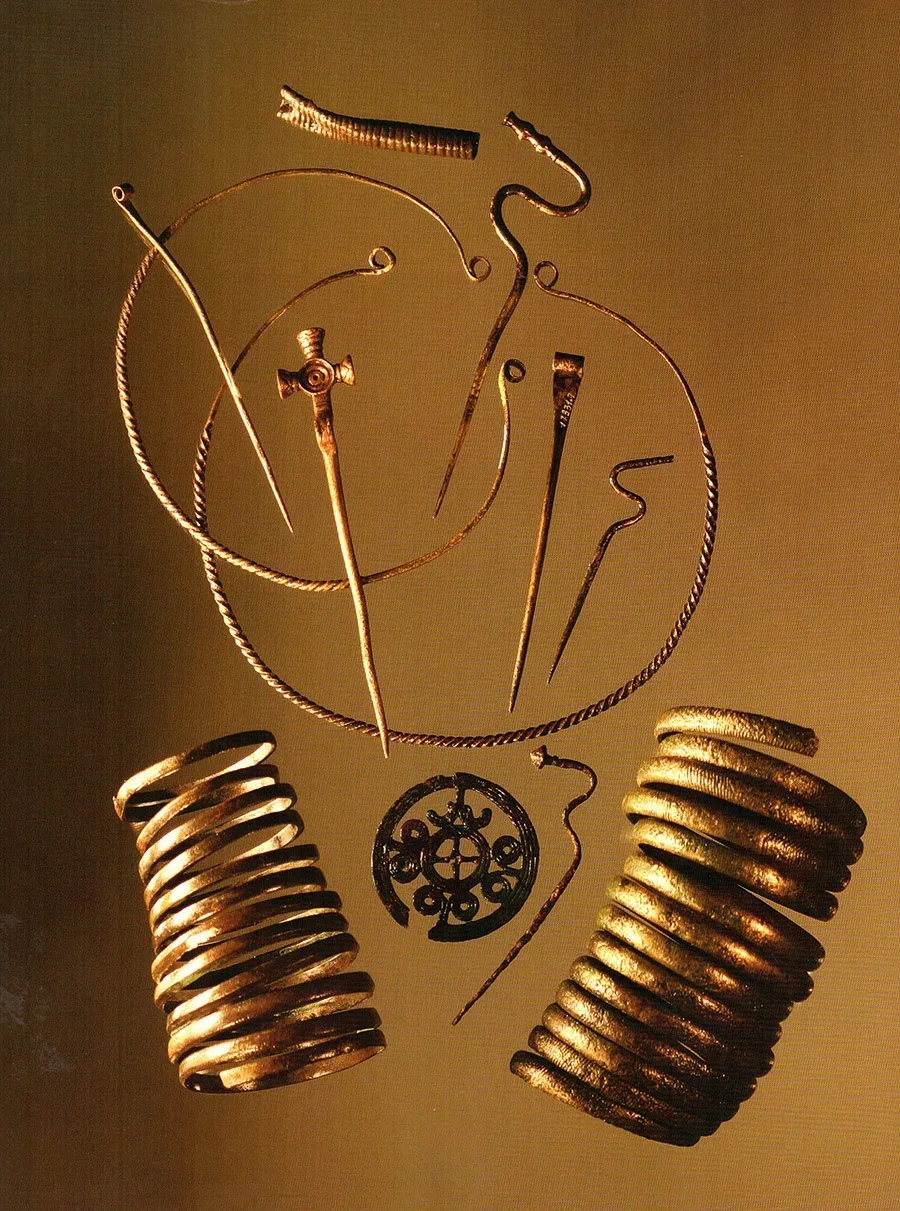
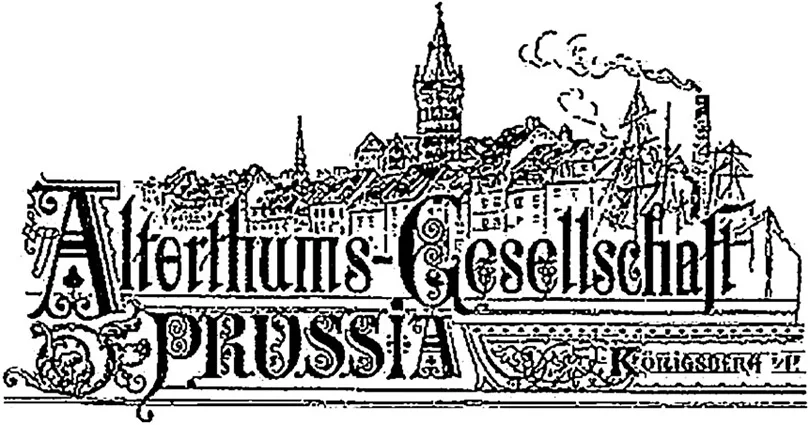
The last decade of the 19th century and the first quarter of the 20th are considered the heyday of the "Prussia", marked by exceptionally fruitful fieldwork and research.
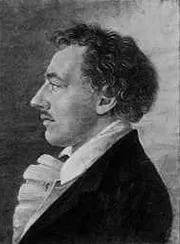
Ernst August Hagen
(1797, Königsberg – 1880, Königsberg)
In 1816, after graduating from the Altstadt Gymnasium, he entered the Albertina, where he studied natural sciences and medicine. In 1821 he received his doctorate, after which he switched to art history and literature and wrote poems that even Goethe appreciated.
In 1825 Hagen became a professor, and in 1830 he took charge of Prussia's first chair of art history. With his active support, Königsberg acquired an art gallery, an Academy of Arts, the Prussia Society and the museum of antiquities of the same name.
Ernst August Hagen remained involved in the cultural life of Königsberg almost to the very end, writing several works on the history of Prussia and a book on the history of Königsberg's theatres.
His father, Karl Gottfried Hagen (1749–1829), was a pharmaceutical scientist, professor of physics, chemistry, botany and mineralogy at the University of Königsberg, and the founder of pharmacy as a science.
Ernst August's elder brother, Karl Heinrich Hagen (1785–1856), was a professor of law and economics and a high-ranking government official. His younger sister, Florentine Hagen (1800–1838), married the mathematical physicist Franz Ernst Neumann (1798–1895), and his elder sister, Johanna Hagen (1794–1885), married the astronomer and physicist Friedrich Bessel (1784–1846).
In 1945 the centuries-long history of the German province came to an end: following the Second World War it was divided between Lithuania, Poland and Russia (then the USSR). And the collection of the Prussia Museum was likewise torn to pieces — part of it was irretrievably lost to world scholarship at that time, another part was scattered around the world, and only a very small portion, after a series of misadventures, returned to the Kaliningrad Regional Museum of History and Art.
The Golden Age
The creation in the mid-19th century of an outstanding archaeological collection in East Prussia, which laid the foundation for the future museum, was the achievement of enthusiasts and amateurs, not of professional archaeologists. Such a discipline simply did not exist yet.
It all began in the 18th century, when the Physical-Economic Society (Physikalisch-Ökonomische Gesellschaft) was founded in Mohrungen (Königsberg district, now Morąg, Poland) to introduce innovations into the province's agriculture. However, after its headquarters moved to Königsberg in 1798, the focus of its activities changed. The organisation now devoted itself to amateur archaeology and ethnography and brought together people who cared about the province's prehistoric past. Regarding their involvement not merely as a hobby but as a matter of honour, people of the most varied professions took up the archaeologist's spade — craftsmen, merchants, artists, civil servants, university luminaries… It was they who started the Prussia collection, a museum that would become world-famous.
On 19 November 1844, during the celebrations of the 300th anniversary of the Albertina, the University of Königsberg, a Prehistory Section was established within the Physical-Economic Society; when it separated to become an independent Society for the Study of Antiquities, it received the name "Prussia".
Its chairman was Professor Ernst August Hagen, who headed Prussia's first chair of art history at the university. The Society planned to research history, collect the folk songs and legends of ancient Prussia — the land between the Vistula and the Neman (then the Memel) — and engage in "the collection and preservation of Prussian antiquities and works of art of every kind…". In practice, however, its main activity became the search for, study and preservation of archaeological finds made on the territory of the province.
The results of the organisation's work were published in a regularly issued journal, also called "Prussia". One of its regular contributors was Georg Bujack, who headed the project from 1878 until his death in 1891. He was succeeded by Adalbert Bezzenberger, a lecturer in comparative linguistics and ancient history at the University of Königsberg, who led the "Prussia" for a quarter of a century (1891–1916) and became renowned, as the art historian Richard Dethlefsen wrote, "for diligent work with the spade and even more diligent work as a scholar".
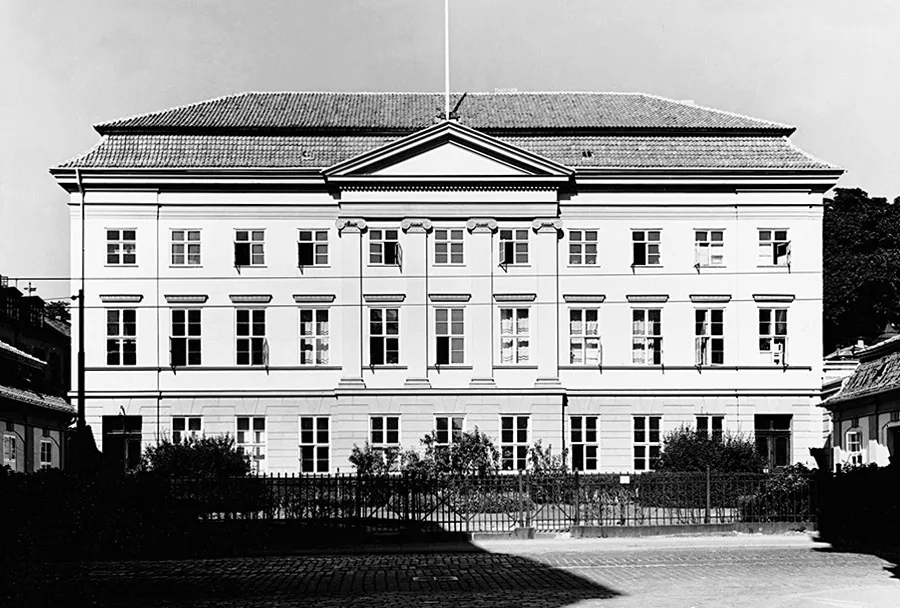
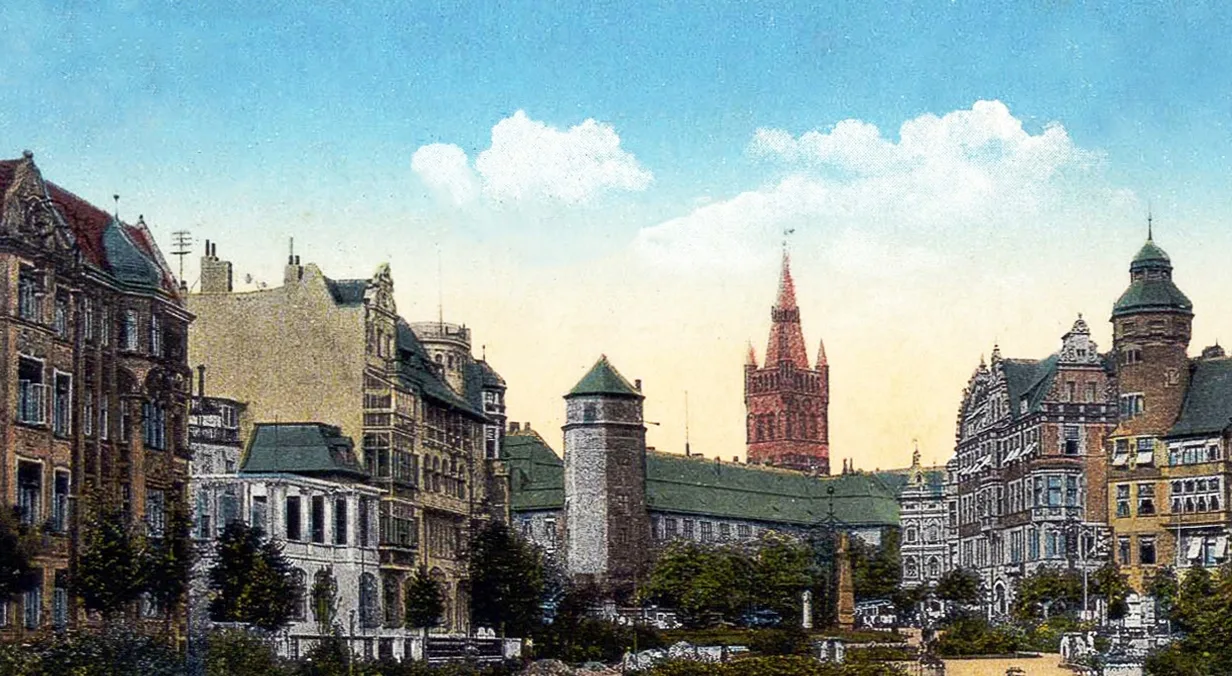
The collection being assembled by local amateur archaeologists was first kept in the university library at Königstraße 65/67 (pictured above; the site is now occupied by an utterly nondescript building, No. 37–41 Frunze Street).
It was here, in 1876 (according to some sources in 1878), that the East Prussian Provincial Museum opened on the basis of the Physical-Economic Society. Its director was Otto Tischler, one of the leading German historians, regarded as the founder of Prussian archaeology as a science, who was at the same time librarian and curator of the Physical-Economic Society's collection. He carried out his own excavations and created a valuable chronological framework based on material from the Dollkeim cemetery (Kovrovo, Zelenogradsk District). A report on the results of his research was published in the museum's first catalogue, issued in 1879. To this day, European archaeology rests on a chronological system created, in essence, by an amateur archaeologist. The founder of the Prussian school of archaeology, Tischler, like his colleagues, never studied the discipline.
In 1879, at the end of the excavation season, Otto Tischler organised an exhibition of his archaeological finds at the Hotel de Prusse in Königsberg — at that time the society did not yet have permanent premises of its own. The exhibition was visited by none other than Crown Prince Friedrich Wilhelm, who later became King of Prussia and German Kaiser (Emperor) under the name Friedrich III.
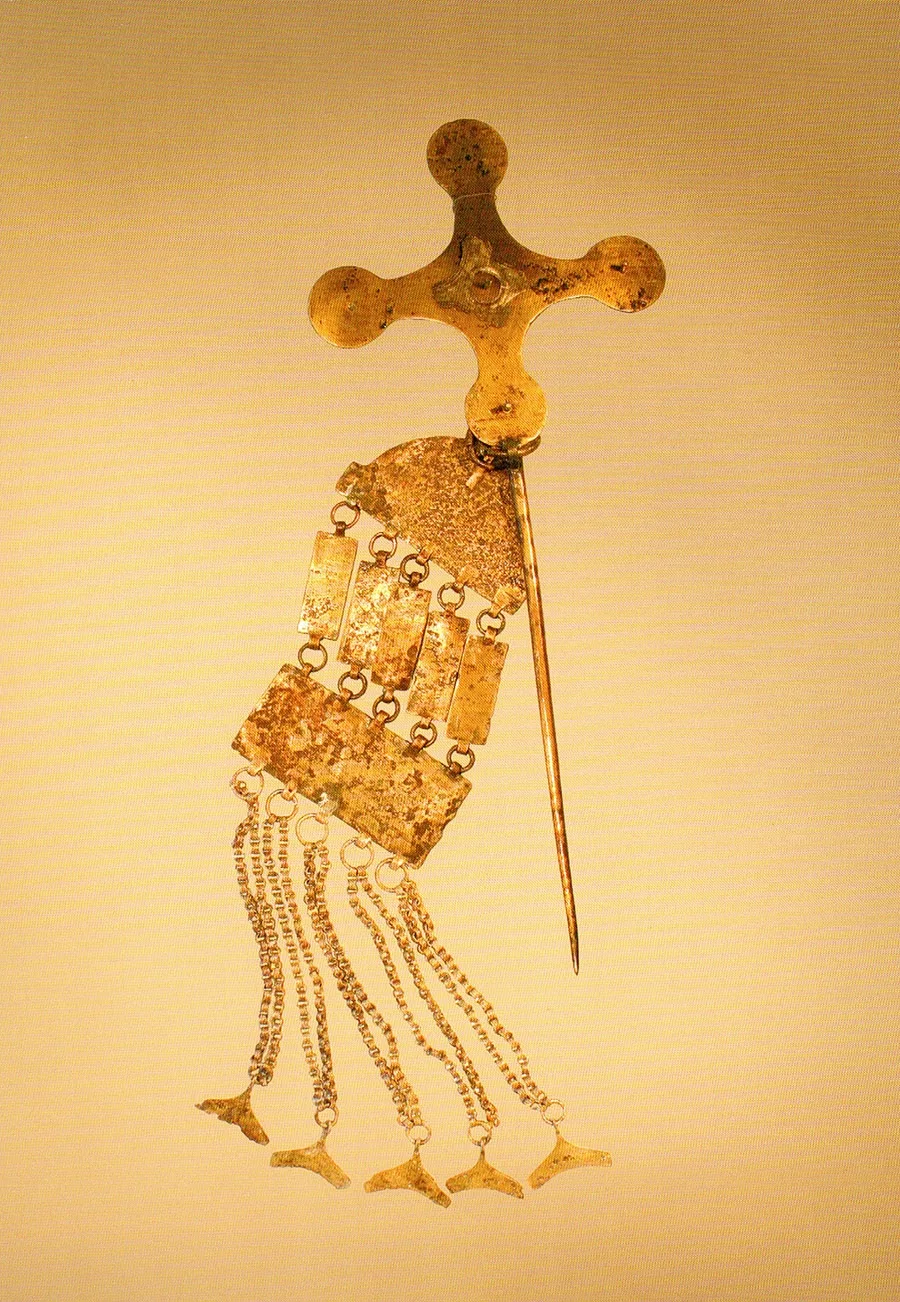
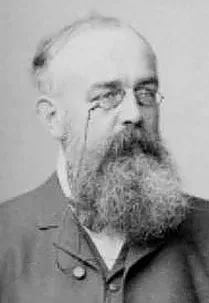
Otto Tischler
(1843, Breslau – 1891, Königsberg)
A German archaeologist and the founder of Prussian archaeology and of the Prussian school of archaeology, Otto Tischler studied chemistry, mathematics and physics at the universities of Königsberg and Heidelberg. After taking part in the Austro-Prussian-Italian and Franco-Prussian wars, he became fascinated by Prussian antiquities and devoted almost his entire life to this passion — archaeology and prehistoric research — carrying out numerous excavations in East Prussia.
In 1865 he joined the Physical-Economic Society founded in Königsberg; from 1869 he ran its library and later administered its archaeological collection. In 1880 he received the degree of Doctor of Philosophy from the University of Leipzig. He was an honorary member of the Netherlands Society of Anthropology and Archaeology and a member of the Anthropological Society in Vienna, the Berlin Society for Anthropology, Ethnology and Prehistory, and the German Academy of Natural Scientists Leopoldina.
The heir to the throne's visit proved very useful. The future monarch was so impressed that in 1881 he allocated five rooms in the north wing of Königsberg Castle for the museum's exhibits and handed over to the museum for safekeeping the collection of local antiquities from the Royal State Archives.
That same year, a museum unofficially known as the "Prussia" opened in the Royal Castle. Moreover, until the death of Friedrich III, money flowed steadily into the society's coffers, which made it possible, among other things, to continue publishing the journal that covered the Society's activities and popularised history and archaeology.
The "Prussia" exhibition was constantly growing, thanks in part to private collectors who willingly supported the museum by donating antiquities from their own collections. The Physical-Economic Society also shared its accumulated collection of artefacts, handing over to the museum almost all its rare books. There were so many of them that separate premises had to be found for the library, whose holdings by the beginning of the 20th century amounted to almost 5,000 volumes.
With such an abundance and variety of exhibits, the museum became enormously popular not only in the East Prussian province but far beyond it. In 1903 it recorded what was then a record number of visitors for an institution of its kind — 12,503. Many prominent European scholars visited it and wrote their scholarly works on the basis of its materials, among them Gustaf Kossinna, professor of German archaeology at the University of Berlin, prehistorian and founder of the "settlement archaeology" method; Nils Åberg, Swedish archaeologist, professor at Stockholm University and co-author of the typological method in archaeology; Martin Jahn, German prehistorian, professor of prehistory at the Martin Luther University of Halle-Wittenberg and director of the State Museum of Prehistory in Halle; and many others.
Rest Is but a Dream
Between 1881 and 1923 the collection changed its address several times — partly because it kept growing. From 1881 the museum and its library were housed in the north wing of Königsberg Castle. In 1904 it returned to Königstraße 65/67. In 1905 the prehistoric collection of the East Prussian Provincial Museum was transferred to the Prussia Museum through the mediation of the provincial government. In 1914, because of the outbreak of the First World War, the museum was closed to visitors for almost two years. In 1923 it moved to the third floor of the south wing of Königsberg Castle. Four departments were created here: prehistoric, ethnographic, and church art of the Teutonic Order period, while the Moscovite Hall housed the "Hall of the Banners of the Regiments That Fought at the Battle of Tannenberg", which in 1924 was augmented with a collection of exhibits from the Municipal Art Museum. In July of that year a new museum display was opened which, as Vladimir Kulakov writes in his book "The History of the Prussia Museum", "occupied the entire complex of the western part of the quadrangle formed by the castle buildings".
In 1925, owing to serious economic difficulties, the Prussia Society could no longer maintain the museum and was forced to hand it over to the jurisdiction of the provincial government, which did not have the best effect on the growth of the museum's collection during that period. The museum then officially became the Provincial Museum of Regional Studies (Landeskundliches Provinzialmuseum). Outside the province, however, people continued to call it nothing other than "the Prussia Collection".
Königsberg Castle housed the administration of the East Prussian museums and the Prussia Museum; from 1921 the Municipal Art Collections moved into the south-eastern part of the castle, and from 1942 to February 1944 it also held the Amber Room.
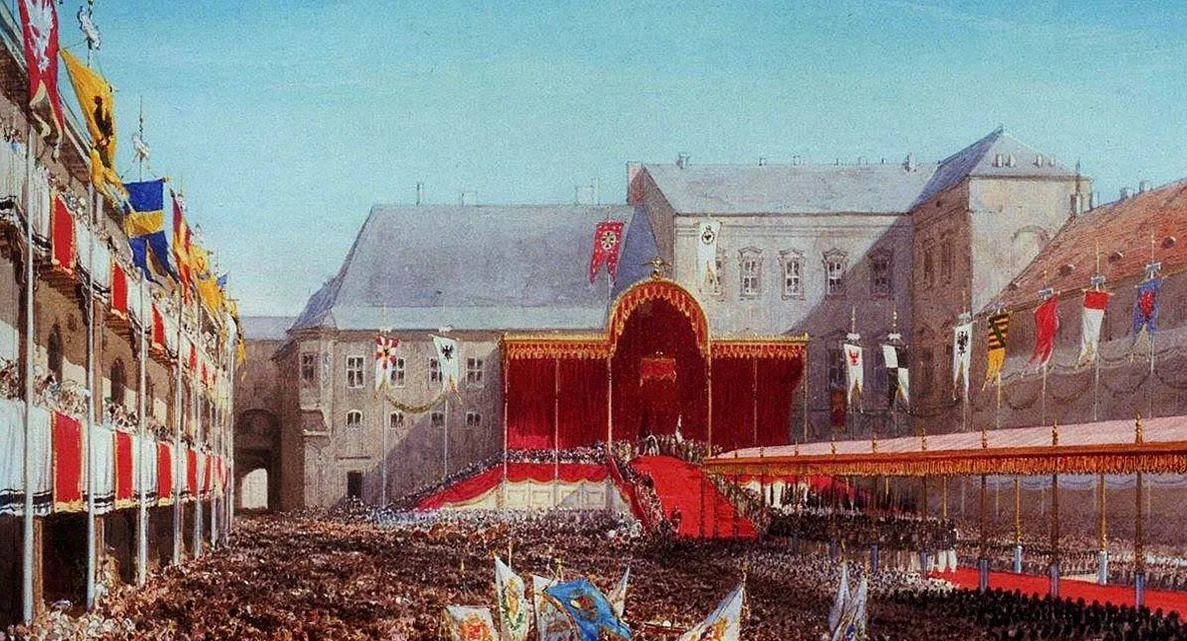
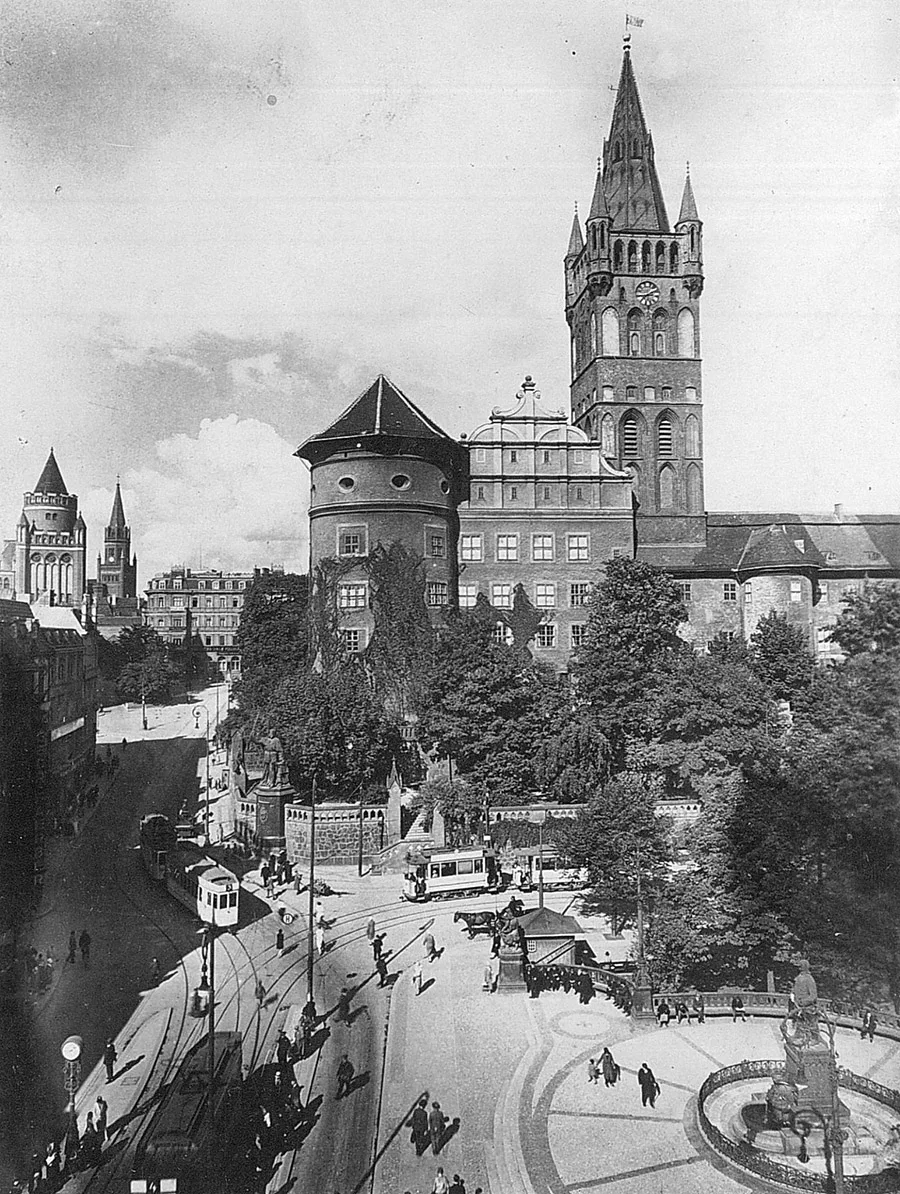 Königsberg Castle in the early 20th century.
In the 1930s the Prussia Society came under the influence of the ethnic concept then popular in German archaeology, promoted by the German archaeologist and folklorist Wilhelm Gaerte, who was also director of the museum from 1922 and chairman of the Prussia Society from 1926. He became famous for publishing in Königsberg in 1929 the first richly illustrated popular-science book on Prussian antiquities, Urgeschichte Ostpreussens (The Prehistory of East Prussia).
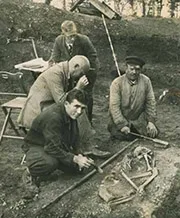
Wilhelm Gaerte
(1890, Eydtkuhnen – 1958, Hanover)
Wilhelm Gaerte was a German archaeologist and folklorist. In his day he was regarded as the foremost expert on the prehistory of East Prussia. From 1909 he studied classical archaeology, philology and folklore at the University of Königsberg. In 1914 he received his doctorate. In 1925 he took over as director of the Prussia Museum, turning it into the leading regional museum of the eastern part of the German Reich.
Because of his limited willingness to cooperate and his "unclear relations with the Poles in Masuria", he was expelled from the German Centre Party by the National Socialists in 1938. After fleeing East Prussia in 1945, he settled in Lower Saxony, in Hanover.
To this day it serves archaeologists around the world, including Russian ones, as a treasure trove of information about finds made in the province in the 19th and early 20th centuries. During Gaerte's directorship archaeological research intensified, thanks to which the museum's collection began to grow again.
After the Nazis came to power in Germany, the scholarly work of the Prussia Museum practically ceased. The new regime demanded that history be presented to the people in line with its ideology and help justify misanthropic ideas of racial superiority.
As early as 1930, speaking at a congress of archaeologists in Königsberg, Gustaf Kossinna called for history to be interpreted in such a way as to explain the inevitability of the arrival of German conquerors in Prussia in the 13th century.
On 10 December 1934 the Prussia Society ceased to exist independently and, as part of its "alignment with the official ideology", was incorporated into the Reich Association for German Prehistory, headed by the same Wilhelm Gaerte.
In 1936, owing to a lack of space in Königsberg Castle, the collection was divided. The prehistoric department moved to the building of the Three Crowns Masonic lodge at Hintertragheim 31 (now 2 Sergeyeva Street). However, the building proved too cramped for its archaeological collection (more precisely, for the so-called study collection, previously kept in the museum's storerooms) and for the library, which had also moved there. The displays of the prehistoric department remained in the halls of the castle's south wing.
On 1 June 1938 the prehistoric department was removed from museum jurisdiction, reorganised and renamed the "State Office for Prehistory in Königsberg"; it was headed by the archaeologist Wolfgang La Baume, state curator of the regional museums.
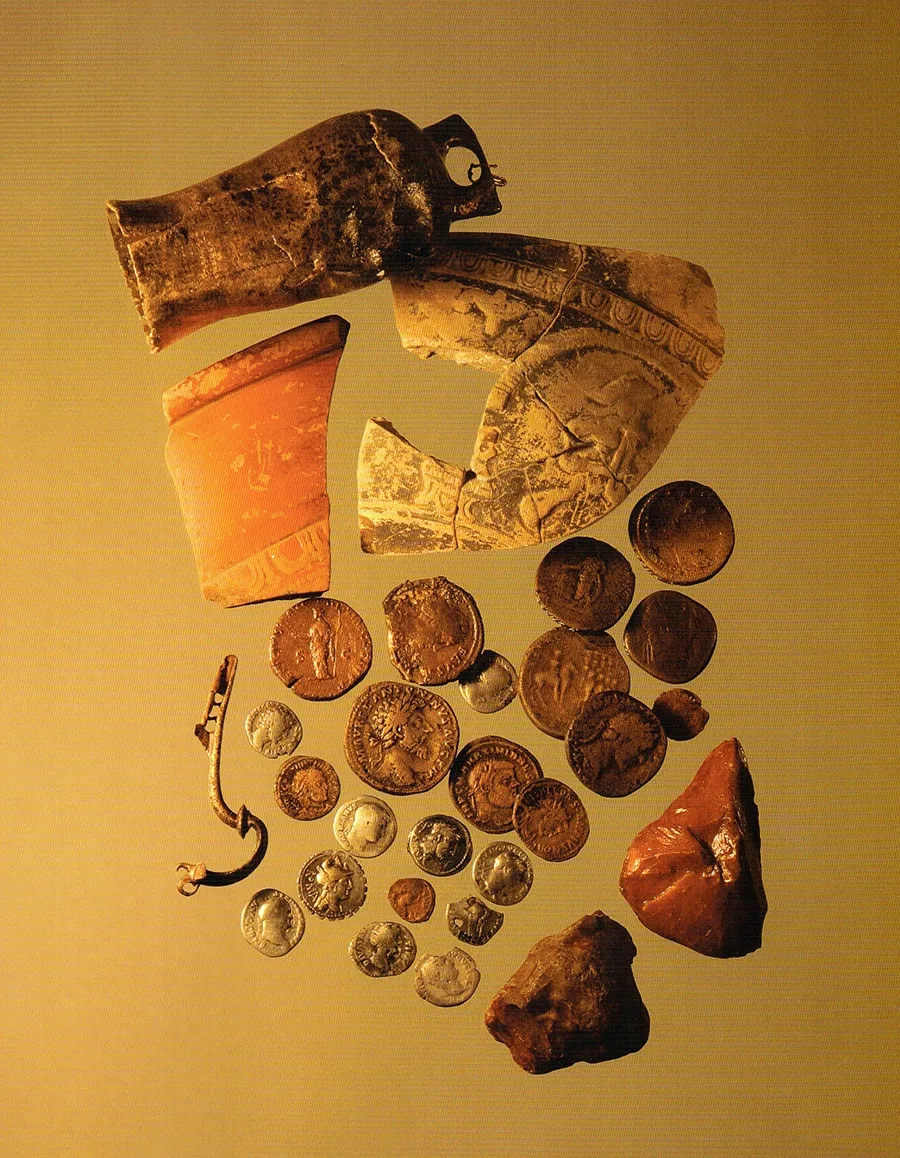
Before the Second World War the Prussia collection numbered more than 400,000 exhibits.
Although scholarly activity was practically curtailed in this period, exhibitions were nevertheless strongly encouraged by the Gauleiter of East Prussia, Erich Koch. In 1937, for example, he helped organise in the west wing of the castle a presentation of the results of the latest excavations by German and Swedish archaeologists at the Viking cemetery in Wiskiauten (now Mokhovoye, Zelenogradsk District, Kaliningrad Region).
With the turning of the tide in the war, in 1943, the "Prussia" collection was split up once again. Because of the danger of British air raids, most of the study collection — mainly metal objects — and the entire expedition archive were evacuated to Carlshof near Rastenburg (now Karolewo, Warmian-Masurian Voivodeship, Poland). For everything else, as would later emerge, there were also plans, not all of which were destined to come true...
The Hard Years of War
In 1944 the last exhibition was prepared on the second floor of the south wing — "The Horse in the Prehistory of East Prussia". It was curated by the same La Baume, who was, among other things, a specialist in Baltic horse gear. Alas, according to the curator himself, the exhibits on display were completely destroyed in a fire that broke out after a British bomb hit the castle. As a result of that bombing of central Königsberg and the fire in the castle on 30 August 1944, the Moscovite Hall suffered particularly badly. Only some of the metal and bone objects kept there survived; in 1951 they were found by Kaliningrad's first architect, Arseny Maksimov, who later sold them to the local museum of regional history. He searched for the exhibits together with a certain citizen (presumably a foreigner) named Neumann.
Although the Moscovite Hall had held, among other things, many objects of precious metals before the bombing, only iron and bone items returned to the museum...
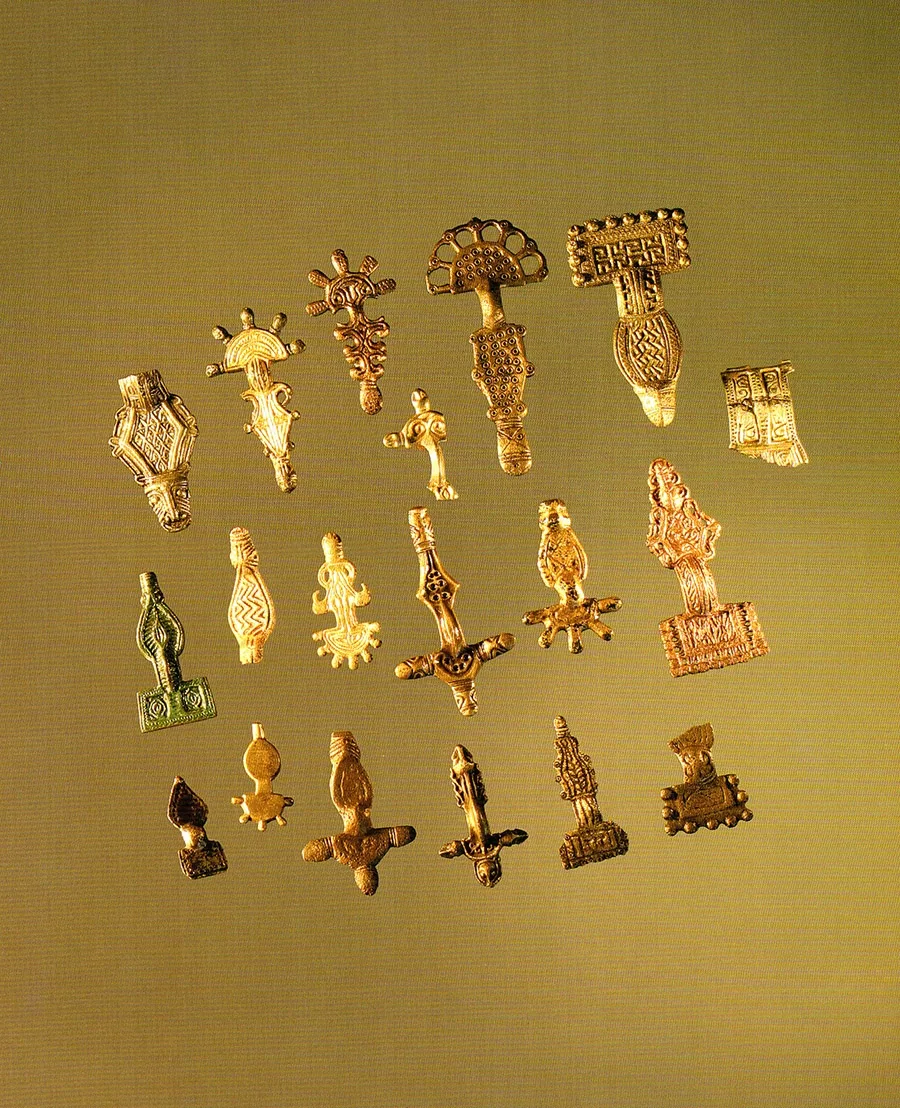
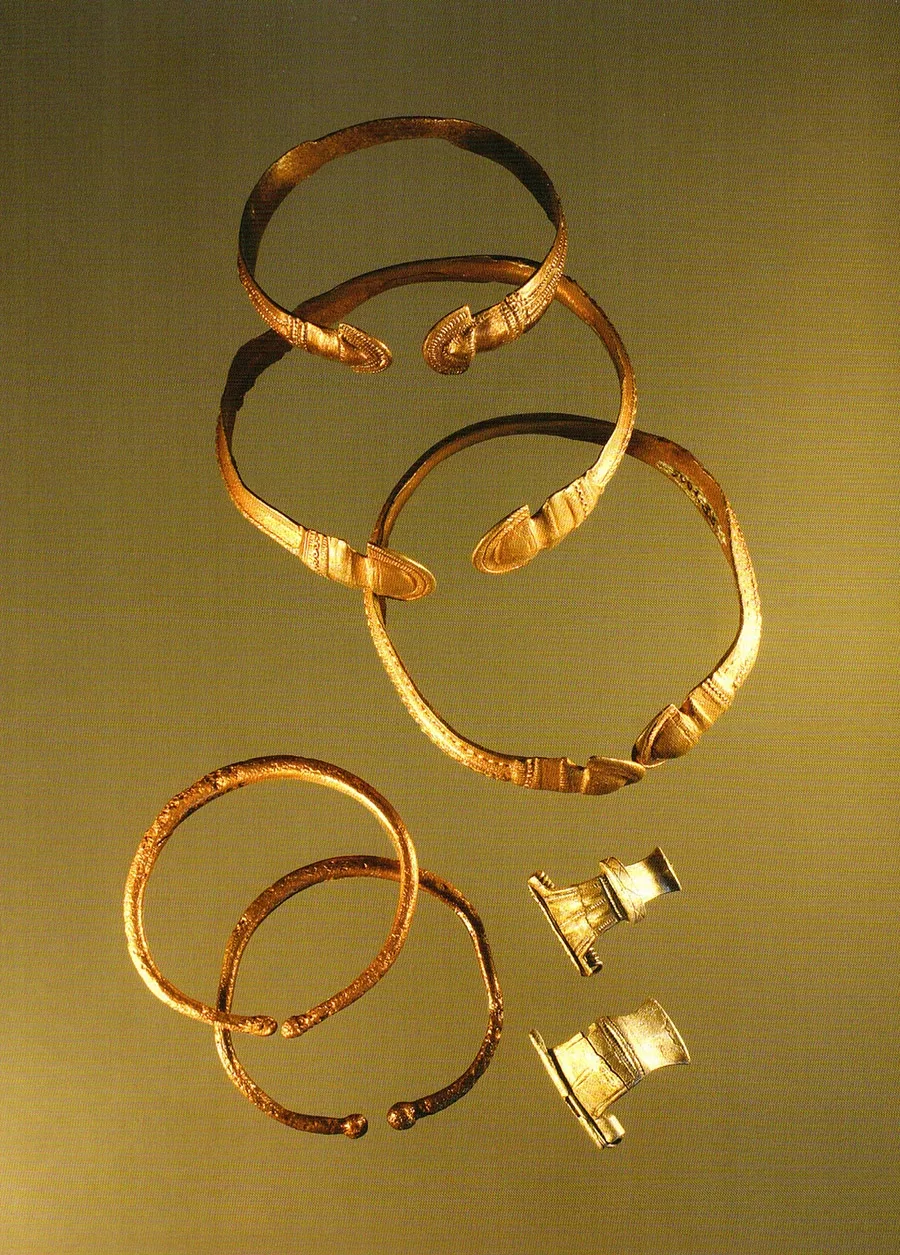
Unfortunately, the rare exhibits from the south wing of the Royal Castle were, alas, never evacuated. Many artefacts were found in the summer of 1945 by a team led by the Soviet archaeologist Professor Alexander Yakovlevich Bryusov (the brother of the poet Valery Bryusov). The museum valuables collected were packed into 30 ammunition boxes and, under guard by soldiers of the Königsberg commandant's office, sent to Moscow, to the Committee for Cultural Institutions under the Council of Ministers of the RSFSR. On the way, however, they mysteriously vanished without a trace, never reaching the Soviet capital.
In the late 1950s, officers of the Soviet KGB intercepted a letter from Wolfgang La Baume, former curator of the "Prussia" collection, who was then living in West Germany. He wrote to his acquaintance, the Polish professor Jerzy Antoniewicz, that in April '45 the "Prussia" exhibits had been safe and sound and were in the provincial capital before the Soviet troops arrived. In the letter he mentioned the place name Quednau and Königsberg's Fort No. 3. It was there, according to him, that part of the treasures of the legendary collection had been hidden. This indicated that the Nazis had not managed to remove all the museum's exhibits from Königsberg. On the basis of this information the Soviet government set up a commission to search for lost cultural valuables and sent it on a secret mission to the former provincial capital, to Fort No. 3. Thus Case No. 13, classified "Top Secret", on the search for the Prussian treasures came into being. But the search proved fruitless. In a room measuring 3 x 5 m, only a heap of empty boxes was found. One can only assume that these were the very boxes that had disappeared on the way to Moscow. After the castle was destroyed, Case No. 13 was closed. The commission concluded that there were no treasures in Fort No. 3. Even supposing they had been there, they had simply been plundered by the "new settlers" in the course of 1945.
Around the turn of 1944–1945, two wagons of museum property were sent at different times to Western Pomerania, to the Broock estate near Demmin. Only one of them, however, reached its destination; its contents were left unlocked in the palace attic, freely accessible to the refugees sheltering on the ground floor. The valuable cargo from the second wagon, which because of a technical fault never reached the Broock estate, was unloaded in an empty barber's shop in Demmin. The subsequent fate of this part of the "Prussia" is unknown.
In April 1946 Lothar Diemer, a merchant and later director of the District Museum of Local History in Demmin, noticed children playing with stone axes near the manor house.
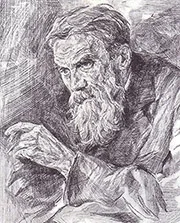
Adalbert Bezzenberger
(1851, Kassel – 1922, Königsberg)
A German philologist and archaeologist, lecturer at the universities of Göttingen and Königsberg, and founder of Baltic studies. From 1894 he was a corresponding member of the Russian Academy of Sciences.
He was the son of the Germanist Heinrich Bezzenberger. After graduating from the gymnasium in Kassel in 1869, he followed in his father's footsteps and studied German philology at the University of Göttingen. Under the influence of Theodor Benfey, however, he abandoned it and took up comparative historical linguistics. In 1872 he defended a dissertation in comparative linguistics. In 1873 he moved to the University of Munich, where he became interested in Indo-European studies.
In 1874 Bezzenberger defended a dissertation in Göttingen and obtained the title of Privatdozent. In 1879 he became one of the founders of the Lithuanian Literary Society and a full professor and head of the chair of Sanskrit at the University of Königsberg. Here he laid the foundations of Baltic studies and took up Baltic archaeology. In 1884 he was elected a member of the Göttingen Academy of Sciences. In the 1890–91 academic year Bezzenberger became vice-rector of the University of Königsberg, and in the 1919–20 and 1920–21 academic years its rector.
A street in Königsberg was named in honour of Adalbert Bezzenberger.
He wrote a detailed report on the looting and ruin of the archaeological finds: "I found parts of the Prussia collection [...] in one of the rooms of the manor in an unbelievably neglected state [...] It appears that the collection suffered various kinds of damage. It is evident that gold and silver were systematically searched for here, because I discovered numerous hastily torn-open packages…" All the boxes had been unpacked, and practically all the paper was crumpled or torn to shreds. Large charts were ripped. And so it was everywhere. Diemer assumed that the documents had been used to light the kitchen fire.
The merchant rescued the remains of the Prussia collection and kept them in his warehouse until 1949, from where they (125 wooden crates) were taken to East Berlin, accompanied by Wolfgang La Baume and Wilhelm Unverzagt, and placed at the disposal of the Academy of Sciences. But misfortune befell the "Prussia" there too: owing to improper storage and burst water pipes, the museum exhibits suffered even greater damage.
For some reason, the fate of the Prussia collection hidden away in East Berlin was kept secret, and so for a long time it was considered lost. Only in 1990, after almost 40 years of silence, were 80,000 documents and 50,000 objects (mainly of iron, bronze, silver, stone, glass, textile and leather) handed over to the Museum of Ancient History in East Berlin. Later, in 1992, they went to the State Museum of Prehistory and Early History (Charlottenburg Palace), where they are kept to this day.
The Russian historian and archaeologist Vladimir Kulakov writes in his book "The History of the Prussia Museum": "Part of the collections ... was later discovered by Red Army soldiers on the territory of the former Allenstein district (now Olsztyn, Warmian-Masurian Voivodeship, Poland) … These artefacts evidently correspond to the first consignment of the main part of the Prussia Museum's holdings, evacuated because of the danger of bombing. According to V. La Baume's written testimony, these materials were sent in 1943 from Königsberg to Rastenburg/Carlshof (Kętrzyn/Karolewo, woj.Warmińsko-Mazurskie Polski) … where they were partly looted, reportedly by soldiers … On V. La Baume's advice, the Polish archaeologist Jerzy Antoniewicz sent these finds in 1959–1960 to the Museum of Warmia and Masuria in Olsztyn."
The Treasure Fort
When it became clear that the Red Army was about to enter Königsberg, the largest and most valuable part of the Prussia collection, which was on the ground floor of the south wing of Königsberg Castle, was hidden. Where, Kaliningrad's archaeologists did not know. For a long time it was believed to have perished in the fire in the castle after the bombing. Its subsequent fate, however, turned out to be somewhat more complicated.
The first settlers appeared in Soviet Königsberg in the Severnaya Gora area in 1945. They moved into the old houses. They got rid of the household belongings left by the previous occupants, not wanting to keep anything "hostile". The new masters of local life created a veritable rubbish dump by Fort No. 3 "König Friedrich III", where "black" diggers soon appeared, swooping like crows on the mountains of discarded belongings. They were hardly interested in the history of the former province. They were looking for valuables, weapons, metal — anything they could make money from. Fort No. 3 itself, however, remained out of their reach, because it was occupied by the army.
Meanwhile, residents of Kaliningrad came across some exhibits by chance. Rumour had it that even golden trinkets turned up. They never made it to the museum, though. Boys made fishing spinners out of the silver coins or simply kept them as souvenirs.
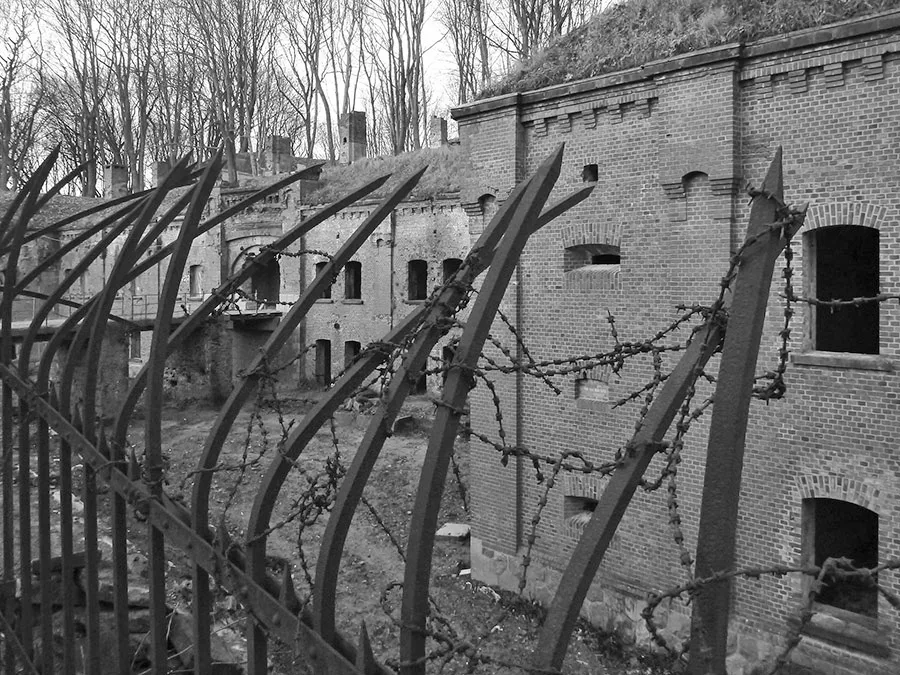 Fort No. 3 "König Friedrich III".
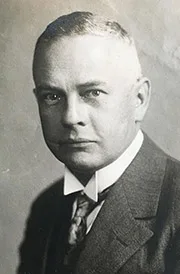
Wolfgang La Baume
(1885, Wurzen – 1971, Ludwigshafen)
The German prehistorian Wolfgang La Baume studied natural sciences in Jena and Berlin in 1903–1907. In 1908 he received his doctorate and worked as an assistant at the Natural History Museum. From 1911 he was curator of the West Prussian Provincial Museum in Danzig, and in 1923 he became its director. That same year La Baume founded the Danzig Society for German Prehistory. In 1924 he was given the title of professor of prehistory and early history at the Danzig Technical Institute. From 1928 to 1933 he headed the chair of prehistory and early history at the University of Königsberg. In addition to his scholarly work, La Baume was actively engaged in archaeological excavations in the lower Vistula, whose results formed the basis of his works on the prehistory of the region. In 1938 he was appointed head of the "State Office for Prehistory in Königsberg" and state curator of the province's regional museums. After his expulsion in 1945, La Baume worked at the Museum of Native Antiquities at Gottorf Castle in Schleswig, and from 1950 he headed the department of prehistory and early history of the J. G. Herder Research Council in Marburg. His son Peter La Baume (1916–1977) was also a prehistorian.
The first investigations in Fort No. 3 began in 1967, but under the escort of an officer — access to the restricted site, then used as military depots until the mid-1990s, was limited. A cursory inspection of the fort's rooms produced no results. In 1981 the film "Order: Cross the Border" was shot here, and before filming the accessible rooms of the fort were thoroughly cleaned. The museum treasures of the "Prussia" may have been carted off to the dump along with the rubbish. After the military left, in 1999, the structure passed into private hands. Once again there was cleaning and rubbish removal, with all the consequences that entailed. By this time the scholarly community considered the collection lost.
A little later that same year, 1999, however, antique objects began to surface at antique markets in Kaliningrad, Moscow and St Petersburg, some of them still bearing Tischler's famous markings. Specialists at the Kaliningrad Museum of History and Art assumed that these were items from the Prussia collection — and they were not mistaken. Criminal investigation officers brought into the case launched an inquiry that proved highly productive. The owner of one antique shop brought to the museum several items he had taken on consignment the day before. And the officers who went after the sellers found far more in their possession — about three thousand archaeological finds. Many were badly damaged, and some survived only as fragments.
Anatoly Valuev and Konstantin Skvortsov of the Kaliningrad Regional Museum of History and Art and their colleagues examined the fort thoroughly and did, after all, find traces of the famous archaeological collection there.
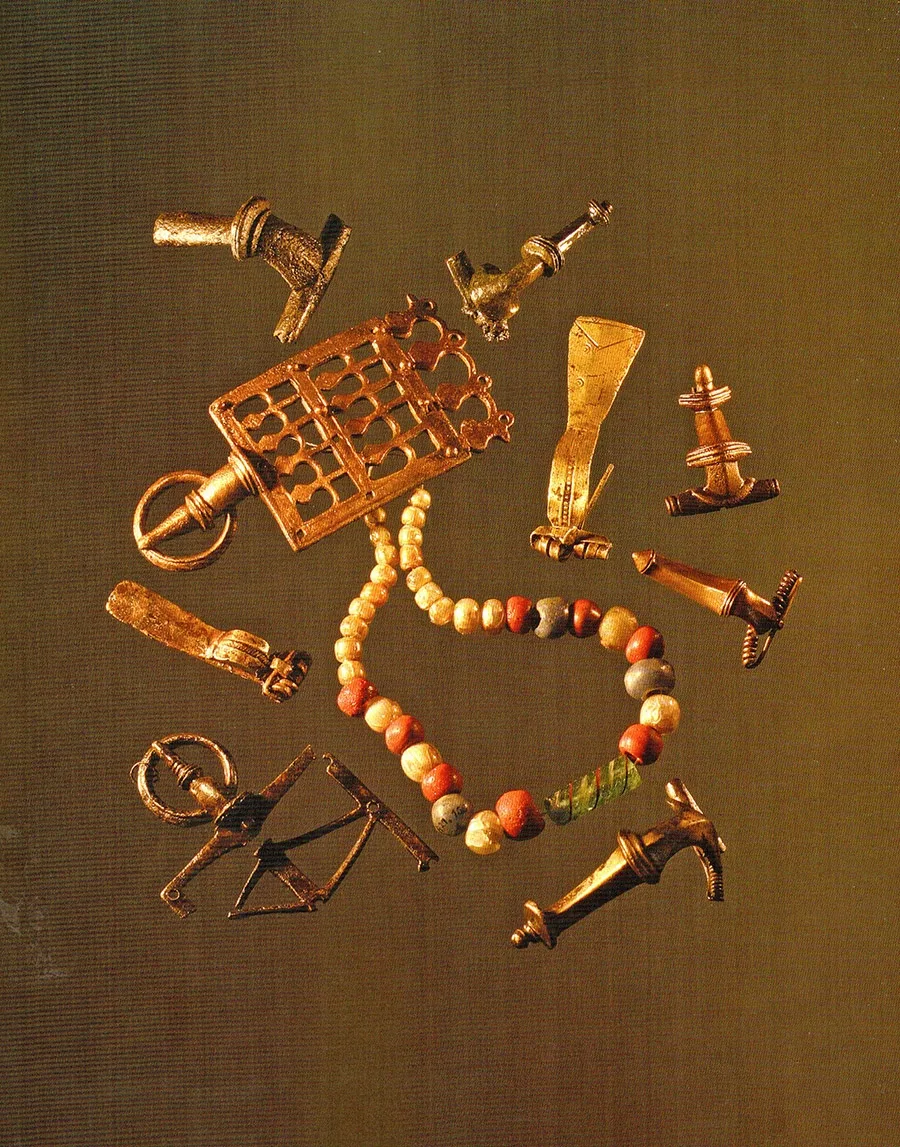
Kaliningrad's city hall allocated them 10,000 roubles for the search — a considerable sum at the time. The money did not last long, but even in a month of work in incredibly difficult conditions, in the cold, Valuev's team meticulously examined every centimetre, sifted sand and rubbish in search of even the tiniest particles, and rescued almost 16,000 archaeological objects. As reported on the website of the Society for the History and Regional Studies of East and West Prussia, these were objects dating from the Stone Age to the Middle Ages — fibulae, amber, silver coins, sword blades, stone tools, jewellery of gold, silver and bronze… It was assumed that the monument to Immanuel Kant had also been hidden there. According to eyewitnesses, bronze statues were indeed kept in Fort No. 3, but which ones is unknown. They had been sawn into pieces, possibly to be sold for scrap. Yet the archaeologists did not find a single fragment. The hidden "Prussia" had been mercilessly plundered, sold off and scattered among private collections. All that remained in the ground were fragments of no interest to the looters.
In 2000 the collection grew by another 10,000 exhibits. They too were found in the rubbish used to fill pits on the grounds of the fort.
Razed to the Ground, and Then
For lack of money, the archaeologists had to wind down work in the fort and turn to restoring the sensational finds. So, to save the famous collection and help their Kaliningrad colleagues conserve and catalogue its exhibits, the Hamburg-based ZEIT-Stiftung Ebelin und Gerd Bucerius (the Ebelin and Gerd Bucerius Foundation of the newspaper ZEIT) was brought in. Without any bureaucratic delays, it provided financial assistance and concluded a cooperation agreement with the Kaliningrad Regional Museum of History and Art, supplying equipment and materials for a restoration workshop. In addition, the foundation invited the museum's researchers, the archaeologists Anatoly Valuev and Konstantin Skvortsov, to Germany for training at major museums and restoration workshops. The Institute of Archaeology of the Russian Academy of Sciences, represented by Vladimir Kulakov, a corresponding member of the German Archaeological Institute, also joined the work of identifying the Prussian artefacts. Today the restored treasures form part of the permanent exhibition of the Kaliningrad Regional Museum of History and Art.
Many valuable exhibits of silver, bronze and glass were also found in the late 1960s in the ruins of the south wing of Königsberg Castle, before it was blown up. All of them likewise went into the holdings of the Museum of Regional History (now the Kaliningrad Regional Museum of History and Art).
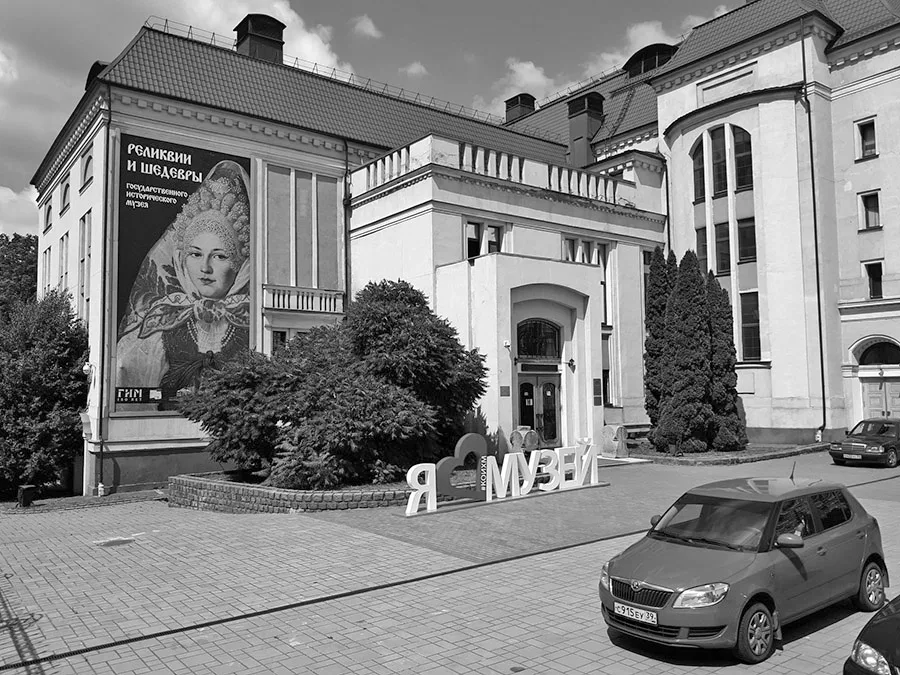 The Kaliningrad Regional Museum of History and Art.
Among the finds were 15 inventory books of the "Prussia". Since 2007, as reported on the Prussia Society's website, with the assistance of the Polish State Archives at a restoration workshop in Olsztyn, it has been possible to restore 1,584 pages that were in a catastrophic state and thus preserve them for scholarly research.
By 1970 the ruins of Königsberg Castle, together with the excavations that had begun there, were wiped off the face of the earth. Such was the "wise" decision of the party authorities, in keeping with the cultural and ideological policy of those years. Monuments that were sometimes a unique source of knowledge about the region's history and culture were destroyed with a stroke of the pen. This policy meant that for decades thousands of extremely valuable historical and artistic objects, including numerous pre-war museum collections, were removed from the Kaliningrad Region.
The mindset of both the population of Soviet Kaliningrad and the authorities had been shaped by the war that had only just ended, when any hint of preserving East Prussian traditions or caring for monuments was considered, if not treason, then a sacrilege against the memory of the millions of victims of German Nazism. "Our dreams and wishes are coming true, / The days are gathering their speed. / Our buildings rise on every side — / The Russian man is building them!" wrote the post-war Kaliningrad poet Sloykov in 1947.
In the post-war years two forces clashed on the ruins of the old world. On the passive side were the surviving cultural and material treasures of the former German province; the active side of the conflict was its new rulers. Their "methods" doomed the remnants of the East Prussian heritage to total destruction. Fortunately, thanks to representatives of the intelligentsia, the "general line of the party" — to knock the "Prussian spirit" out of the popular consciousness — was never fully carried out. Among them were schoolteachers, university lecturers and museum workers.
All those who had come to love this land sincerely and sought to know its history better. And who understood that the absence of historical memory severs a person's bond with the land on which he lives.
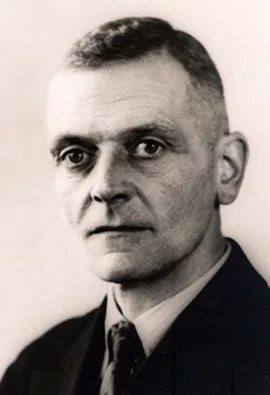
Carl Engel
(1895, Magdeburg – 1947, Fünfeichen camp (Pyatidubka) near Neubrandenburg)
The son of a merchant and a Protestant, Carl Friedrich Wilhelm Engel attended the gymnasium in Magdeburg. From 1913 he studied philosophy and natural sciences in Munich. In 1914 he went to the front as a volunteer and was wounded. Among his decorations was the Iron Cross 2nd Class.
In 1918 he was taken prisoner by the British. After his release he worked for a book publisher. From 1925 he regularly published articles on the archaeological monuments of Central Germany. In October 1927 Engel took a job at the Magdeburg Museum of Natural History and Regional Studies while continuing his studies at the University of Tübingen, and a year later he defended a doctoral dissertation on Stone Age archaeology.
In 1929 Engel moved to the Prussia Museum in Königsberg as an assistant. In East Prussia he took part in several archaeological expeditions, including those of 1929–1931 to the Linkuhnen cemetery near Tilsit. In 1937, together with Wolfgang La Baume, he published an atlas of finds from the southern Baltic states, Kulturen und Völker der Frühzeit im Preußenlande (Cultures and Peoples of the Early Period in Prussia).
At the same time, from 1934 Engel taught at the Herder Institute in Riga, where he obtained the title of professor, and later headed the university in Greifswald while continuing to direct the Riga institution.
At the very start of the war against the USSR, in June 1941, Engel was appointed head of prehistoric research in the Reichskommissariat Ostland and assigned to Department IIa for Science and Culture of the Reichskommissariat, which covered the Baltic states and Belarus. Here he created a structure of state museums based on the Prussian model. At the same time he supported the excavations of Reichsleiter Rosenberg's task force aimed at obtaining "ideologically useful results" about Germanic settlements and rulers in early medieval Russia.
A committed advocate of Kossinna's "settlement archaeology", Carl Engel tried to interpret "clearly defined archaeological cultural provinces" in ethnic and historical terms. On this basis he constructed a spatial division of East Prussia, which in the Roman period consisted of several cultural groups, that matched the tribal territories of the early Middle Ages exactly. Engel considered his main task to be writing a large monograph on the prehistory and early history of the East Prussian province, but the work remained unfinished.
Research on archaeological sites in the Kaliningrad Region began in 1947, but it was seasonal and short-lived. Funding for the development of a local school of archaeology was meagre. In the 1990s the situation changed a little. The Kaliningrad Regional Museum of History and Art moved into a new building (the former Stadthalle on the shore of the Lower Pond — before the Second World War, the Castle Pond) and renewed its displays.
"Whereas before 1945 the archaeological collections of the Prussia Museum in the Royal Castle alone numbered more than 240,000 items, today the archaeological holdings of the Kaliningrad Regional Museum of History and Art comprise only about 10,000 items," writes Anatoly Valuev, deputy director of the museum and honorary member of the German Archaeological Institute, in his publication "The Museum's Archaeological Exhibition in the System of Supplementary Education and Upbringing of Young People". "In addition, substantial archaeological collections existed in other Königsberg museums, in library collections, in higher and secondary educational institutions, and in a wide network of provincial museums."
In 2016 Sergey Yakimov, director of the Kaliningrad Regional Museum of History and Art, and Professor Matthias Wemhoff, director of the Museum of Prehistory and Early History in Berlin, signed a cooperation agreement within the framework of the international research project "The Territory of Former East Prussia in the Roman Period and the Migration Period. Finds of the 1st–7th Centuries AD from the Prussia Museum in Königsberg".
Through joint efforts, a scholarly card index of the Prussia collection artefacts held by the Kaliningrad Regional Museum of History and Art was compiled, and the finds of the 1st–7th centuries AD were digitised. The project's database is constantly expanding.
Finally, in 2021 the "Digital Prussia Museum" went online, as reported on the official website of the Kaliningrad museum: "The virtual catalogue was created by the Museum of Prehistory and Early History in Berlin as part of the research project 'Continuity of Research and Research on Continuity', carried out with financial support from the German Research Foundation (DFG). The virtual catalogue reunites online the collection of antiquities that was considered irretrievably lost during the Second World War and makes this unique collection accessible to all users."
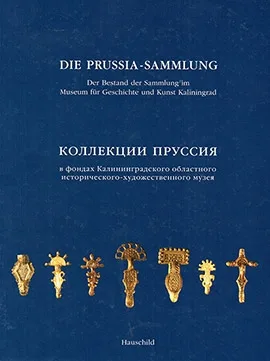
Colour illustrations are from the book "The Prussia Collections in the Holdings of the Kaliningrad Regional Museum of History and Art".
Sources
Heidemarie Eilbracht, Norbert Goßler, Timo Ibsen, Christoph Jahn und Jaroslaw Prassolow, letzte Änderung am 19.05.2013. Vom Rand in die Mitte — neue archäologischer Forschungen im ehemaligen Ostpreußen, 2014.
Christoph Jahn, Heino Neumayer, Izabela Szter. Die Odyssee der Prussia-Sammlung an das Museum für Vor- und Frühgeschichte Berlin und ihre wissenschaftliche Rekonstruktion.
Christine Reich. Verloren geglaubte Geschichte — Die Prussia-Sammlung im Museum für Vor- und Frühgeschichte, Ostpr. Schriften des Archäologischen Landesmuseums 9, Schleswig 2009.
Кулаков В.И. История Mузея «Пруссия». г. Калининград 2011.
Гуревич Ф.Д. Древности северо-западных областей РСФСР в I тысячелетии н.э. Отдельный оттиск. Материалы и исследования по археологии СССР, №76. М.-Л.1960. С.328-452.
Флориан Феррбёф. Городские элиты Кёнигсберга: между традицией и обновлением (1815–1914).
Aleksandra Rzeszotarska-Nowakiewicz. Prussia-Museum w Krolewcu. (Музей «Пруссия» в Крулевце).
Войцех Новаковски. «Кёнигсбергская школа» археологии с ее начала и до 1945 года.
Timo Ibsen. 100 Jahre Sammeltaetigkeit — Die Prussia-Sammlungvon ihren Anfaengen bis zum 2. Weltkrieg (100-летняя деятельность по собиранию коллекции «Пруссия» с момента основания до Второй мировой войны).
Christoph Jahn und Izabela Szter. Kurze Entwicklungsgeschichte des Prussia-Museums in Königsberg
sowie zu Teilen der vor- und frühgeschichtliche Sammlung
des PRUSSIA-Museums im Museum für Vor- und Frühgeschichte, Berlin
Hans-Jörg Froese. Prussia: Eine legendäre Geschichte
Телеканал Культура. “Сокровища «Пруссии»"
* * *
In 2008 the Kaliningrad publishing house Zhivyom published "The History of Königsberg Castle" by the well-known Russian archaeologist Vladimir Kulakov, which contains an entire chapter devoted to the dramatic history of the famous collection of Prussian antiquities. We present it to you below. The full book is available for download at Prussia.Online.
The Fate of the Prussia Museum
In November 1844 an event of great importance for the cultural life of the Baltic region and Germany took place in Königsberg: the well-known art historian Professor Ernst August Hagen (1797–1880) and the archive councillor Friedrich Adolf Meckelburg, meeting with six of their colleagues at the Café National on the Paradeplatz, founded the Prussia Society for the Study of Antiquities. The goal of the Society's work, as defined by its founders, was "the search for and preservation of Prussian antiquities and objects of art of every kind". A year later the Prussia Society inherited part of the collection of archaeological finds previously in the care of the Physical-Economic Society, founded in Mohrungen (now Morąg, Warmian-Masurian Voivodeship, Poland). Thus began one of the largest collections in the countries of the Baltic Sea basin. The entire collection of archaeological finds of that Society, with the participation of its curator Otto Tischler, passed to the new museum in 1879.
In 1874 the East Prussian Provincial Museum was established in Königsberg on the basis of these museum collections. Its largest, prehistoric department (the future Prussia Museum) was headed, after the merger of the museum holdings, by the father of Prussian archaeology, Otto Tischler. The close alliance between this museum and the Prussia Society for the Study of Antiquities continued successfully. From 1878 to 1939 the Society's reports were published under the title "Prussia Bulletin" (Prussia-Berichte). Much space in its pages was devoted to analysing artefacts from the holdings of the East Prussian Provincial Museum. In 1879 the museum's first catalogue was published. On 6 September 1879 its halls were visited by Crown Prince Friedrich, who seven years later became Kaiser Friedrich III (1831–1888) and reigned for 99 days.
He examined the exhibits with great interest, among which pride of place went to the finds just unearthed by Otto Tischler's excavations at the flat-grave cemetery of Dollkeim (now the village of Kovrovo, Zelenogradsk District). The future heir to the imperial throne very much liked the order that reigned in the museum and the creative spirit that characterised the work of its staff.
The result of this favourable impression on so exalted a personage was the transfer, in September 1881, to the holdings of the Prussia Museum (as the museum came to be unofficially called) of a collection of local antiquities that had previously been kept in the Royal Archives of Königsberg.
In the 1920s the leadership of the Prussia Society for the Study of Antiquities (and, accordingly, the museum's management) was based at Königstraße 65/67 (now Frunze Street).
In the summer of 1936 the holdings of the Prussia Museum were moved to the building of the Three Crowns Lodge (Hintertragheim 31, near the Park Hotel building, now Sergeyeva Street). Soon afterwards, on 1 June 1938, the prehistoric department of the Prussia Museum became independent under the name "State Institution for Prehistory". It was headed by the then young Prussian archaeologist Wolfgang La Baume (evidently a descendant of French immigrants).
By 1944 the largest museum collection of antiquities in the Baltic region had been assembled in Königsberg Castle. The bulk of these rarities, numbering more than 240,000 items, consisted of the archaeological collections of the Prussia Museum (Prussia-Museum), officially housed in two wings of the castle from 27 November 1925. It was previously believed that up to 80% of this museum's materials were irretrievably lost at the end of the Second World War, inflicting irreparable damage on European culture. Time, however, has brought its own corrections. It turned out that the fate of the Prussian archaeological "Atlantis" is still not entirely clear.
The German archaeologist Christine Reich established that as early as 1943 part of the holdings and inventories of the "State Institution for Prehistory" had been moved for safekeeping to the Carlshof estate (now Karolewo, Warmian-Masurian Voivodeship, Poland).
In December 1944 – January 1945 two wagons of museum exhibits were sent by rail to the territory of present-day north-western Poland. These finds subsequently ended up at the Broock manor near the eastern German town of Demmin, where they lay safely until 1949. In these rescued crates, together with the finds, were archaeological field inventories, excavation plans and a collection of negatives.
In 1949 Wilhelm Unverzagt, director of the Museum of Prehistory and Early History, transported these finds and archival materials from Demmin to East Berlin and placed them at the disposal of the Academy of Sciences of the GDR, in whose custody all these treasures remained throughout the post-war period. The scholarly world of Europe and the USSR had no information about them. In 1994 all this wealth returned to the Museum of Prehistory and Early History at Charlottenburg Palace (Berlin).
In his letter, sent before the fall of Königsberg (Feldfpost Nr 09846) and partly published by Heinrich Lange, the well-known Prussian archaeologist W. La Baume lifts the veil of secrecy that shrouded the last days of the Prussia Museum. Another part of the Prussia Museum's holdings and the bulk of the finds from the museum's display (including gold and silver jewellery) were, after the destruction that befell the Castle on 30 August 1944, packed into 34 crates and taken to Fort No. 3 near the village of Quednau (the fort, named "König Friedrich III" in 1894, is now near the Severnaya Gora settlement). Some exhibits were transported to the fort still in their museum display cases. On 24 February 1945 the new museum storage site was visited by the curator responsible for the exhibits, Wolfgang La Baume.
The inventory of evacuated exhibits he compiled was kept in Königsberg in the last days of the war. The fate of these priceless documents is unclear. Unfortunately, some of the exhibits remained in the halls of the Prussia Museum.
According to information gathered by Heinrich Lange, these included the remains of a cabinet and a display case with Neolithic finds (Funnelbeaker culture?), as well as a horse burial of the Roman period with bronze (?) bridle fittings, which had been prepared for display in the hall. All these assemblages were destroyed by the fire of August 1944 and were never removed from the museum halls. In accordance with Gauleiter Erich Koch's order "On Strengthening the Fortress of Königsberg" (March 1945), all the ground-floor windows and some of the doors of the Castle's rooms (including the South Wing with the museum halls) were bricked up. This was how the Castle was prepared for defence. Thus some of the exhibits were in effect walled up in the halls and survived there the storming of Königsberg by the Red Army.
Immediately after the storming was over, the Soviet government, concerned about the fate of the national cultural treasures taken to Germany from the Soviet territories occupied by the Wehrmacht, began searching for them on Prussian soil. As part of these operations, the well-known archaeologist Professor Alexander Yakovlevich Bryusov, a specialist in Eastern European antiquities of the Bronze Age, managed to find a good many historical and artistic monuments in the castle rooms that still held the echo of the last shots of April 1945. Among them were archaeological exhibits. A considerable part of these finds, as A.Ya. Bryusov mentions in his diary entries, was sent to Moscow. Evidently these materials were addressed to the holdings of the State Historical Museum (1 Red Square), where Alexander Yakovlevich worked. Yet no one ever saw his finds in the museum's holdings. Their fate remains unclear.
Some of the Prussia Museum's exhibits remained in what was now a new Russian regional centre — Kaliningrad. More than 90 items (only ferrous and, less often, non-ferrous metal) were purchased in 1950 by the local museum of regional history from the "searchers" A.V. Maksimov and B.F. Neimark, who had found them in the ruins of the southern (?) and western wings of the castle.
Evidently, when the remains of the Hall of East Prussian Glory on the 4th floor of the West Wing were being cleared, the exhibits kept there were thrown down and picked up below by the "searchers". Fortunately for us, not all the finds fell into their hands. Some of them rolled into the basement light wells of the West Wing and were found in 2001–2005 during excavations carried out here by the Baltic Expedition of the Institute of Archaeology of the Russian Academy of Sciences.
As early as 1992 it became known that in 1943 part of the museum holdings from the Royal Castle had been evacuated westwards and is now kept in the Museum of Prehistory and Early History in Berlin.
The fate of the museum display, housed in six halls on the ground floor of the castle and including "textbook" exhibits known to every European archaeologist, remained unclear for longest. This "Prussian Atlantis" was believed to have vanished from human sight forever.
While the war was still going on, in early January 1945, part of the archaeological collections of the Prussia Museum was moved to one of the forts in the outer ring of fortifications of the fortress city of Königsberg. This was done after British bombers destroyed the historic centre of Königsberg at the end of August 1944. Some museum exhibits, it seems, were being removed from the already burning castle, but the collapsing ancient walls made a swift evacuation impossible. Only in 1966–1967 did the museum worker V.N. Strokin find in the ruins of the castle the remains of crates with inventories and exhibits, together with the bones and equipment of a Wehrmacht soldier who had been guarding (transporting?) these finds. He remained forever beneath the collapsed museum vaults. V.N. Strokin carried out his search for the remains of the Prussia Museum's display on the instructions of the management of the Kaliningrad Museum of Regional History. It was conducted using methods far removed from archaeological ones.
The circumstances in which these fascinating finds, like others, were made will never be fully clarified.
The Königsberg authorities managed to shelter the Prussian rarities from danger only at the beginning of the last year of the war. This information was conveyed in 1959 by one of the leading archaeologists of the Baltic region, Wolfgang La Baume, director of the Department of Antiquities of the imperial province of East Prussia, in a letter to his Polish colleague Professor Jerzy Antoniewicz. Later, in 1968, the war veteran I.I. Alchakov reported that in 1946 he had discovered stone tools and objects of bone and bronze packed in crates in one of the underground chambers of Fort "König Friedrich III".
According to accounts by the post-war Kaliningrad residents V.A. Ivanov and L.E. Titov, the casemates of the fort mentioned above contained "old coins, spearheads, stones with labels", "...fragments of amber articles, animal figurines of silver and bronze, ceramic bowls and vases". All this information was carefully collected by the well-known researcher of the fate of lost cultural treasures A.P. Ovsyanov, who mentioned it only in very summary form in his talks and publications from 1994 onwards. Earlier, in 1969, a number of letters indicating where the Prussia Museum's finds had been hidden (among them letters from W. La Baume) had been passed by the competent authorities to the Kaliningrad Geological and Archaeological Expedition. However, this information in no way attracted the attention of the relevant cultural bodies either then or in the perestroika era, and the letters remained inaccessible to archaeologists until A.P. Ovsyanov published them in 1998.
A glimmer of hope of recovering the lost treasures of the history of the Amber Land appeared only in 1998. At that time, various ancient objects connected with the archaeology of former East Prussia began to appear on the antiques market in Kaliningrad.
Among them were articles of stone, bone, bronze and silver. Some of these antiquities, according to eyewitnesses, bore inventory numbers and, judging by their descriptions, were comparable to various exhibits from the collections of the Prussia Museum. Many of these finds are known from surviving museum catalogues and scholarly publications.
Staff of the Kaliningrad Regional Museum of History and Art, having learned that objects from the Prussia Museum had appeared among collectors, had to turn detective for a while, since finding out exactly where these relics of history were being obtained was far from easy. There was only vague information that the archaeological objects were coming from one of the fifteen forts that before 1945 formed part of the outer fortifications of the fortress city of Königsberg. The museum staff turned for help to the local Scientific and Production Centre for the Protection and Use of Historical and Cultural Monuments, which holds these fortifications on its books.
The aim was to find the fort where unauthorised "excavations" were taking place. It turned out, however, that such work was going on at all the forts to which access is currently open. Another tangible "proof" that "black diggers" had discovered antiquities from the Prussia Museum was the handing over to the Regional Museum of History and Art by Maxim Pestrikov, an employee of one of Kaliningrad's antique shops, of part of the archaeological collections that had been found and bought from "unknown persons". The total number of artefacts (mostly small fragments of once-intact museum exhibits) reached three thousand, dating from the Stone Age to the late Middle Ages. Among the items handed over were flint tools, various bronze articles (fibula brooches, buckles, mounts, strap ends, pendants and so on), glass and paste beads of the Roman period, fragments of ceramic vessels, parts of horse gear and other Prussian antiquities. A number of finds bore markings linked to the Prussia Museum collection. This handover to the museum gave additional impetus to the search for the exact place where the antiquities had been "stored". In 2000, part of the finds was bought back from antique dealers thanks to financial assistance from the company LUKOIL-Kaliningradmorneft, and the exhibits entered the holdings of the Regional Museum of History and Art.
In the end the search was crowned with genuine success: during an inspection of Fort No. 3 in December 1999, several Prussian stirrups of the 11th–12th centuries were discovered at the entrance to one of its casemates. True, as it turned out, A.P. Ovsyanov himself had seen these museum exhibits earlier but, not being a specialist, had taken them for "rims from drainpipes" (!!!) and paid them no attention. It is gratifying, however, that in 2001 this very searcher became a laureate of the "For Selfless Dedication" Prize, awarded to Avenir Petrovich by the D.S. Likhachev International Charitable Foundation, among other things for the discovery of "part of the archive of Königsberg from the Prussia museum (about 40 thousand exhibits)..." (the wording of the internet report has been preserved). So the find of the "rims" did not go unnoticed by the progressive public after all.
The day after A.P. Ovsyanov's fruitless "expedition" to Fort No. 3, archaeologists led by A.A. Valuev went there. They found rooms covered with a layer of rubbish left by the previous "military" occupants, who had abandoned their former base in 1998. This modern cultural layer, already dug over by the diggers (it was they who had "dumped" their finds on the antiques market), still contained archaeological objects. To collect the remains of the old museum collections, a team was formed of staff of the Regional Museum of History and Art who had for many years taken part in the work of the Baltic Archaeological Expedition. The team included S.A. Koval, head of the museum's department of regional history, and museum staff members K.N. Skvortsov, N.I. Tselovalnik and O.V. Khorzhevskaya. The work of the team was led by the museum's senior researcher A.A. Valuev.
The work was carried out in 1999–2001. At its first stage, the post-war deposits containing exhibits were systematically removed from the interior rooms of the casemates. The soil was sifted in stages through coarse and fine sieves.
After this, on a wooden table of the school-desk type (found in one of the nearby casemates), the objects discovered were given an initial sorting, and all archaeological objects, including their tiniest fragments, were scrupulously picked out. In this way many tonnes of soil were processed by hand and in freezing temperatures. The second stage of work involved a detailed inspection of all the rooms of the fort in order to find other rooms that might contain remains of the museum collections. Where necessary, soil from these rooms was also sifted and examined. In a number of rooms the space beneath the floors and inside the partition walls was also investigated with probes and a metal detector.
In total, more than 60,000 archaeological objects were found in the course of the work. Unfortunately, most of them were in a fragmented state, the consequence of damage inflicted on the collection most likely in the post-war period. However, one should not discount the possibility of losses suffered by the Prussia Museum's collections during the bombing of central Königsberg by the British air force on the night of 29–30 August 1944. One can only roughly imagine the route the finds took from the Castle during the Christmastide days of 1945. Intact exhibits loaded into wooden crates may have been mixed with the debris into which part of the museum display had been turned by the bombing. The crates were placed in the casemates of Fort No. 3, chosen as a temporary refuge from the hardships of war. But the events of spring 1945 — the blockade of Königsberg and its storming by Soviet troops — made the casemate walls a shelter for the museum display for many years. In the post-war decades some of the finds may have been lost while military units were stationed in Fort No. 3. Nevertheless, the fort's conversion into a "closed" site in essence saved a considerable number of Prussian historical rarities — even though the crates in which the exhibits were stored were burned soon after the war, and large sculptures of non-ferrous metals were handed in "for scrap". The contents of the crates, mixed with all kinds of rubbish and ashes, were repeatedly shifted from one casemate to another, out of sight, by Red Navy men tidying up the unit's quarters. Nevertheless (or perhaps precisely because the soldiers did not "carry the rubbish out of the hut"), already during the initial sorting carried out in December 1999 it was possible to identify a number of artefacts repeatedly published in the scholarly literature. The scholarly expertise of the Institute of Archaeology of the Russian Academy of Sciences was brought in for the further "decoding" of the rescued rarities of Prussian archaeology prior to their restoration. This identification, unique for Russian scholarship, made it possible to return to the world cultural community treasures of our continent's history that had been considered lost forever in the deadly flames of the world war. The finds made at Fort "König Friedrich III", which have literally and figuratively risen from the ashes, are of no real value to collectors, but are of great value to modern scholarship.
Before the eyes of our astonished contemporaries, the display of the Prussia Museum, once considered lost forever, is being reborn like the fabled Phoenix. This truly epoch-making event will add a new chapter to the priceless book of the history of Europe — our common home. The case of the revived display of the Prussia Museum is an example of one of the few "myths of the 20th century" to have become historical reality.
The Prussia Society for the Study of Antiquities itself did not perish in the fire of the Second World War. It was revived on 6 October 1972 by senior school councillor Erich Grimoni, Kurt Erzberger, Ulrich Albinus and five of their colleagues. All of them were natives of East Prussia who held sacred the tradition of studying the past of their homeland. Their work was carried out "in the spirit of the traditions of the old Königsberg society". Since 1984 and at the time of writing, the Society has been headed by Günter Brilla (Bonn), a professor of medicine. Unfortunately, present-day German historians, ethnographers and archaeologists are not involved in the activities of the Prussia Society for the Study of Antiquities and are on the whole remote from the problems of the history of the south-eastern Baltic. The annual meetings of the Society's members are held at the Museum Stadt Königsberg (Duisburg), headed by Lorenz Grimoni.
Vladimir Kulakov's book "The History of Königsberg Castle" is available at Prussia.Online.
Translated from Russian with the help of AI (Claude, Anthropic), October 2026.