Fort No. 1 “Stein”
We are very glad that the forts are beginning to come back to life. Let us hope that in time the ring of Königsberg forts will turn into a museum-and-park frame around Kaliningrad. Our example shows that anything is possible! Of the fifteen Königsberg forts, two (No. 2a and No. 10) are still “free”. Incidentally, No. 8 is also empty and unguarded. Take it and get on with it! But for some reason certain forts, even those that have already found owners, are in no hurry to open their gates to visitors.
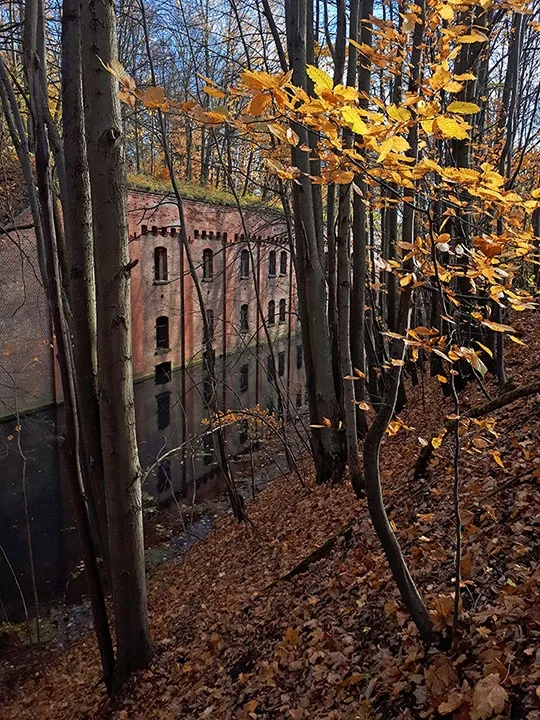
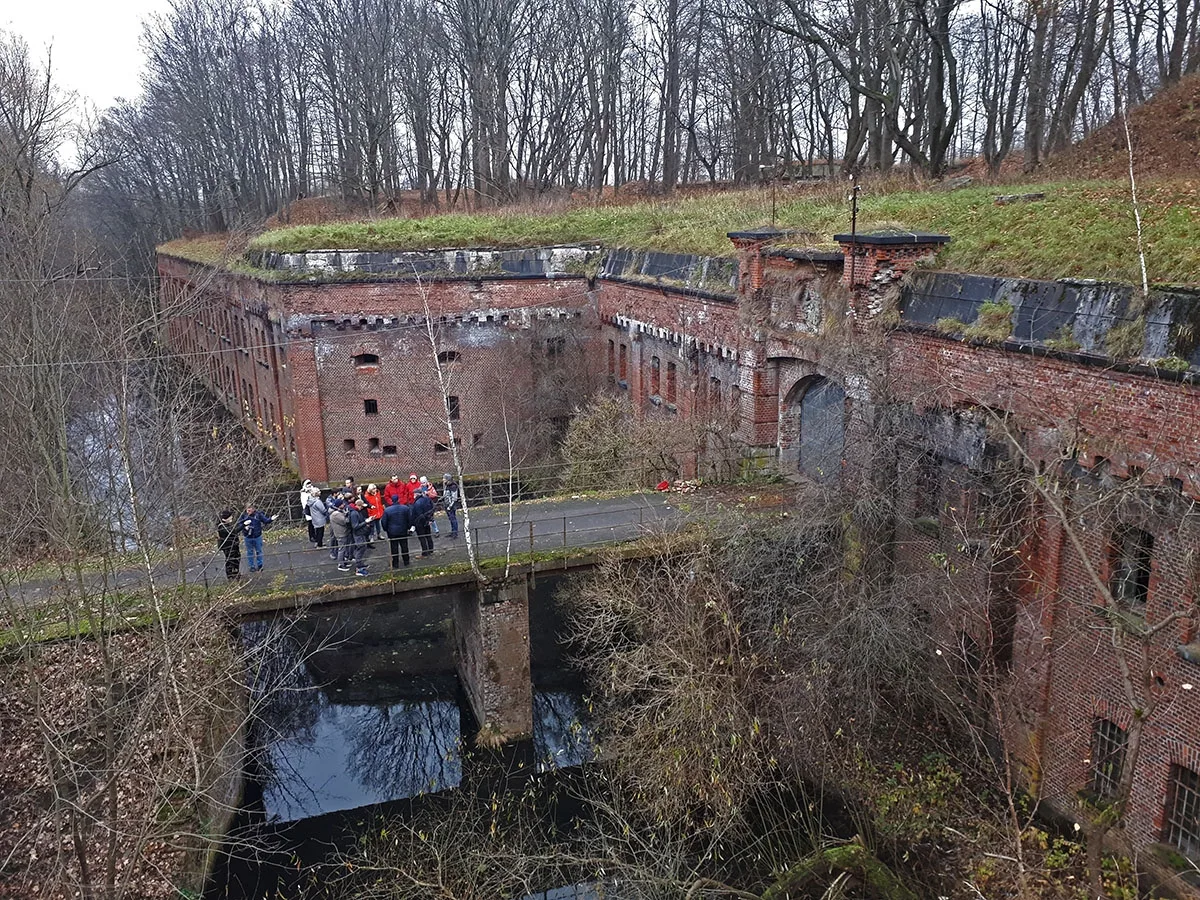
The main task at Fort No. 1 is to deal with the water. At present the moat around the fort, which according to the design should be dry, is full. As a result, the fort’s ground floor is flooded (in the photo above).
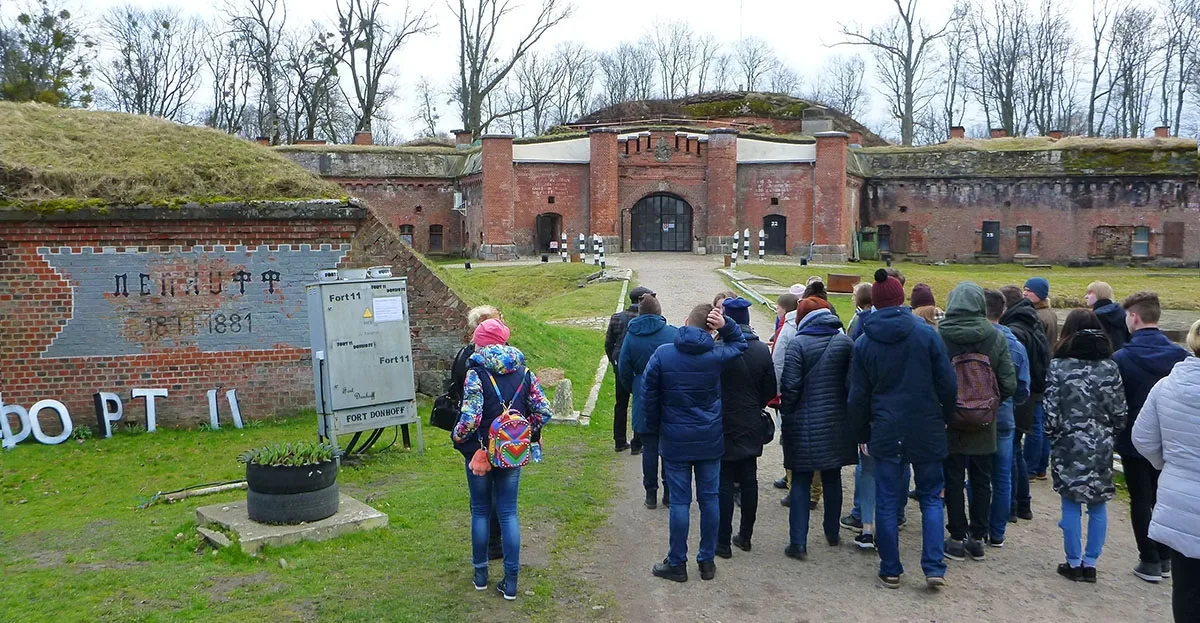
We solved a similar problem at Fort No. 11 almost seven years ago – there the water was knee-deep throughout the fort. We found damage in the storm drains, repaired it, and the water went down and stabilised at a normal level.
The second most important and second largest task is organising parking. We have to build our own large, convenient car park so that, as visitor numbers at the fort grow, our neighbours have no complaints about us.
At the same time, the fort grounds and its interior will be put in order with the utmost care: we will dismantle the many makeshift structures inside and outside and remove all the rubbish that has accumulated over the decades. Volunteers from the “Keepers of Ruins” movement, led by Vasily Plitin, have already offered to help and will come to the fort for a major clean-up on 20 November. Starting at 10.00. Everyone is welcome!
After that come the conceptual questions. Should the forts we manage resemble one another, or would it be better for the cause if they were noticeably different? Why? In what way? We are thinking about this right now, as well as about how to make it possible to visit both forts on a single ticket. We will probably have to arrange transport for people ourselves from Fort No. 1 to Fort No. 11, which we have been managing for almost seven years now. For visitors, Fort No. 1 has the advantage over Fort No. 11 that it can be reached from the city centre by regular bus or shared minibus taxi.
The results of our work will be obvious to everyone by the start of next season.
Incidentally, this year we have made considerable efforts to ensure that Fort No. 11 “Dönhoff” remains no less attractive a place for our guests in winter than in the warm season: we are planning a rich and interesting Christmas and New Year market from the end of December until almost mid-January. In addition, we are installing lighting so that the fort can also be visited after dark. In winter this becomes especially relevant. New exhibition spaces will open very soon. A new ticket office is about to start working. We are expanding and improving the car park.
Balga Castle
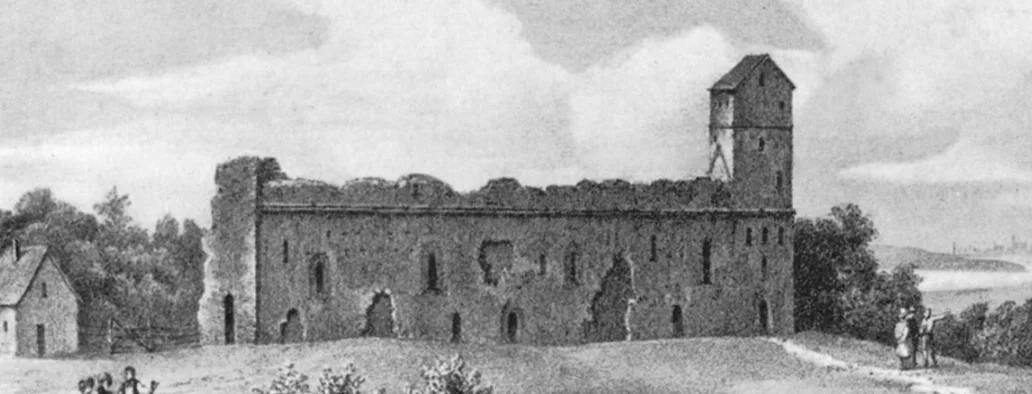
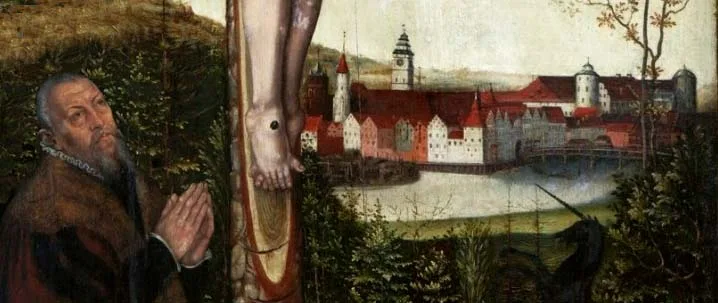
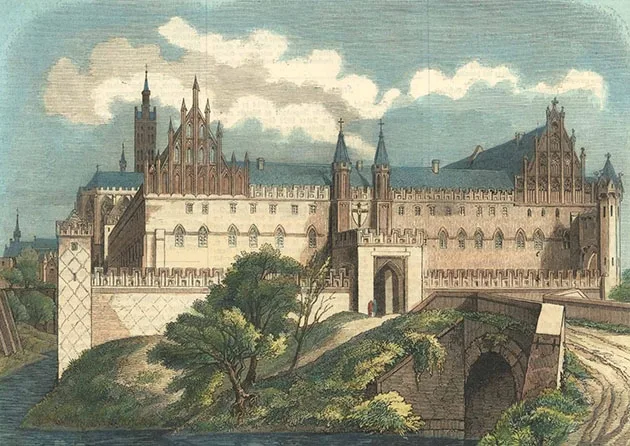
Balga is often called a place of power. It is one of the few castles that no one ever managed to take by storm, and one of the most beautiful. Its importance for the history of our region can hardly be overestimated – it was the first castle built by the Teutonic Order in the 13th century on the territory of today’s Kaliningrad Region. It was from here that the Bohemian king Ottokar II Přemysl set out in 1255 on a campaign into Sambia, at the end of which, having achieved all their goals, the crusaders founded a new castle on the bank of the Pregel, named Königsberg in the king’s honour. Alas, having withstood numerous sieges and assaults, Balga Castle fell into decline and was almost entirely dismantled in peacetime. This process began at the end of the 17th century and continued for almost a hundred years. By 1790 the castle already looked roughly as it has come down to our time. The surviving fragment of the outer bailey survived only because it was used as a landmark for navigation on the lagoon. Yet as early as the mid-19th century, thanks to the castle’s magnificent history, tourists began to visit it, and what was left of it was turned into what we would now call a showpiece. Before the Second World War the castle housed a local history museum. A restaurant opened by its walls and was very popular.
The revival of Balga will have a positive effect on the entire southern part of the region.
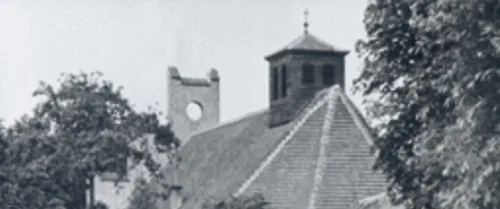
We are inspired by the example of the successful development of Ragnit Castle in Neman, which would have been impossible without the governor’s support for the project. Buses carrying tourists who, we are sure, will be keen to travel to Balga will pass through Ushakovo, where the revival of Brandenburg Castle is under way; there is a beautiful church there and a bridge over the river. Next to Ushakovo, in the village of Novo-Moskovskoye, stands what may be the oldest church in our region. It is even better preserved. We would like this fascinating site, too, to become a prominent point on the region’s tourist map.
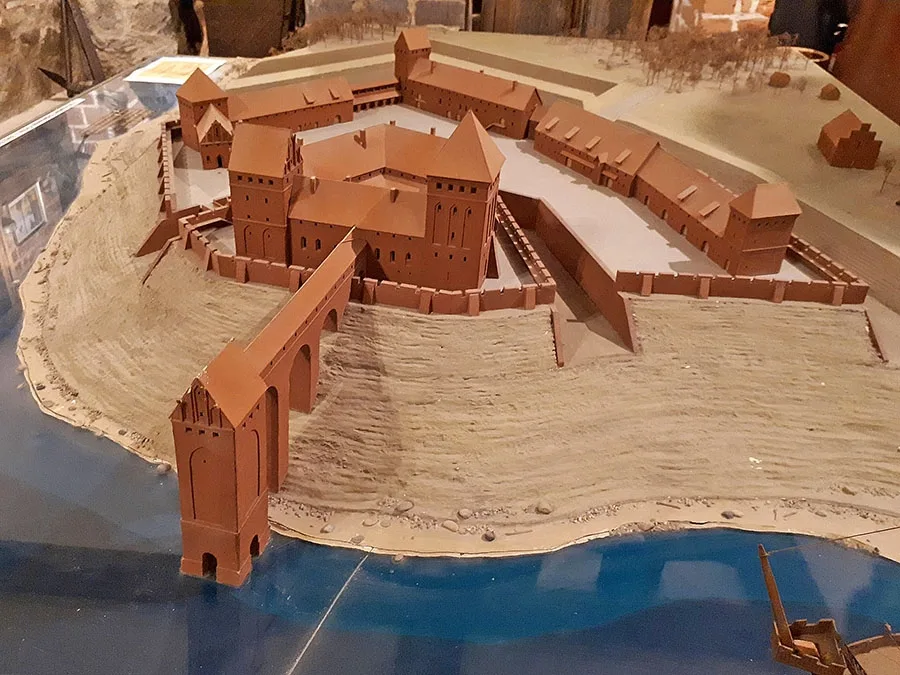
Through the prism of Balga, Mamonovo will at last come into tourists’ view. Two outstanding enthusiasts work in the museum field there: Konstantin Kosenkov and Dmitry Shilov, who created a unique Museum of Prussian Brick in the garden of his own house. The Mamonovo City Museum, where they work together, has an entire hall devoted to Balga. Among other things, it holds a splendid model of the castle (in the photo below) created by the Kaliningrad architect Yury Zabuga, who gave several years of his life to Balga. We will definitely place an enlarged copy of it on the castle grounds so that tourists can see what a magnificent monument of medieval fortification it was.
If Baltiysk continues gradually to develop as another tourist centre in the region where visitors to our region will stay, a fascinating route across the waters of the Vistula Lagoon could be laid from there to Balga. Bagrationovsk will probably also feel an influx of tourists. It too has a wonderful museum and the long-suffering outer bailey of the local castle, and the town itself deserves attention.
In neighbouring Poland, millions of people visit the restored castles of the Order every year. When the borders become transparent again, part of this flow will reach us too.
What do we plan to do at Balga first? Of course, tidy up the grounds and the road and organise security. After announcing that we were leasing the castle, I had several conversations with Russia’s most eminent archaeologists, who expressed their intention to carry out large-scale excavations at Balga. We are only too glad! In this way, we hope, the collections of our future museum will be formed. There is an idea to set up the production of large “Order” bricks right on site, which we plan to use for restoration work. We hope that one day we will also get round to a roof for the surviving walls of the outer bailey. There is simply no alternative there for a museum space. Next to the castle are the ruins of the local church. We will try to play a part in its fate as well. Follow our announcements on social media. Balga Castle already has pages on Facebook, VK and Instagram.
In Kaliningrad I am known as an active supporter of the idea of rebuilding Königsberg Castle. Of course, there is a great temptation to propose something similar for Balga, especially as there is a wonderful example – the castle of Guédelon in Burgundy, being built with 13th-century materials and techniques. But let us not get too far ahead of ourselves. Such decisions cannot be taken without carrying out all the necessary preliminary research. Let us first put the grounds in order, understand the condition in which the castle has survived to our time, let the archaeologists do their work and create the conditions for comfortable and safe access for everyone to what remains of it. Let us not forget that the lagoon shore there is very steep – at least two safe paths down to the water will have to be built, and most likely even three.
We face a great many very serious tasks that require urgent solutions, but in six years of work with Fort No. 11 “Dönhoff” we have come a long way, learned a great deal and gained enormous experience – on such a foundation there is nothing to fear in starting new projects. I am sure we will succeed! Join us!
I would like to take this opportunity to thank Anatoly Bakhtin, Yury Zabuga, Vladimir Sozinov and Konstantin Skvortsov, who made enormous efforts in 1994–2016 to preserve the castle’s outer bailey. I will be very happy if together we can breathe new life into legendary Balga!
Photos on this page: Mikhail Ogorodnikov
Translated from Russian with the help of AI (Claude, Anthropic), October 2026.