Accidit in puncto, quod non contigit in anno.**
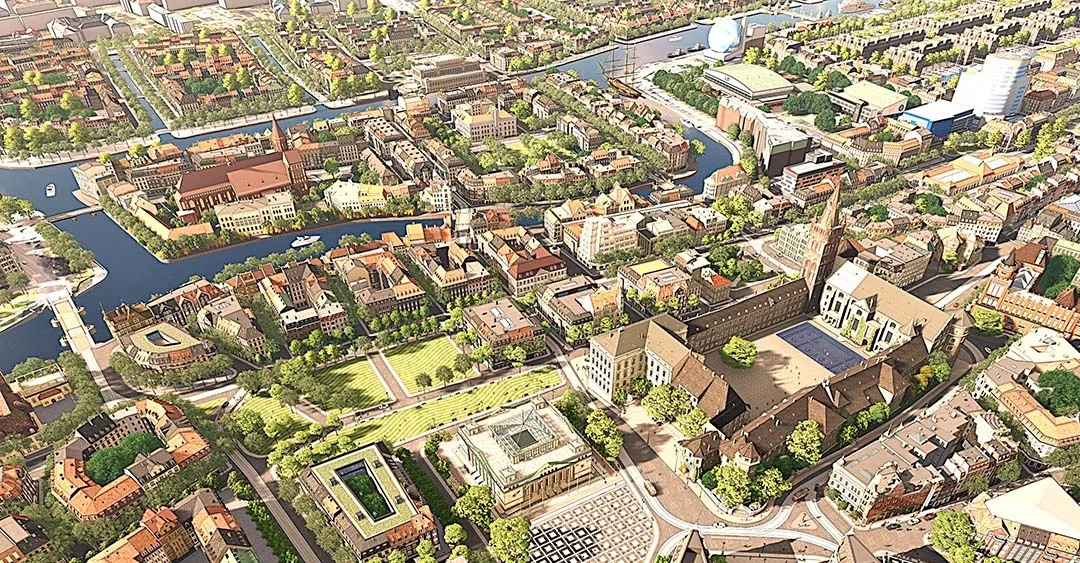
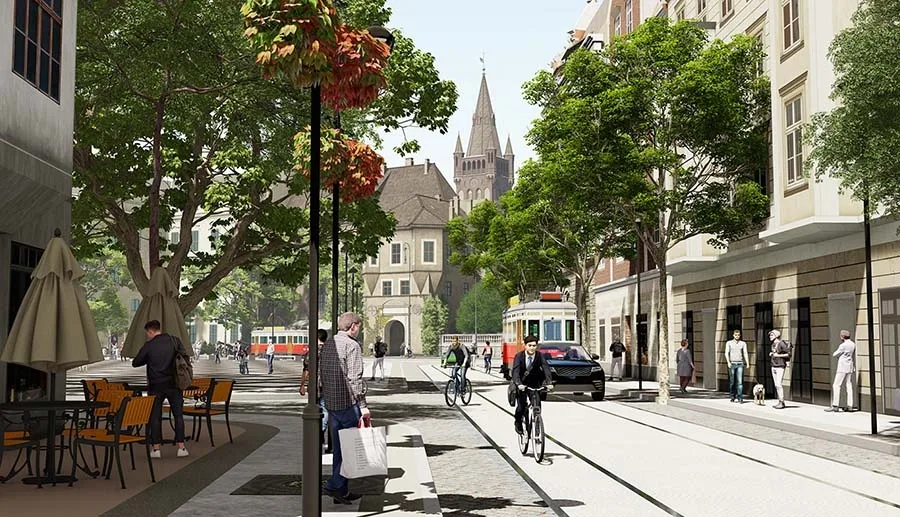
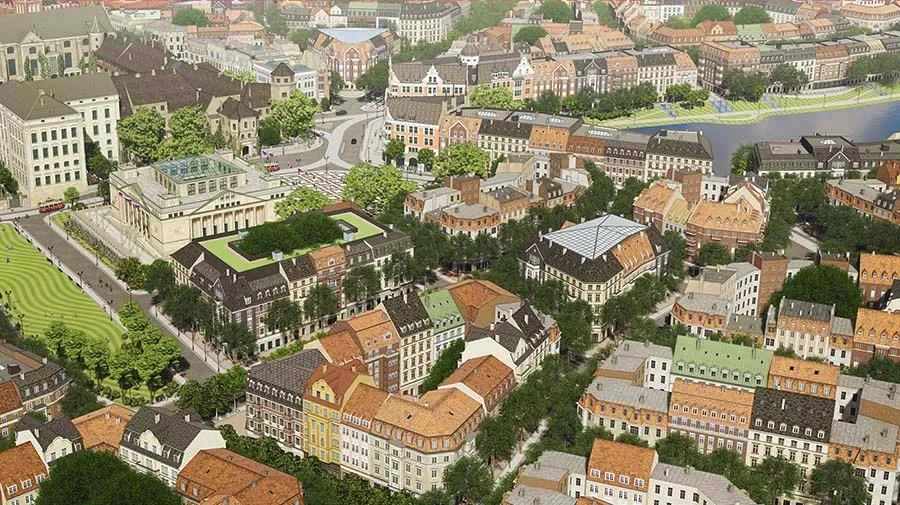
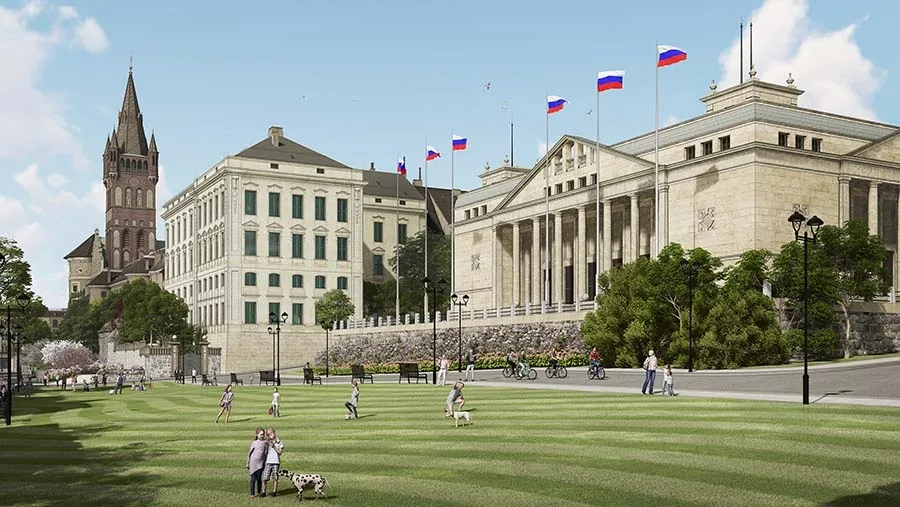
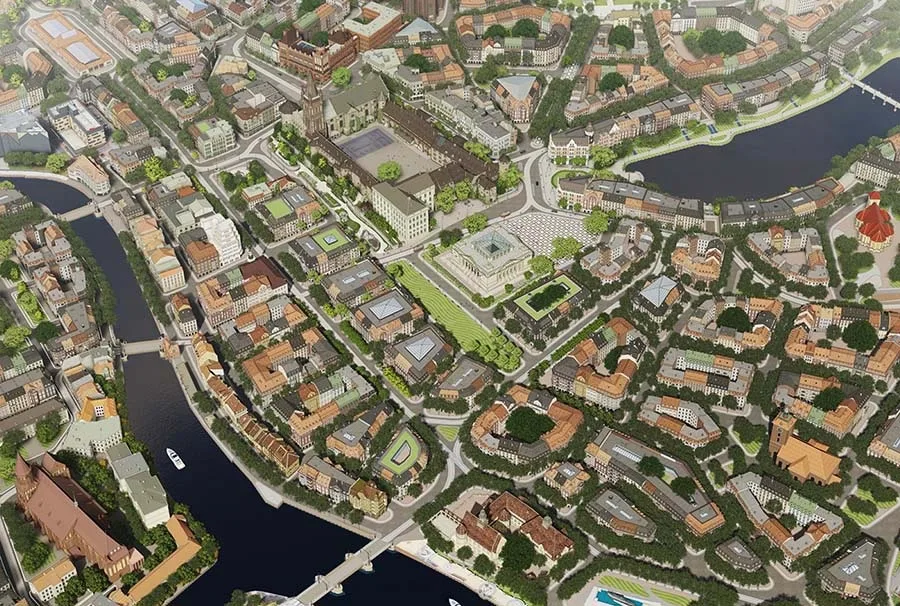
Our profession demands a bold vision of the future and (if you want to be a practising architect!) the ability to sense and capture the mood of society as a whole, which ultimately decides what gets built and what does not. I cannot say whether I have enough of a gift for foresight, but I am certainly not short of optimism. Otherwise, what “fuel” could have kept me going all these years on my project (see below) to revive the Altstadt, rebuild the castle and create an urban environment in the historic center that recalls what our city was like in its heyday at the turn of the 19th and 20th centuries?
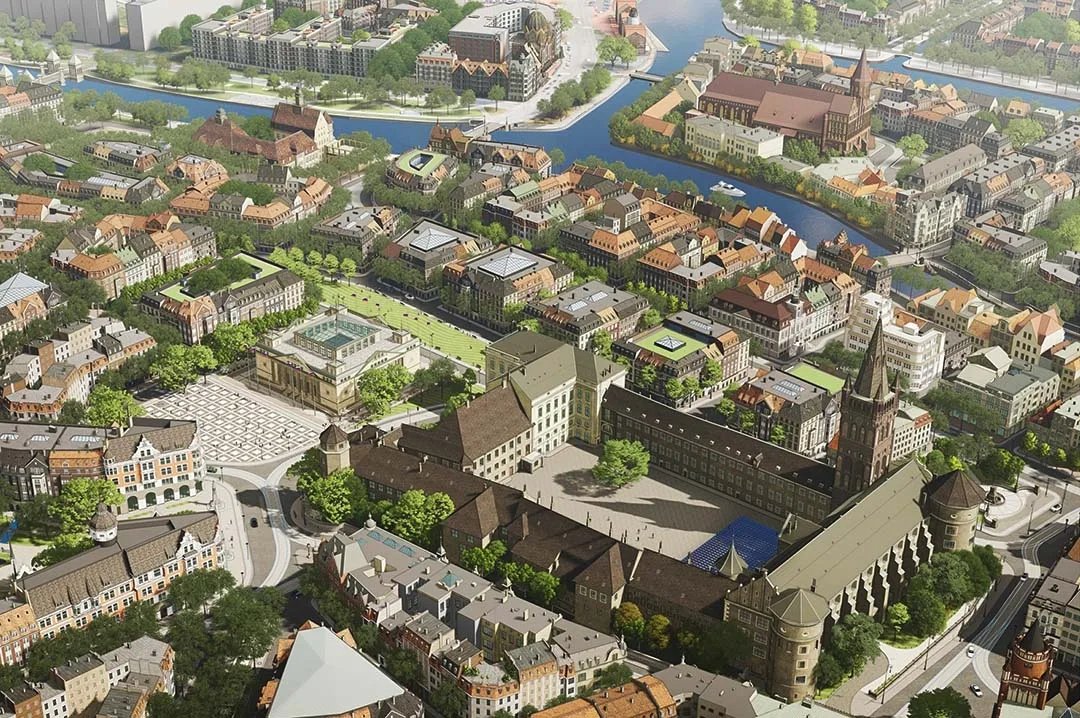
The full version of the presentation of our project to recreate the historic center.
And yet there is a great deal of pain in my optimism, caused by what has happened to our city in recent years. But the beauty of the lost center of Königsberg has never stopped inspiring me: knowing what this city once was, and understanding what it can and should become, I kept on working — and I am still doing so now, in addressing you.
So what was Königsberg like? Beyond the familiar views of its central part, what deserves our attention and study? What unique urban-planning and architectural solutions did our predecessors find here — solutions that were then, to our great regret, lost in the wartime turmoil of the 20th century?
To see where we stand today and understand which way to go, let us, as is customary in such cases, begin by setting out the context — our current frame of reference. Let us start with the fact that, in terms of its population, our city has always been, and still is, international and multi-ethnic. Since time immemorial, long before the Teutonic Knights arrived, the whole history of this land has been one continuous process of settlement by newcomers.
Lying on the border between two worlds and two civilizations, Prussia changed hands many times, taking in wave after wave of migrants, now from the West, now from the East — which did not have the happiest effect on its appearance. Out of love for this land, one might tactfully call that appearance eclectic.
In describing our city, which passed to the USSR as a spoil of war at the end of the Second World War, it is important to stress how many-sided it was. Königsberg consisted of far more than the medieval towns of Altstadt, Kneiphof and Löbenicht and the suburbs that grew up around them and were absorbed into the city. It was a unique mosaic, painstakingly assembled from very different pieces. Let us list them here:
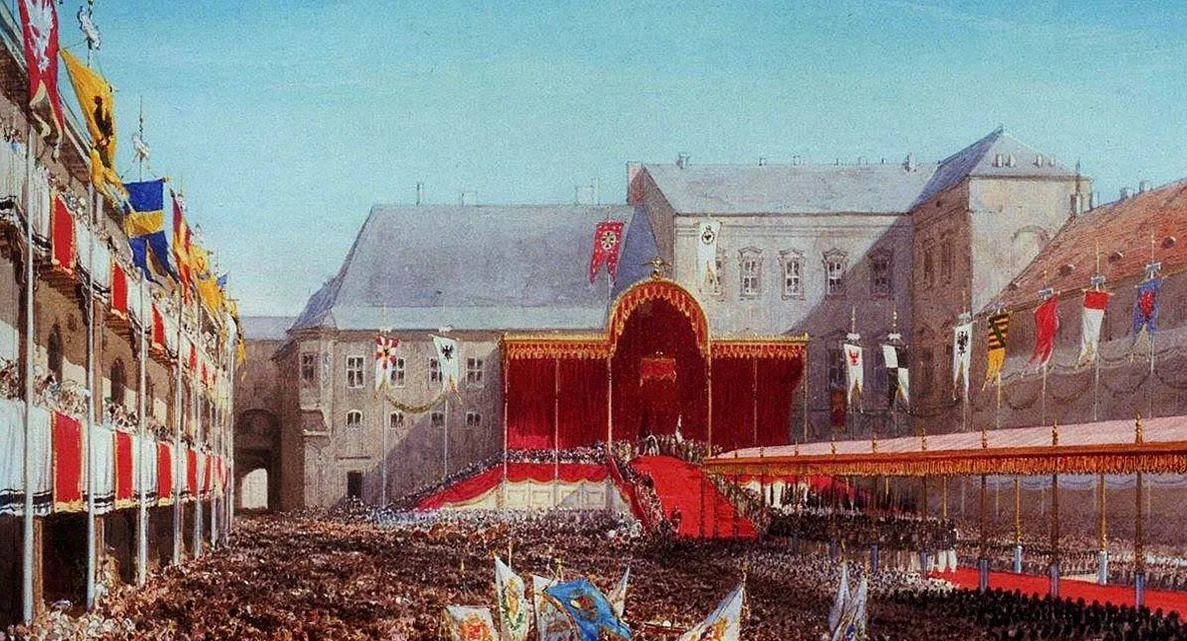
- Königsberg Castle (bombed in 1944, burned out and demolished in the 1960s);
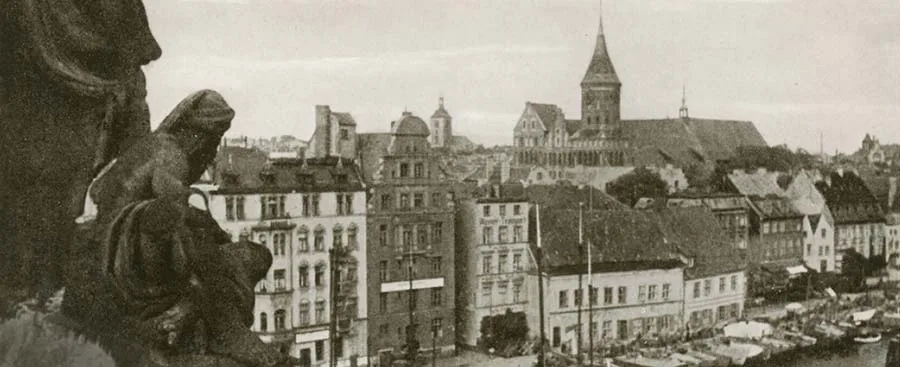
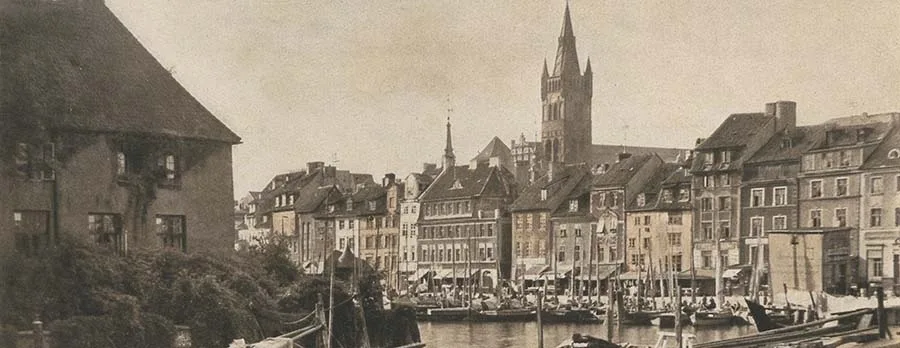
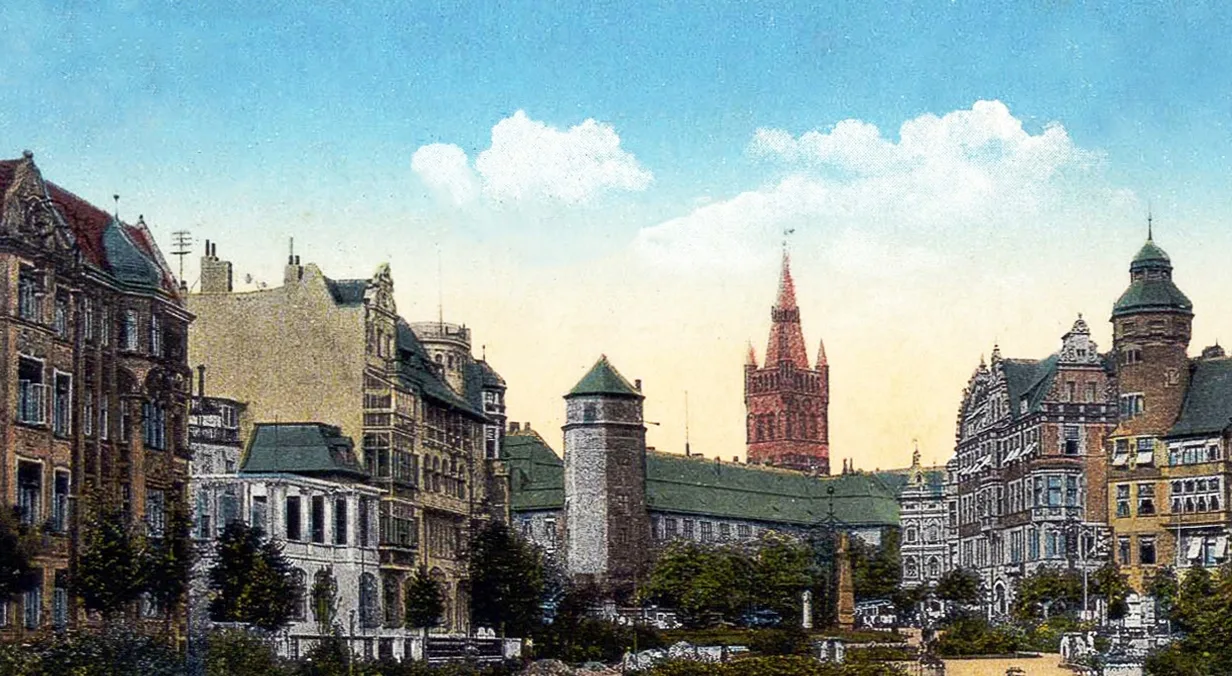
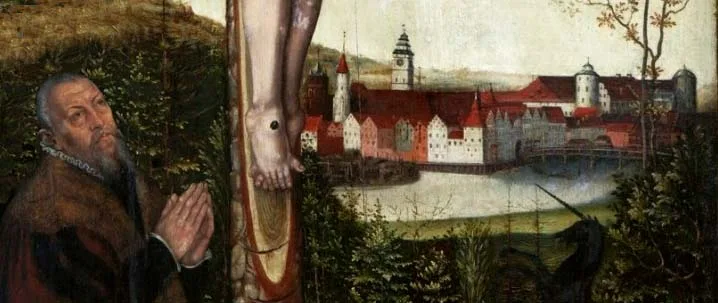
- The medieval towns of Altstadt, Kneiphof and Löbenicht, united into Königsberg, which formed its historic center and recognizable skyline (bombed, and after the war dismantled down to the last brick for building material);
- The waterfront (the riverbanks): the port, the famous Fish Market, the grand roller mill, the grain elevator, cranes and warehouses (partly preserved);
- The Laak district of half-timbered warehouses, better known as the Lastadie (bombed, burned and demolished);
- Districts rich in high-quality architecture: Vorstadt, Steindamm, Tragheim, Rossgarten, Neurossgarten, Hufen, Neue Sorge, Sackheim, Haberberg (partly preserved);
- The industrial districts of Ponarth, Ratshof, Rosenau and Schönbusch (partly preserved);
- The fortifications that framed the fortress city: towers, bastions, barracks, blockhouses, reduits, ravelins, etc. (preserved);
- The “Schneider Belt” park zone, laid out over the fortifications that encircled the city — the rampart ring (in decline);
- The Amalienau and Maraunenhof districts, built at the turn of the 19th and 20th centuries, when the “garden city” concept dominated European urban planning (preserved);
- The city's parks: Luisenwahl (now Central Park), Max Aschmann Park, Ratshof Park, South Park, Kalthof Park, etc. (in decline);
- Königsberg's ring of forts — 15 forts (some have fallen into decay, but most survive and are in use);
- Devau, one of the world's first five civilian airports (fallen into decay, partly demolished).
As we can see, a great deal of the Prussian architectural heritage has been lost. The central part of our capital — the city whose future architectural face I want to discuss with you — was not restored after the Second World War, but was hastily built over in the style of so-called “functionalism”. Understandably, in the post-war years the priority was to build as much housing as possible, as fast as possible and as cheaply as possible. Yet the years go by, the so-called “Khrushchyovkas” are still standing, and more buildings just like them keep going up around them — where will this inertia lead us? One can rightly point to all sorts of objective reasons, but the fact remains: the city was unique, and now it is in decline, growing ever more ordinary.
What is the main urban-planning problem of today's Kaliningrad? It is that the city's historic center — its finest and architecturally most interesting part, shaped over centuries inside the rampart ring and wiped off the face of the earth in the Second World War — was hastily and chaotically built over in the 20th century with nondescript apartment blocks.
These buildings have no architectural value whatsoever, and their service life is coming to an end. Within the next 25–50 years (however long we put off starting the process!) they will all have to be demolished so that something can be built in their place… But what?! That is the key question we will have to answer together — and then go on to rebuild almost the entire city center. So let us dream a little about what the regional capital could become if we approach its revival thoughtfully. We need a clear concept, worked out down to the smallest detail, starting with the zoning of the territory and the rerouting of traffic, with the aim of creating a renewed historic center and ensuring the harmonious development of the city's other districts.
ZONING
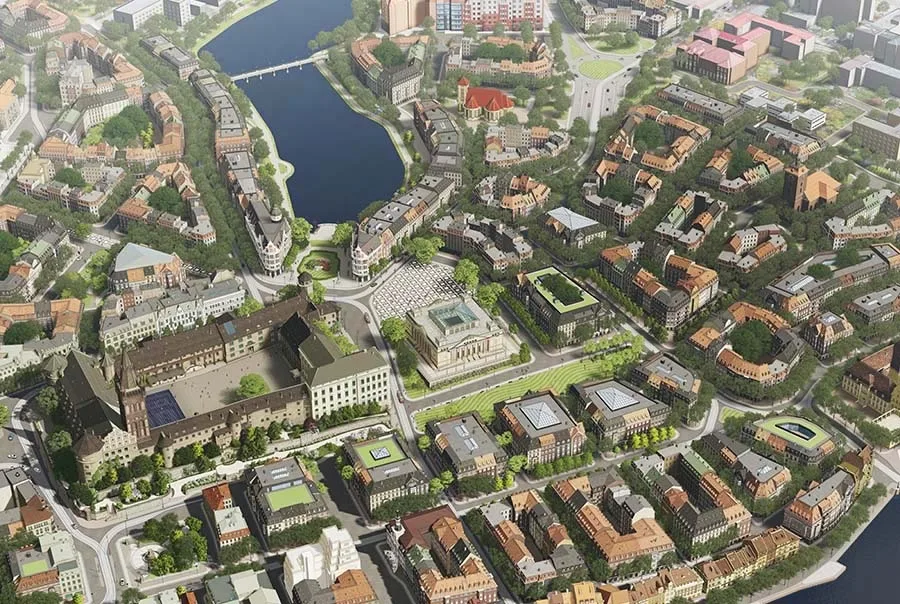
Every settlement that respects its own age — and our city is no exception — needs a historic center. You cannot just muddle through “somehow” without one. Because a situation in which the historic center exists but the city seems not to “notice” it plants a time bomb under every project carried out in the area. (The House of Soviets is a vivid example!) In our case, the boundaries of the historic center are (going clockwise from the new cultural cluster on Oktyabrsky Island): Kalinina Avenue, Zheleznodorozhnaya Street, Gvardeysky Avenue, Professora Baranova Street and Litovsky Val. On any ordinary city map, this almost closed ring (a letter C), with Oktyabrsky Island wedged into it, is plain to see — it is everything that lies within the former rampart ring.
The design of the city's dominant landmark — the castle — calls for particular responsibility. Here we will once again have to hear the arguments both of those who, like me, advocate its reconstruction, and of those who oppose it.
Should the castle be rebuilt or not? For Kaliningrad this question is akin to Shakespeare's “to be or not to be” — with one addition: to be a recognizable city that respects its own history. The castle is as integral a part of our cityscape, of the very image of the city, as the Eiffel Tower is of Paris or the statue of Christ is of Rio. Everyone involved in the debate knows full well that my vote is for rebuilding the castle exactly as it was.
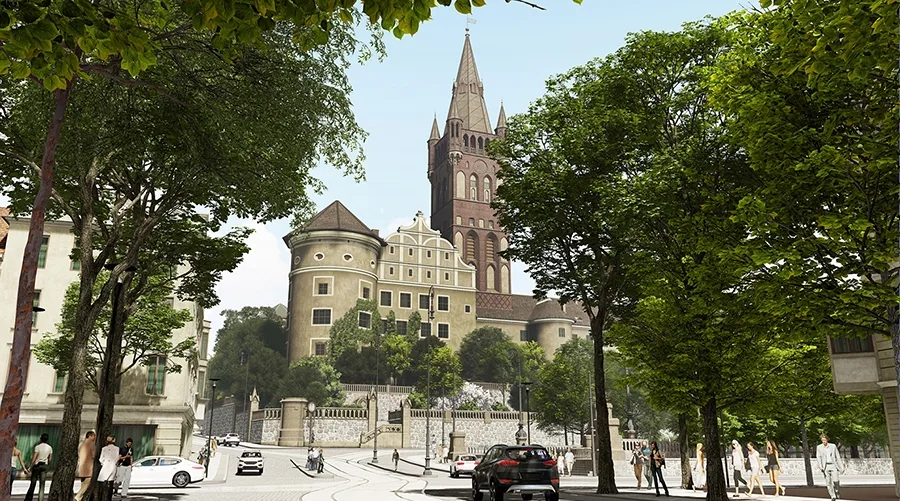
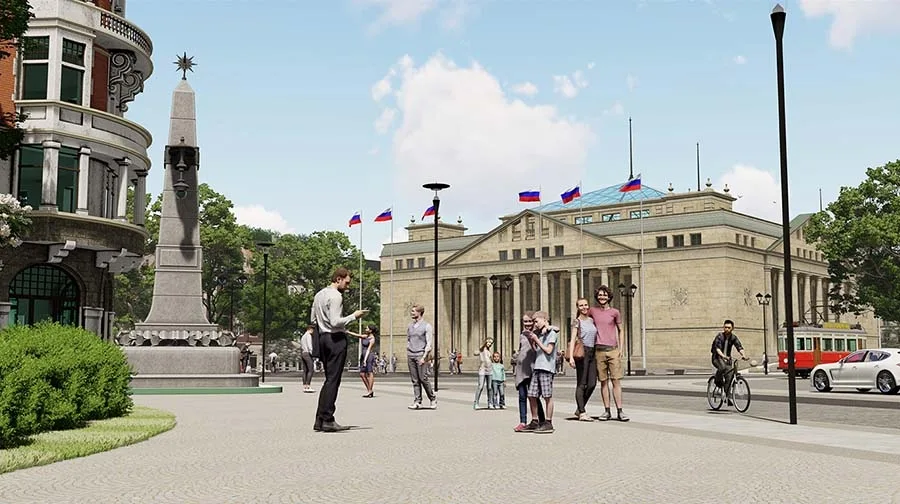
Every city with centuries of history has an architectural symbol. For Königsberg it was, without question, the castle. For Kaliningrad, once the castle had been demolished, that role was meant to go to the House of Soviets. But it never became a viable symbol.
In the second half of the 20th century, Soviet architects were given a window of opportunity: the chance to create a new city from scratch on the site of the demolished old one. Such an attempt was indeed made, but something was missing, or something got in the way. As a result, we once again stand at the same crossroads. Once the buildings that are beyond repair have been demolished, do we build some new city in the center? Or do we treat history with respect and answer the clearly expressed wish of tourists, a substantial share of local residents and everyone who cares about the fate of Kaliningrad-Königsberg to see the historic center reconstructed — which in no way prevents us from continuing to build modern buildings, in any number and of any height, outside it?
Many large old cities long ago found the answer to the question of how to bring historic buildings and everything else together harmoniously “under one roof”. To satisfy different (ethnic, religious, subcultural) groups living closely side by side, you need to give them separate “rooms” in their shared “house” — to let each of them pursue their own wishes and arrange their lives as they see fit. That is the essence of zoning.
TRAFFIC FLOWS
For the revitalization of the historic center to become possible, the area must be freed from excessive through traffic. Moskovsky and Leninsky Avenues, which currently tear the old city into lifeless fragments, should be taken underground into tunnels. The noisy Moskovsky Avenue, running along the river, is practically begging for it. Leninsky Avenue is a little more complicated. We propose diverting it to the Second Estakadny Bridge, likewise taking it underground (roughly from the intersection with Sommera Street to the roundabout on Shevchenko Street).
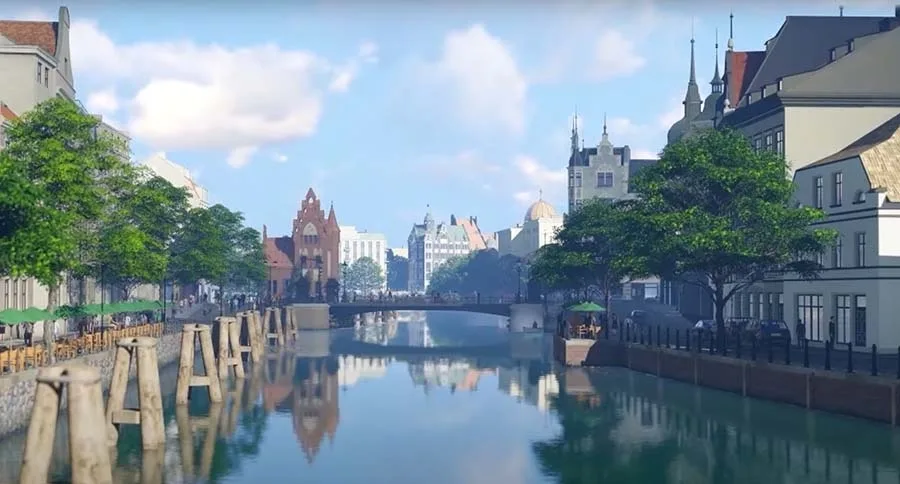
Our city should have more bridges, and every one of them should be a drawbridge. If we can bring back to the historic center everything that creates the distinctive atmosphere of a port (piers, marinas, yachts, sailing ships and so on), future generations will be immensely grateful to us. (Along with the city's appearance, the quality of life and the investment climate will change for the better.)
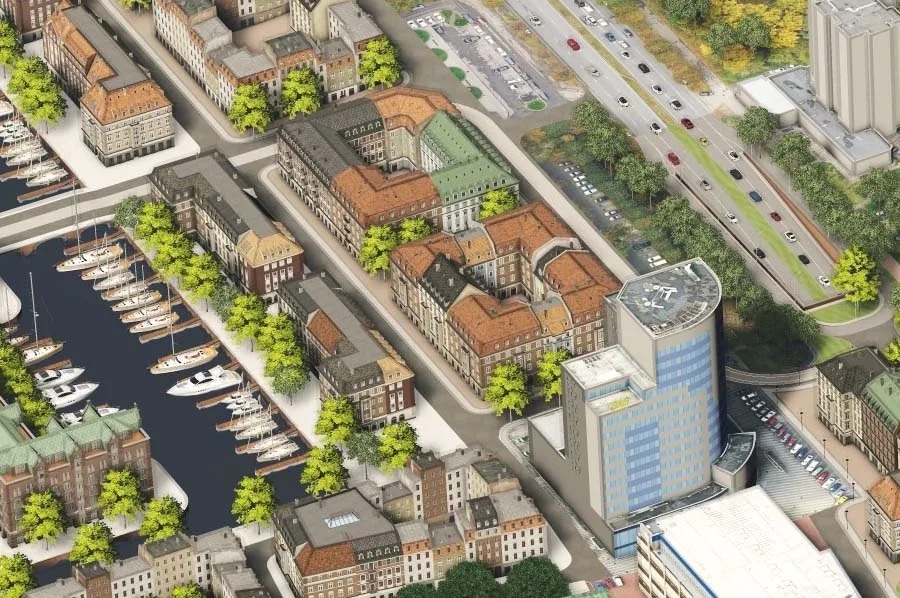
The port is the most picturesque place in Kaliningrad, but, alas, it is cut off from the city. Even public transport is currently organized in such a way that residents have virtually no way of getting to the port — you can only get there by private car or taxi.
Part of the solution to excessive car traffic in a revitalized historic center will be a renewed network of public transport routes, cycling infrastructure and pedestrian zones. (And soon, infrastructure for electric vehicles as well!) When public transport is properly organized, people will always choose it over their own cars. In the part of the historic center that will be built from scratch on the banks of the Pregolya, on top of a Moskovsky Avenue moved into a tunnel, all of this can be provided for at the design stage. It will be harder to find solutions and change residents' habits where the urban environment has already taken shape.
Once the new road bridge in the western part of the city opens, the total capacity of Kaliningrad's bridges will increase significantly.
But will that be a step toward reducing the number of cars passing through the historic center every day, or will it, on the contrary, drive that number up? An important question, you will agree. Let me repeat: in my view, the solution is to build a road tunnel beneath the historic center (come off the bridge, turn onto Moskovsky and almost immediately you are in the tunnel).
We need to rethink the purpose of the historic center and, more broadly, of the whole city. At present, to breathe clean air and get away from the noise, the bustle and the danger that come with heavy traffic, we head for the resort towns of Zelenogradsk or Svetlogorsk, or simply out into the countryside or to the sea. But is that good for Kaliningrad's businesses (and the city budget)? Perhaps we should set a course toward creating the conditions for people to come and relax on the banks of the Pregolya in the heart of Kaliningrad — and to get out of the habit of doing so by car, because comfortable public transport will be there for them?
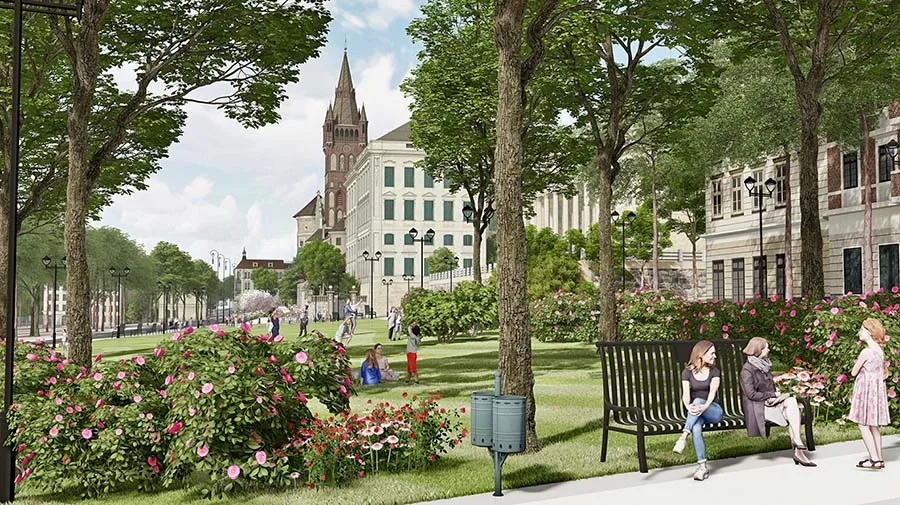
The tram should become the main means of passenger transport in the historic center. Today any city can order its own original carriage design from the manufacturer, and that design becomes one of the elements that shape the city's recognizable identity.
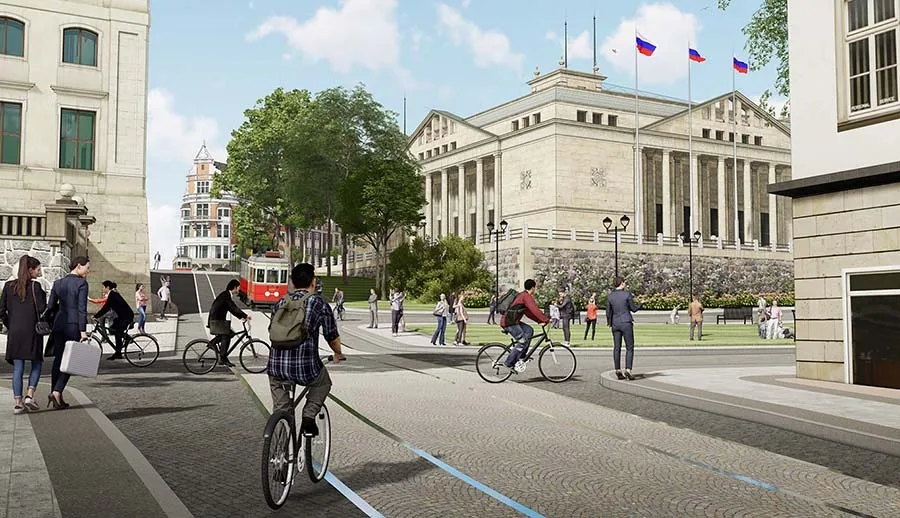
A 1000 mm gauge would make it possible to fit period-style trams built on a modern platform into the narrow streets of the historic center. From the city center, tram routes could be extended to the districts of Severnaya Gora, Ponarth, Rosenau and Hufen, as has already been done for Amalienau. (Forgive me: the city's current administrative division into just three districts does not allow me to name directions precisely, so where it “falls short” I fall back on my knowledge of the old place names.) The tram will be popular not only with locals but with tourists as well. As for mass transit to the outskirts, we could draw on pre-war experience with the narrow-gauge railway, replacing it with a rapid tram — what is now commonly called “the metro for mid-sized cities”. Dedicated lines for such a tram could link the city center with the neighborhoods of Borisovo (and on to the village of Lugovoye), Vasilkovo (and on to Guryevsk), “Kosma” (named after Alexander Kosmodemyansky), “Pribrega” (Pribrezhny) and Chkalovsk (and on to the village of Kholmogorovka).
URBAN PLANNING REGULATIONS (DESIGN CODE)
In recent years our local Capital Repair Fund has been one of the most visible institutions working for the good of the region. Dozens, if not hundreds, of buildings in the regional capital (and beyond!) have been renovated to a very high standard, and the work goes on. But isolated successes are not enough. We need a strategy (with this article I am merely trying to start the conversation about it and its development) and tangible results on the scale of at least whole blocks — places that residents and tourists recognize as “cozy urban oases”, drawing people in with the quality of their urban environment. We need to find promising locations of this kind and finally bring them up to a model standard in every respect, so that the whole city can look at them and see which direction to move in.
Things have come to such a pass that Kaliningrad's officials and architects will soon be sent on professional development courses to the center of Zelenogradsk — which by now has a thing or two to teach them in this respect!
There must be strict height limits within the historic center.
Given today's realities, a maximum of six or seven floors including attics, and in rare, exceptional cases (for example, a renewed Bellevue as the district's dominant landmark) up to nine or ten. And that applies only to the main streets and boulevards. Buildings inside the blocks should be lower (3–4 floors).
Kaliningrad's business district, with no height limits — let's call it the City — should be built elsewhere. What is wrong with Selma or the port area, if the ground on Oktyabrsky Island raises doubts? All over the world, large cities with an architectural history worthy of respect are zoned on exactly this principle: the old town (that is, the historic center), the City (the business district) and suburbs of every kind, in keeping with local traditions and conditions.
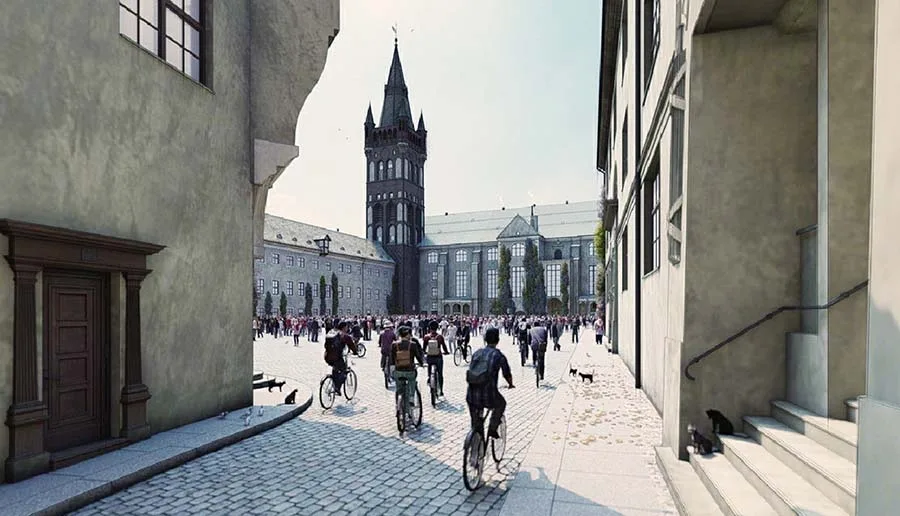
Returning to the castle and the urban environment around it, I will say it again: I see no rational alternative to recreating the central part of the city in the form it had when it fell victim to the war and to the short-sightedness of the regional leadership in the last century.
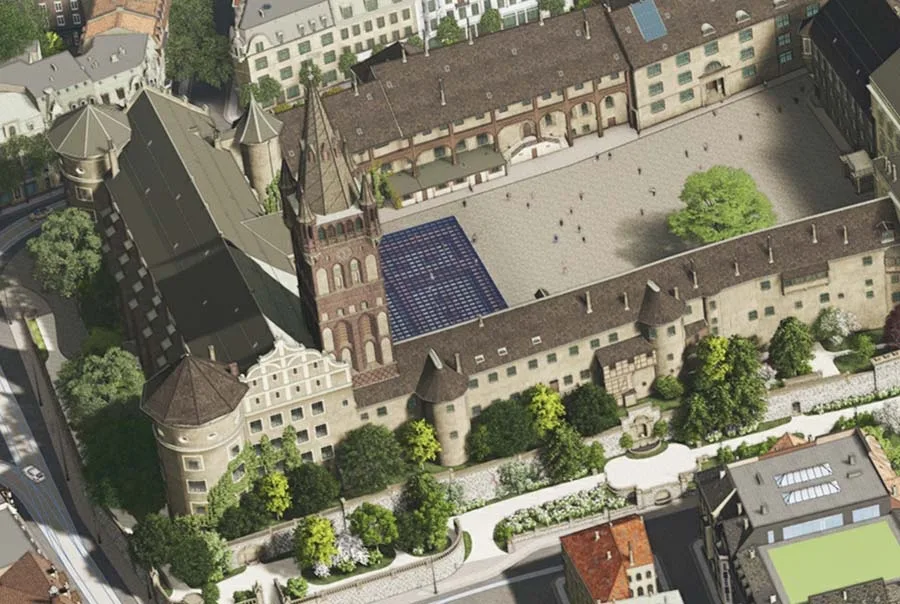
Of course, not everything will be rebuilt exactly as it was, but we do need to recreate a number of recognizable urban locations, as has already been done in many European cities. I am convinced that any attempt to take a different path would mean repeating the very mistake that once left us without a historic center for decades. Yes, there were weighty reasons for it at the time. But, as they say, a city must keep developing. And it is high time we learned at least from our own mistakes!
In my view, the most important elements of the design code (the body of regulations) for the historic center should be:
- Within the administration of the Historic Center district — which needs to be made a separate administrative-territorial unit — a management body (hereinafter, the Special Commission) should be set up, made up of professional administrators, architects and designers and responsible for the district's appearance;
- All urban-planning and architectural projects carried out in the Historic Center must be approved by the Special Commission and, where necessary, go through public hearings, which any interested party may initiate. To prevent corruption, a public council overseeing the commission's work should probably be set up as well;
- A height limit of 15 m;
- Steep (>45 degrees) hipped or gabled roofs, ceramic roof tiles;
- Paving with cobblestones and paving slabs of specific types (and specifications) set out in a dedicated regulation. Granite curbs. Storm drains must be concealed beneath the street surface. All downpipes carrying water from the roof gutters must discharge into the storm drains;
- A single style for all street furniture, street lighting, wayfinding and decoration, in line with the regulations (design code) of the historic center;
- Agreed principles for shop-window design and commercial signage, in keeping with the spirit of the Historic Center;
- Do-it-yourself landscaping and “modernization” of any exterior elements of buildings in the Historic Center by owners and tenants must be prohibited by law. All changes, right down to the pattern of glazing bars in the window frames, must be approved by the Special Commission;
- Repeated use of standard architectural designs in the Historic Center must be prohibited by law. Every building must be unique;
- Color regulations: buildings and other exterior surfaces may be painted only in the colors specified by the design code;
- At least 20% of facades must be finished in clinker brick, sandstone or architectural concrete;
- Front doors and building entrances must be approved by the Special Commission.
I would like to say a separate word about the distinctive skyline of the Historic Center — the church spires and castle towers rising above the rooftops. It was a crucial part of what made the city recognizable. What is stopping us from at least introducing this term (skyline? silhouette?) into the urban planning regulations and setting out, in a separate article, what it should be? A recognizable skyline would make Kaliningrad as attractive as it can possibly be and help bring in more tourists and more investment.
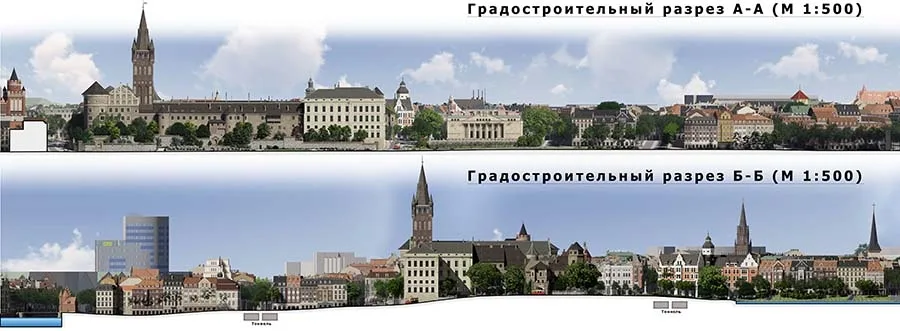
We need to pull ourselves out of the quagmire of visual chaos that is destroying the image of the city. The historic center should set the example here and strike the keynote that is missing today — and whose absence is the reason new buildings keep going up that have nothing in common with local architectural traditions.
WITHIN THE REALM OF THE POSSIBLE
Having given Kaliningrad its due, I would like to say a few words about what, in my opinion, those working on projects in the region's district towns should focus on. A great deal of work has already been done there. There is plenty to show and plenty to talk about.
It seems to me that resources are currently spread rather thin: considerable money and time have already been invested, yet nowhere in the region (except Zelenogradsk!) has a renewed location emerged that attracts people not merely with the smell of fresh paint, but with a new, convincing, mature quality of urban environment born of architectural and renovation work. I would suggest a few adjustments to current practice.
In my view, we need to create what are known as points of attraction — to identify a promising fragment of the urban environment (a street, a block) and turn it into a benchmark that draws in locals and tourists alike. Renovated facades, sidewalks, paving, street furniture, cafés and restaurants, and tourist sights must all work together as a whole.
Let us recall the principles on which towns in our region were once built. With rare exceptions, almost all of them were laid out more or less to the same template. (We will skip the era of pagan hillforts and the castles of the Teutonic Order.) Every town had a central market square with a town hall (the seat of local government), overlooked by the houses of the wealthiest citizens — the only ones who could afford architectural embellishment. The main church usually stood somewhere near the square, or right on it. Unfortunately, in many towns in the region these historic ensembles have not stood the test of time. But parts of them have survived almost everywhere. And that is something we can build on! A good example is Gvardeysk, where the central square has already been restored and fully serves its purpose, attracting locals and tourists alike.
Leaving aside the Sambia Peninsula with its resorts, which are developing according to their own logic, we have several towns where the gradual reconstruction of the central squares could begin. There is no need to rush, but there must be a clear sense of purpose: we must make the district towns of the Kaliningrad Region cozy, attractive, memorable and loved — so that tourists leave dreaming of coming back one day, and locals feel no wish to move away. To begin with, I would put Pravdinsk, Sovetsk and Chernyakhovsk on the list of towns where squares could be brought back to life. Three directions out of Kaliningrad, and all three towns have real potential as tourist destinations. Our district towns have every chance of making up for the drab decades at the turn of the 20th and 21st centuries.
Quite recently (02.06.24), Kaliningrad struggled to cope with the aftermath of an extremely heavy downpour. The damage done to the city and its residents was considerable — the elements had once again shown their strength. Let us hope the city has learned its lessons and will modernize its storm drainage. Now imagine that one day a severe winter storm drives a surge up the Pregolya 2–3 times higher than usual… I will leave the rest of the scenario to your imagination. For my part, I believe it is important and timely to propose that we at least begin designing protective structures at the mouth of the Pregolya to help us avert disaster.
PUBLIC OPINION AND FUNDING
Every undertaking, every idea almost always has its supporters and its opponents. This applies in full to my roadmap for transforming the face of the regional capital.
We have long known our opponents' arguments, which first and foremost always point to the meagerness of the regional budget. And there is no arguing with that: there is never enough money to go around, and there will always be someone who needs it more. So it has been since time immemorial, so it is, and so it will be. But all the while, cities have been built, and they will go on being built.
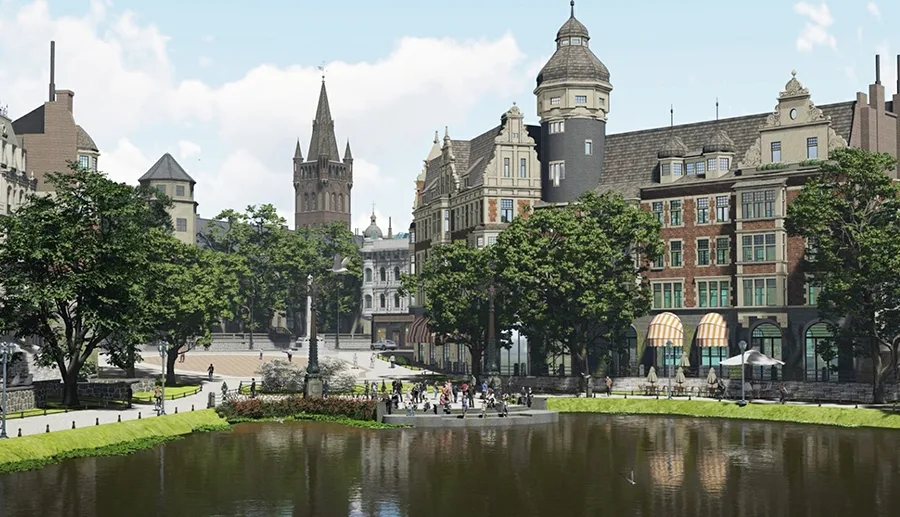
We have to work within the limits we can afford and look for sources of funding. It is a matter of priorities — of understanding which investments will bring the greatest return.
The second most popular broken record is the one about “replicas”. Buildings put up here and now — and not by the world's best builders, at that, and from building materials of dubious quality — will supposedly never be seen by anyone as genuine originals handed down to us from centuries past. This brings to mind the saying that the only people who never make mistakes are those who do nothing. I would gladly rest on my laurels alongside these fine people, but, unlike them, I take a more active stance in life: the road is mastered by those who walk it. To quote an author you know well: “If you have a goal, run toward it! If you can't run, walk! If you can't walk, crawl! If you can't crawl, at least lie down facing the right direction.” In other words, we should do what we can and not torment ourselves over the fact that we cannot do everything. This today, that tomorrow. We have the builders, and we have the materials. Not just one or two castles nearby have been restored, in both Poland and Lithuania, and soon we will see Ragnit Castle in Neman awaken from its nearly century-long sleep. After it will come Gvardeysk, Bagrationovsk, Polessk…
As for a high-quality urban environment, our much-loved Zelenogradsk has been setting the tone for several years now. Why can they do it, while we in Kaliningrad cannot?!
The finest concept, the most sensible undertaking, can be ruined by two things: haste and carelessness. We do have reason to hurry, but we must not get ahead of our capabilities. Better to do one block well than to spoil a whole district with shoddy work. Shoddy work will not be forgiven: it will ruin everything and become an ironclad argument against going any further. The word “replica” has a negative (even contemptuous) connotation not because it refers to something built recently, but because we use it for something designed and built in a hurry, any old how. And it is not only a replica that can be bad — so can the restoration of genuine heritage. If, after a restoration or a scholarly reconstruction from scratch, you feel no urge to study the building's details again and again, if you are not drawn to touch its masonry and nothing about it moves your heart, then the restorers did not put their soul into their work.
We must stop working just to tick boxes, to file reports, to hit targets and to spend budgets. The historic center must be recreated for ourselves — for the future generations of our own families — and then our replica will become a living creation rather than a lifeless mock-up.
The third problem is ideological. The bloc of “communists and non-party members” insists that we are, supposedly, proposing to revive monuments of German culture, when instead we ought to be cultivating a Russian identity among local residents and shaping the urban environment with that in mind. What can one say? These comrades worry in vain. Talk of “Germanization” carried weight in the first post-war decades. Today the Kaliningrad Region is home to the third, fourth and fifth generations of people born here, who regard this land, with all its complicated history, as their homeland. To claim publicly that anyone here could be “Germanized” can no longer be taken seriously. What would certainly do us no harm, though, is an attractive historic-center district that brings substantial revenue into the budget. Let those who enjoy this way of living and spending their leisure time have the chance to sit in cozy city cafés and spend their honestly earned money in good shops. After all, we have nothing against sports fans spending all their free time at stadiums, anglers by the water with their rods, barbecue lovers at their grills... Every community will always be made up of all kinds of people. We need to agree on the rules of living together and stop fraying one another's nerves — life is too short and too beautiful to waste on mutual grievances. As I said above, the way out in our case is zoning. That way, everyone gets what they need: some get a new Kaliningrad of glass and concrete, others a historic center with tiled roofs, cobbled streets and crowds of tourists. I am sure there will be no shortage of people who want to live there!
ACTION PLAN
A draft roadmap for reviving the historic center that I believe to be realistic: (A maximum program, with no regard for any constraints.)
- Draw up a renewal plan for the entire historic center — the whole area within the Second Rampart Ring. Reason: the wear and tear of the buildings and utility networks built in the first decades after the Second World War;
- Develop urban planning regulations for the historic center, make them municipal law and enforce them strictly;
- Free the historic center from excessive through traffic by developing bypass routes for motor vehicles, modern public transport, park-and-ride facilities, a network of cycle paths and pedestrian boulevards, and by building another 4–5 drawbridges (ideally many more, following the formula 1 block = 1 bridge);
- Move Moskovsky and Leninsky Avenues into tunnels (see above);
- Dismantle the Estakadny Bridge and recreate in its place the famous Green, Merchants', Köttel and Blacksmiths' Bridges;
- Rebuild the structures that formed the recognizable skyline of the historic center and were lost in the 20th century: Königsberg Castle, the Main Post Office, the Steindamm Church and the New Altstadt Church. (Rebuilding these churches will put Steindamm back where it belongs.) Restore the historic facade of the Baltic Federal University building on Universitetskaya Street, giving it back its inspired Neo-Renaissance appearance;
- Recreate the Altstadt and Löbenicht quarters of the historic center, lost in the 20th century, together with the streets that linked them to other parts of the city: Steindamm (Zhitomirskaya Street and part of Leninsky Avenue), Französische Straße (Shevchenko Street) and Vorstädtische Langgasse (part of Leninsky Avenue);
- Bring the city's embankments back to life along a stretch of at least 5 km. Restore the roller mill and the grain elevator on Pravaya Embankment, giving them new functions;
- Reverse the ongoing decline of the city's parks, which is harming the environment, the quality of the urban environment and, ultimately, the city's investment appeal. Post-war Kaliningrad was considered the greenest city in the USSR. That title must be preserved — not only by putting the city parks in order, but by caring for all the green spaces within the city limits;
- Develop a network of tram routes of two kinds — a distinctive, custom-designed line for the historic center and a rapid tram for the other districts and the suburbs.
- Ensure the highest possible standard of environmental compliance in the historic center. Make this district the flagship of the city and the region in the use of the latest energy-saving technologies.
- Introduce in the historic center a set of regulations new to the city, defining the format of courtyard spaces and the standards for their upkeep.
If the worn-out Estakadny Bridge is dismantled and Leninsky Avenue is routed across Kant Island (reviving Kneiphöfsche Langgasse), this will inevitably lead to construction beginning on the island. In that case, my vote is for recreating Kneiphof as we all admire it in the photographs that have preserved for us the appearance of this unique medieval island town.
We have tried to reflect everything set out above in our project to recreate the historic center, which is available on the world's most popular video-sharing site.
Looking ahead a little: I plan to share my idea for restoring the network of canals in the Vorstadt before long. But we will talk about that another time, when we discuss here in detail what a historic center with a recreated Altstadt, Kneiphof, Löbenicht, Steindamm and Vorstadt might look like.
* — On 13 June 1724, the three towns on the Pregel — Altstadt, Kneiphof and Löbenicht — were united under the name of the castle around which they had grown since the 13th century.
** — What you do not hope for in years can happen in an instant. (A well-known Latin saying.)
All illustrations: © Arthur Sarnitz (2024)
Translated from Russian with the help of AI (Claude, Anthropic), October 2026.