"Being itself is comparison…"
(Osip Mandelstam).
A major contribution to Königsberg's green lacework was made by the leafy suburbs that became city districts. Between 1905 and 1910 the old city absorbed Kalthof, Tragheimsdorf, Vorder- and Mittelhufen, Lawsken, Ponarth, Schönfließ, Amalienau, Gross Ratshof, Carolinenhof, Mühlenhof, Neue Bleiche and Rosenau. By 1 December 1910 these areas covered 24.11 km2 and had 30,868 inhabitants. By 10 June 1927 they were joined by Juditten, Devau, Kummerau, Neuhufen, Friedrichswalde, Maraunenhof, Ratshof and Speichersdorf, so that another 40.2 km2 passed to Königsberg. By 15 November 1928 the city limits took in Ballieth, Metgethen and Jerusalem (418 ha, 253 inhabitants), and by 1 January 1929 Gross Holstein and Spandienen (820 ha, 391 inhabitants). In 1933 came Altenberg (278 inhabitants), Beydritten, Charlottenburg, Lauth, Moditten, Quednau, Palmburg, Seligenfeld and Neuendorf (7,138 ha). In total the suburbs added 7,416 ha with 13,190 inhabitants to the "inner city".
Let us look at the kinds of green spaces that had taken shape over time, by the beginning of the 20th century, in some of the city districts laid out on the "garden city" model.
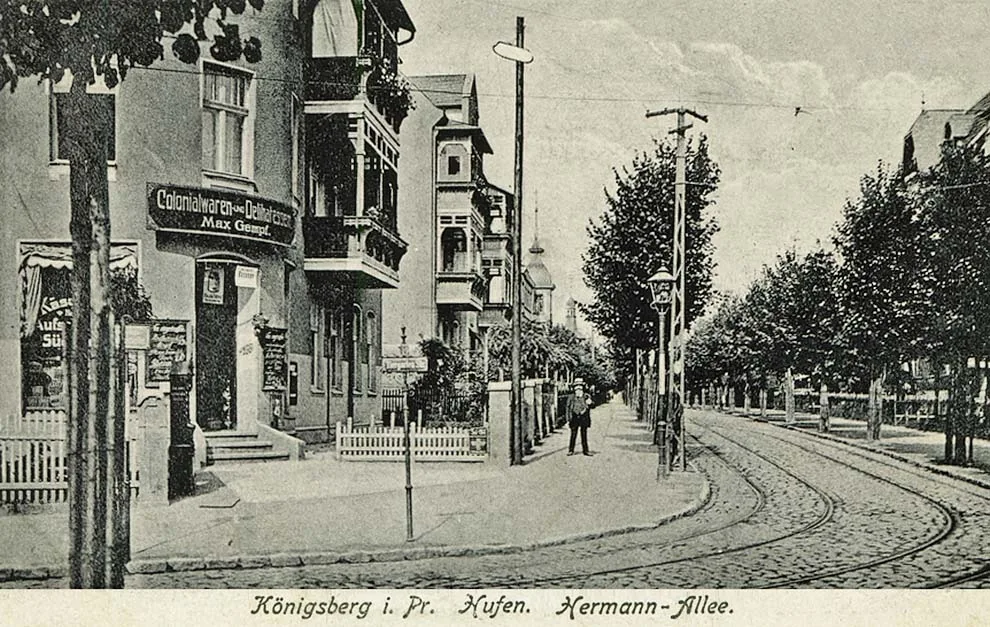
Hufen (Hufen)
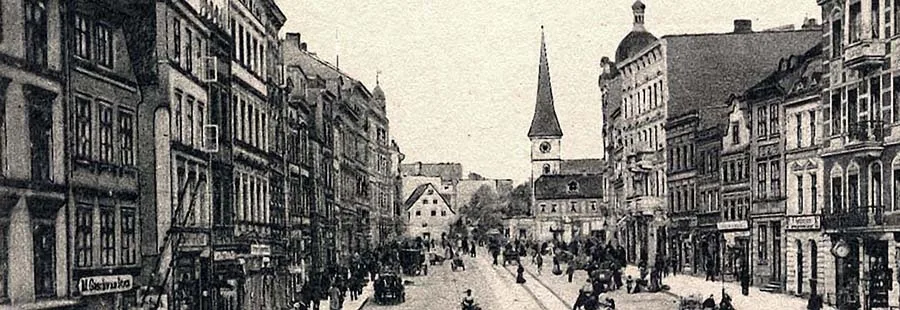
This was Königsberg's nearest suburb, beginning just beyond the Steindamm Gate, demolished at the beginning of the 20th century; in the 17th century the local people had meadows and vegetable gardens here amid still almost virgin forests. Hufen is first mentioned in 1286, because its lands within half a mile inland from the bank of the river Pregel belonged to the town of Altstadt, and until the beginning of the 18th century a forester was maintained here at Altstadt's expense; his residence stood almost immediately outside the town gate, roughly where the building of the Kaliningrad Regional Drama Theatre stands today.
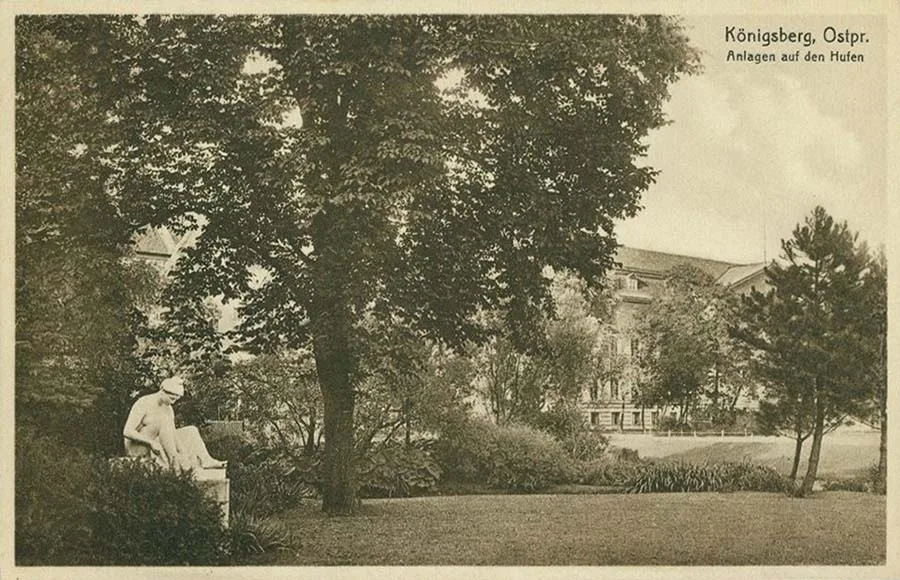 The sculpture "After Bathing" by Stanislaus Cauer. Its place is now taken by "Peter I" by Lev Kerbel.
The name of the future suburb echoes the word huben – a land measure of 17.5 ha. In the 18th century these lands with their woods, homesteads and peasant farms later became an extremely popular place for the country residences of the aristocracy and of simply wealthy citizens of Königsberg. They left the city for Hufen through the Steindamm Gate, built in the Neo-Gothic style.
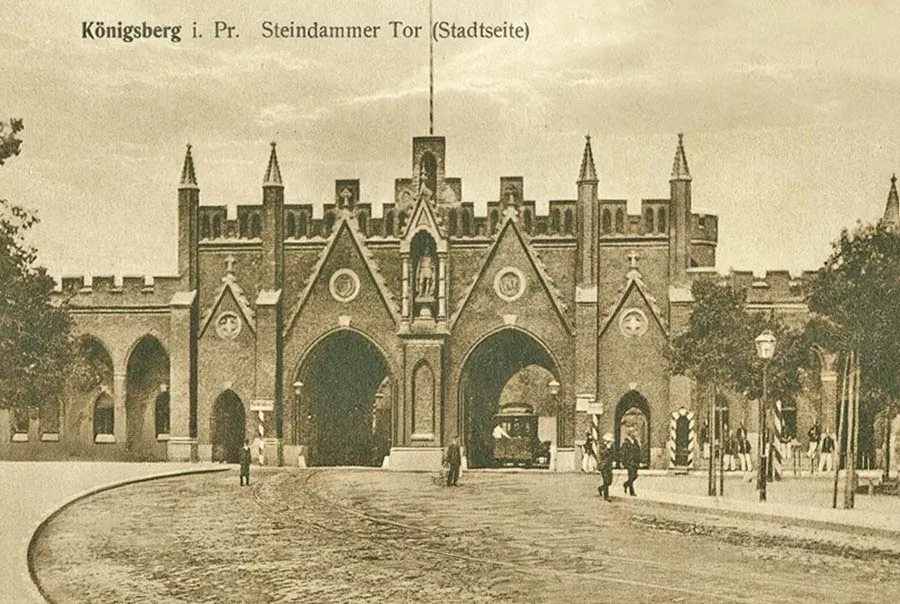 Königsberg's Steindamm Gate was demolished in 1912.
The gate had four openings: two tall ones in the middle for carriages, with passages for pedestrians on either side of them. On the side of the gate facing the city stood a life-size statue of King Frederick William IV. On one side face were the coats of arms of Königsberg, on the other coats of arms with the dates 1226, 1525 and 1657, marking notable events in the history of the Teutonic Order. The main portal of the gate was decorated with an image of the Prussian eagle. The gate was demolished at the beginning of the 20th century, when Königsberg was being actively built up and expanding beyond its historical boundaries.
Gradually Hufen split into three parts. The first, northern part came to be called Vorder Hufen, i.e. Front Hufen. Lying west of the railway line running to the North Station from Warnicken (Lesnoye) and bounded by Beeckstraße (today's Alyabyeva Street), it began to be built up with apartment blocks and public buildings earlier than the other parts of Hufen and by the beginning of the 19th century was one of Königsberg's business centres. The country houses of aristocratic families and wealthy townspeople, of which Vorder Hufen had an abundance from the middle of the 18th century, were gradually sold off and demolished. The second was Mittel Hufen (Middle Hufen), whose western boundary was Schrötterstraße (now Krasnaya Street). And the third was Hinter Hufen (Far, or Back, Hufen), lying west of Schrötterstraße, a very large district, part of which later became known as Amalienau.
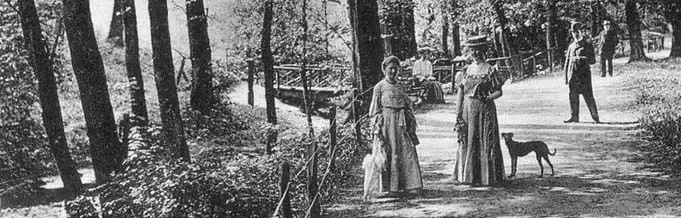
In the 20th century many of the aristocratic villas of the Hufen suburb were Etablissements. That was the name given in those days to popular commercial pleasure gardens with restaurants. Although there were Etablissements in the "inner city" as well, in summer the inhabitants of Königsberg from every walk of life preferred to spend their time in aristocratic Hufen, in Etablissements whose gardens and restaurants had a long and often romantic history. However, the first decade of the 20th century swept away these idyllic landscapes of Hufen, which were displaced by newly built residential quarters.
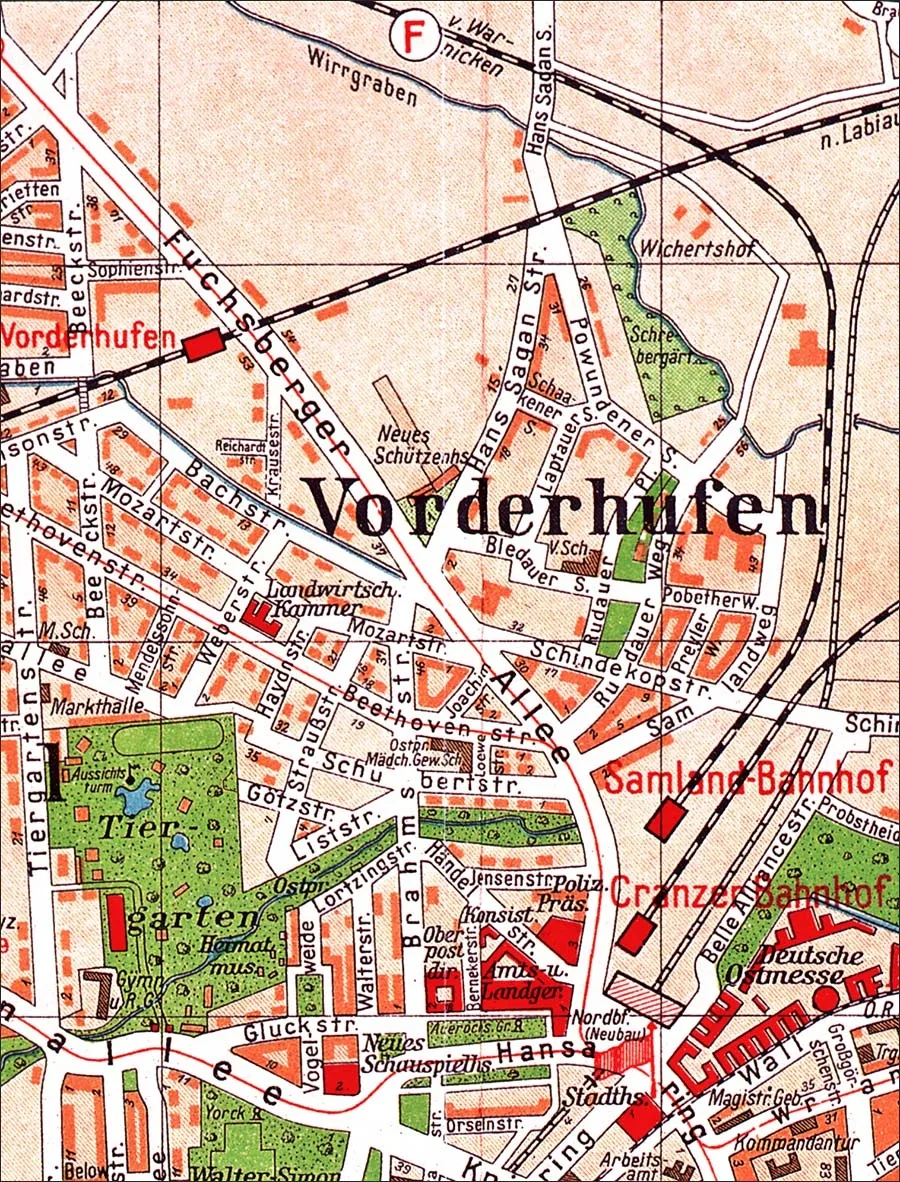 Near Hufen on a map of Königsberg from the Weimar Republic era (1928).
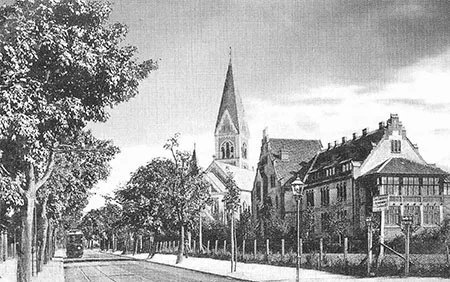
The large new city district of Hufen, built up by the "Königsberg Housing Construction Society" with blocks of two- to four-storey buildings, was distinguished by fruit gardens inside the residential blocks and by small round squares with lawns and flower beds at street intersections, framed around their perimeter by trees of native species – limes, maples, hornbeams.
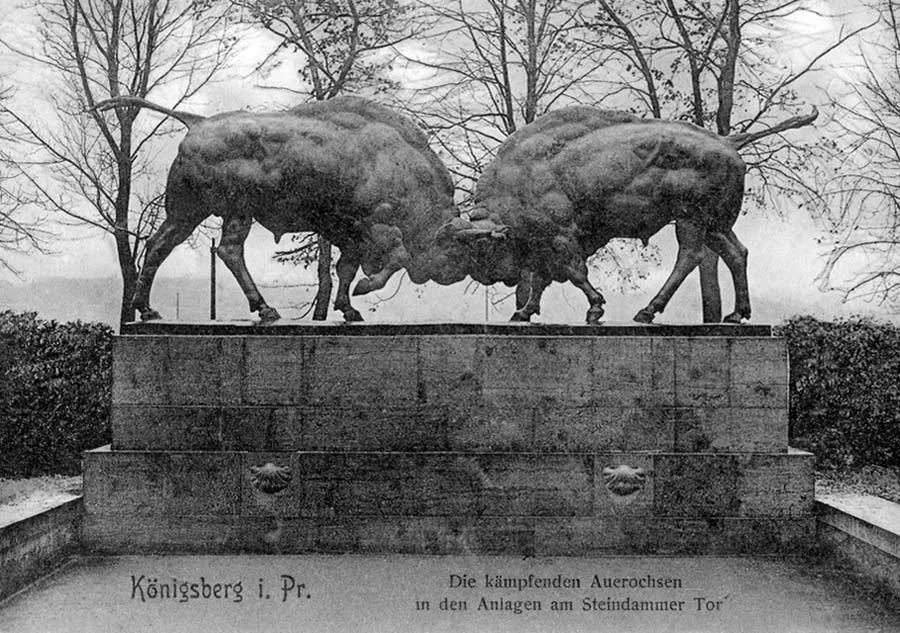 "Fighting Bison" by August Gaul was meant to adorn Münster but went to Königsberg instead.
At the centre of this district are three large parks:
1. Luisenwahl, laid out in 1895 and presented to the city in 1914 by Emperor Wilhelm II (now Tsentralny Park);
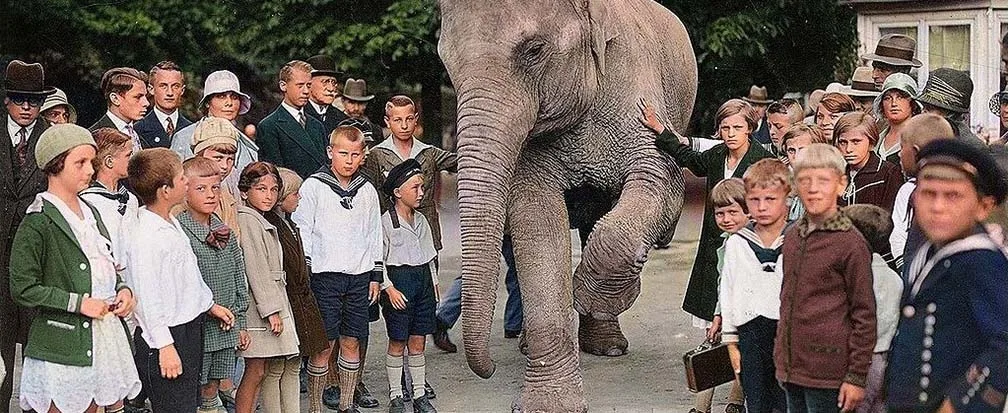
2. The Tiergarten – the zoo;
3. The Walter Simon Platz, a green square with flower beds and well-kept paths covering 6.83 ha, presented to the city in 1892 by Walter Simon – a banker, the son and grandson of bankers, and a university professor (now the Baltika Stadium).
Across Hufenallee (now Prospekt Mira) from the Walter Simon Platz, a little further west of the fortifications and the Steindamm Gate, demolished as no longer needed, began the public gardens of Hansaring (part of Prospekt Mira), leading to the New Theatre (1912). Roughly where the monument to Peter I now stands, the garden was adorned by Stanislaus Cauer's sculpture "After Bathing", created in 1906 (no longer marked on pre-war sketch maps). In 1912 the animal sculpture "Fighting Bison" (sculptor August Gaul, 1869–1921) was installed in the garden next to the later-built Regional Court (Landgericht). The area occupied by the gardens at the beginning of the last century has survived, as have many of the trees adorning it (a new, very young European beech of the 'Purple King' variety has been planted in the northern garden opposite the Schiller monument, not far from the monument to Peter I).
From General-Litzmann-Straße (Sovetsky Prospekt), a large green area laid out for walks led to the zoo along the Hufenfreigraben (Parkovy Stream); beyond it lay the green hectares of the zoo, which by 1913 were linked to Luisenwahl Park by the landscaped Julchental Promenade (following the Parkovy Stream from Prospekt Mira to today's Tsentralny Park). Adjoining the promenade on the side of Hufenallee (Prospekt Mira) was a charming old garden between the streets of Luisenhöh and Julchental.
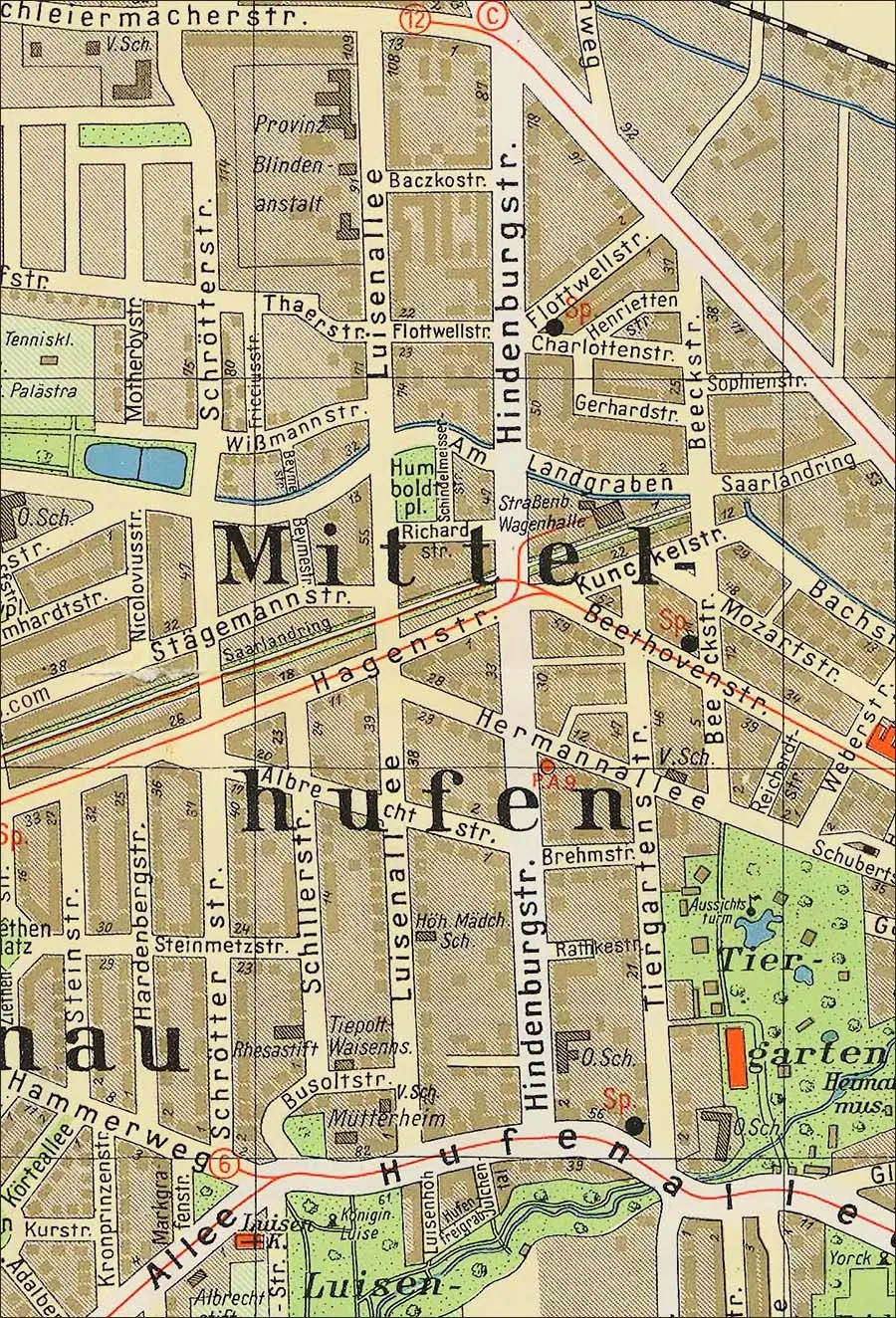 Central Hufen on a 1938 map.
Opposite Tsentralny Park, on the other side of today's Prospekt Mira, the site has survived where there once stood the house of one of the owners of this park, who named it after his wife (Luisenwahl means "Louise's Choice", and this Louise was not the queen but the wife of Councillor Busolt, an educator and follower of Pestalozzi's pedagogical ideas). But he really did receive crowned heads in his house in 1808–09, and Queen Louise loved to walk in the park, which was already called Luisenwahl at the time.
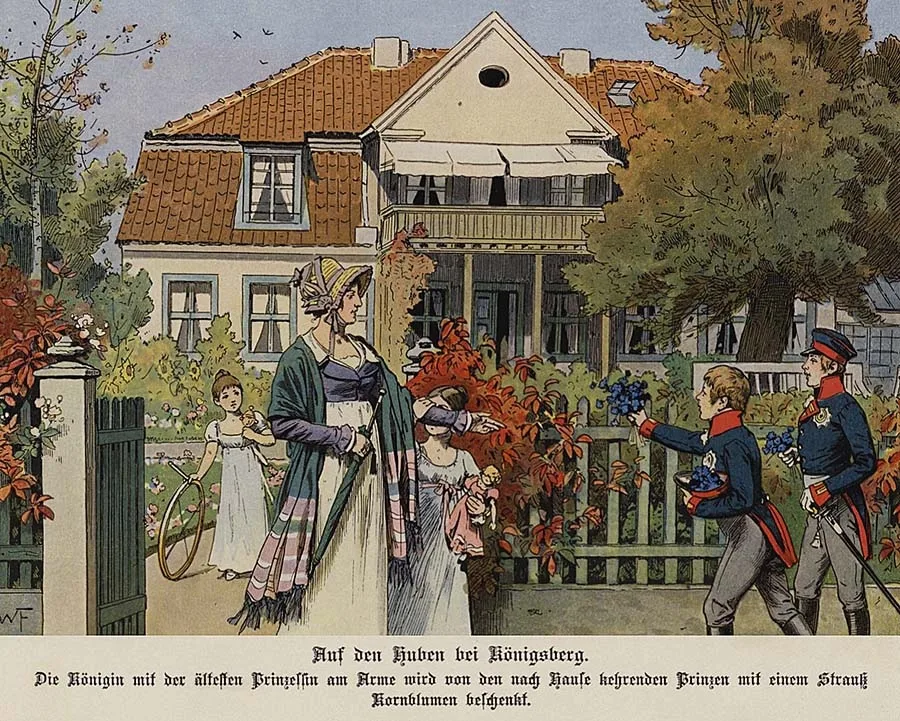 Queen Louise with her children at Luisenwahl.
In the 19th century this house became the Mutterheim, a home for single mothers, which for a long time was surrounded by a small garden. The home has not survived, but the place where it stood is marked by the barely noticeable valley of one of the two branches of the Parkovy Stream, now hidden in a pipe; it flows under Zoologicheskaya Street and Prospekt Mira and, surfacing in Tsentralny Park, does its utmost not to choke on rubbish and to ennoble the unhappy park with its murmuring.
Besides the large parks, Hufen was adorned by other green areas as well: along Landstraße (the beginning of Dmitriya Donskogo Street) ran a splendid wide chestnut alley (partly preserved); a pleasant public garden adjoined the zoo grounds on the side of Vogel Weide (now the area between Grekova and Nosova Streets; incidentally, Grekova Street was once called Glükstraße – Happiness Street); between today's Kvarts factory and Zhelyabova Street lay the Rudauerplatz garden, later (from 1931) Ebertplatz (partly built over); the garden at the crossing of today's Komsomolskaya and Yanalova Streets – Humboltplatz (named after the great scientist); the Bülow-platz garden (at the crossing of Kommunalnaya-Bankovskaya Street and Vali Kotika Street (almost built over); Körner-platz – the Corner Garden at the crossing of Yanalova Street and Kashtanovaya Alley, with once magnificent three-hundred-year-old oaks (built over); Ziettenplatz – a garden at the crossing of Kommunalnaya and Stepana Razina Streets.
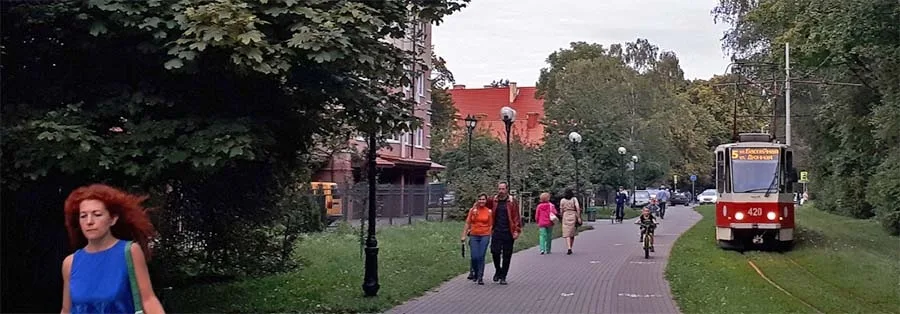
Hufen and its green quarters, now part of Kaliningrad's Central District, remain one of the most prestigious places thanks to their intimacy, cosiness and comfortable environment.
In August 2002 Kaliningrad's chief architect said in an interview: "Luisenwahl? There is no place with that name in Kaliningrad." But the parallel realities of space and time, which are constants and among the most attractive features of our city, hardly depend on the opinion of city officials flying past at the speed of clouds.
Translated from Russian with the help of AI (Claude, Anthropic), October 2026.