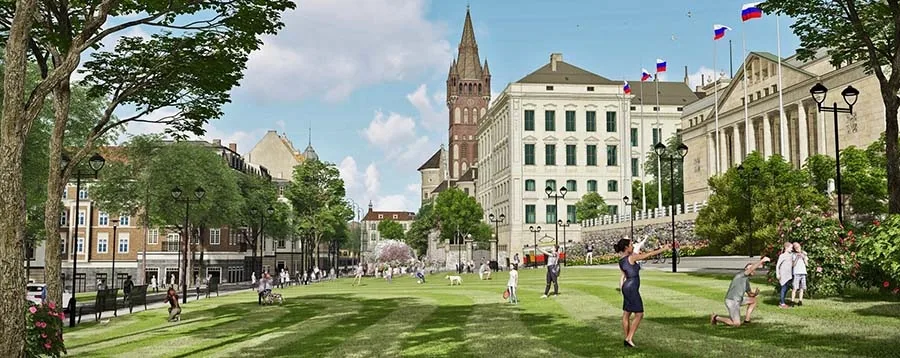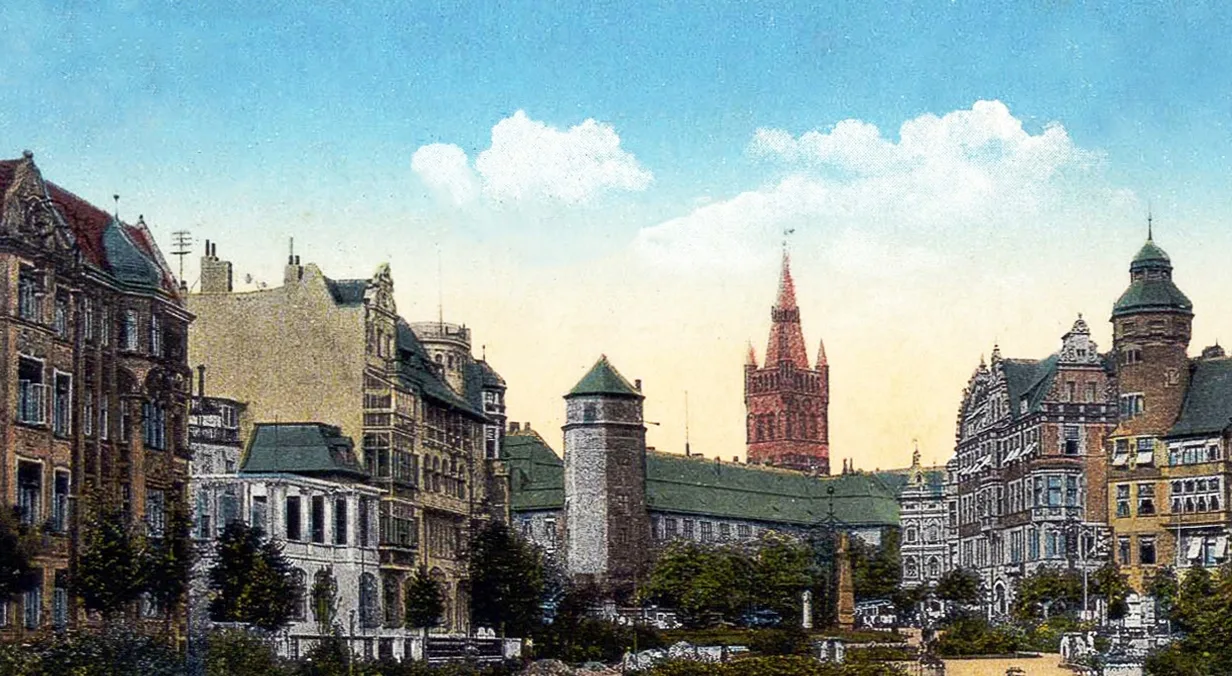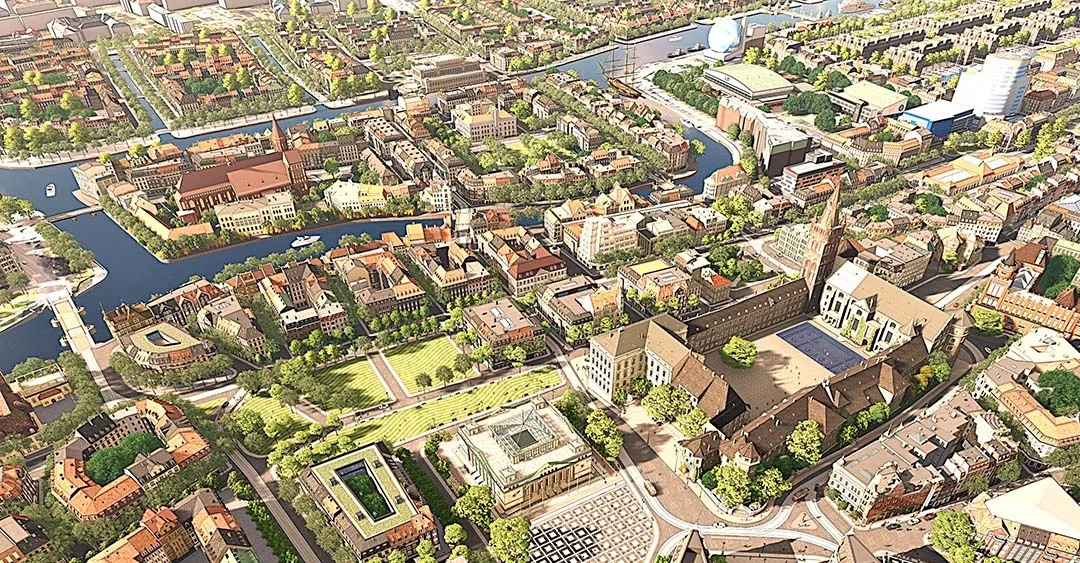
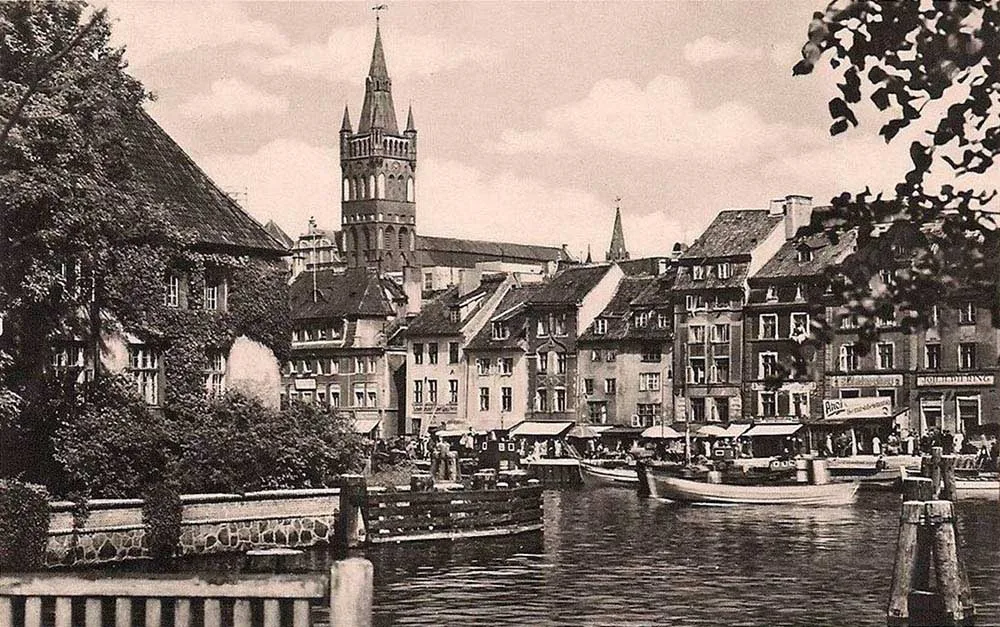
The history of Königsberg begins in January 1255. I can foresee a reasonable objection: what about Prussian Twangste? After all, people lived here even before the Teutonic Order laid the foundations of a castle on the banks of the Pregel, didn't they? Let me state my position at once: there is no continuity between Königsberg and Twangste. Between Kaliningrad and Königsberg there is; between Twangste and Königsberg there is not. The Teutonic Knights themselves did everything they could to ensure that we would learn as little as possible about the pre-Christian history of this place. By destroying all evidence of a Prussian settlement here and leaving no descriptions of their own of Prussian life, they created a historical riddle. Archaeologists and historians have still not agreed on whether Twangste was a sanctuary or simply a fortified settlement, how many Prussians lived here, or what role Twangste played in Prussian history. Königsberg Castle was not the heir to the Prussian settlement, nor its logical continuation, and that is precisely why 1255 became the year Königsberg as such was founded.
THE FIRST CENTURY: BY FIRE AND SWORD
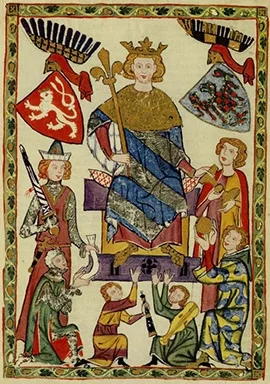
Přemysl Ottokar II
(c. 1230–1278)
King of Bohemia from 1253. He strengthened royal authority and the military might of the Bohemian state. In 1254–55 he led a force of knights to conquer the Prussian lands in Sambia. He planned another campaign to Prussia in the 1260s but was unable to take part in it. He was killed at the Battle of Dürnkrut, fighting the army of the German emperor Rudolf I. A statue of Ottokar II adorns the pediment of the King's Gate in Königsberg (now Kaliningrad).
The foundation of Königsberg Castle followed the crusade into Sambia, in which the Bohemian king Přemysl Ottokar II played the leading role. In the winter of 1254–55 the Christian army, made up of knights of the Teutonic Order and Ottokar's crusaders, swept across the Sambian Peninsula, wiping out pagans village by village, until the Prussian chieftains submitted and sued for peace. Capitulation in those days looked like this: the local tribal chieftains handed over their sons as hostages, the population underwent baptism, and the local nobility, as a rule, kept their lands and privileges and went over to the side of the victors. After the conquest of Sambia, Königsberg Castle was founded on a high hill at the mouth of the Pregel.
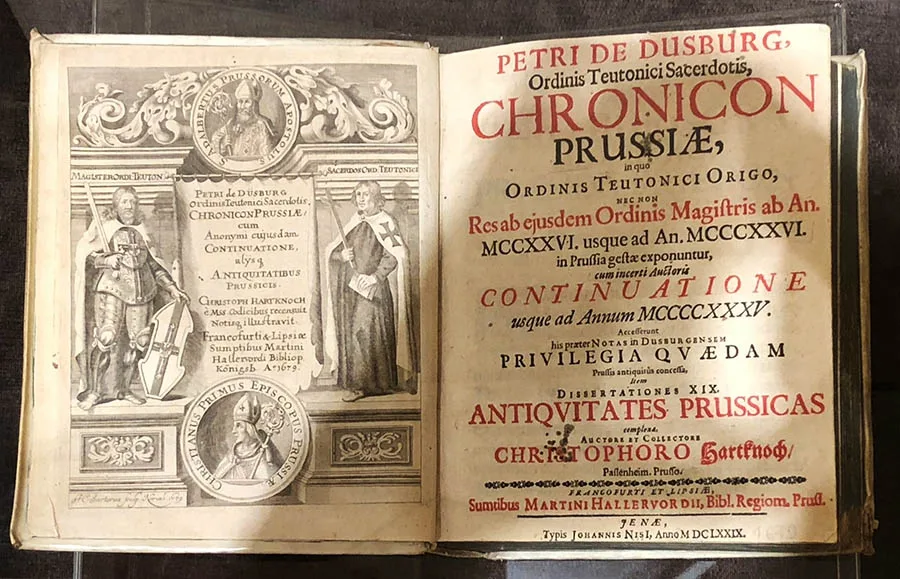
The principal historical document describing the events of those years, Peter of Dusburg's Chronicle of the Prussian Land, speaks rather briefly about the founding of the castle itself:
“After the departure of the lord king of Bohemia, the master and the brethren duly prepared everything necessary for the building and, taking with them the Prussians loyal to them, set out with a great army in the year of Our Lord 1255, and in the place that is now called the old castle they built the castle of Königsberg, naming it the King's Castle in honour of the king of Bohemia (among the Prussians it is called Tuwangste, after the name of the forest that stood in that place), and left there Brother Burchard von Hornhausen as commander, with many brethren and squires. Later this castle was moved to the place where it now stands, on that hill, and was enclosed by two walls with nine stone towers.”
There is every reason to believe that the site for the castle was not chosen by chance but had been picked out by the Order in advance. (It is known that representatives of the Hanseatic League had earlier expressed a wish to found a town at the mouth of the Pregel.) Quite probably the Order's leadership already understood its strategic position: it would become the gateway to the Pregel, opening the waterway into the lands of the Prussians, and could also close it off if need be.
This is precisely why Königsberg later grew into a large city, whereas all the Order's other castles in what is now the Kaliningrad Region, though they eventually acquired settlements around them, never rose above the rank of small towns.
Convent
A council made up of members of the Order: twelve knights and six priests. It was headed by a commander (Komtur), and the convent itself was the supreme authority in a commandery, the Order's administrative unit.
And so Königsberg Castle, at that time still built of earth and logs, was founded. But it was founded not where “archaeological” excavations were carried out with excavators in our own day, nor where the grey hulk of the House of Soviets now towers. The castle stood a little to the east of the House of Soviets, where the concrete descent to the Moskovsky supermarket, built ahead of the FIFA World Cup, now begins; before that it was a neglected slope generously strewn with broken brick. Near the castle flowed the Cat Brook, the Katzbach, which has since been hidden away in an underground culvert. Almost at the same time as the first castle, a mill was built on the brook, a vital link in the Order's economy in the 13th century. A garrison was left in the castle under the command of Burchard von Hornhausen. Contrary to a widespread misconception, King Ottokar himself took no part in founding Königsberg Castle: immediately after the end of the Sambian campaign he hurried back to his own domains, and by 17 January 1255 he was already in Elbing (now Elbląg in Poland).
A brief digression is in order here regarding the name of the castle itself. Historians and local historians have long been arguing over “whence Königsberg took its beginning”. And although Peter of Dusburg states unambiguously that Königsberg received its name in recognition of King Ottokar's services, there is also a view that the name in fact followed the Order's tradition of naming new castles and fortresses after those previously lost in Palestine. One may suppose that in this case the brethren of the Order killed two birds with one stone: they honoured the tradition and expressed their gratitude to the Bohemian king. In the Order (especially in that period) it was customary to decide such matters collectively, and most likely the name Königsberg suited the majority, if not everyone.
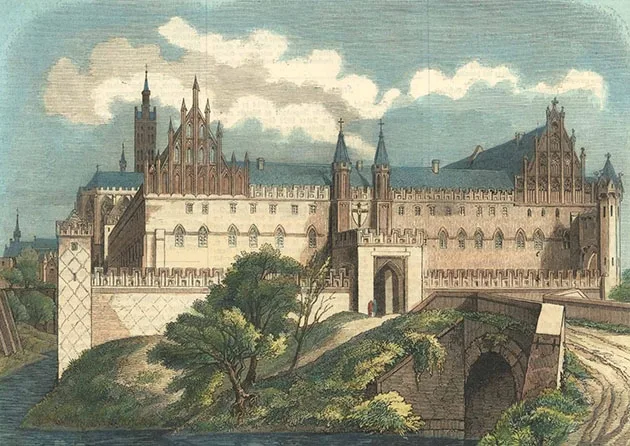
About two or three years later, construction began on a new Königsberg Castle, this time on the site familiar to us from pre-war photographs.
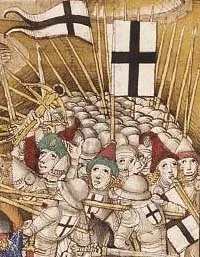
Teutonic Order
A religious order of knighthood founded in 1190 in Palestine, best known for its conquest of the Prussian lands and the state it created on their territory (1309–1525). From the late 13th century it was in a state of military conflict with Lithuania and Poland. In 1410 it was defeated by the Polish-Lithuanian army at Grunwald and lost considerable territory. After its defeat in the Thirteen Years' War (1454–66) it became a vassal of Poland. As a state it was abolished in 1525 with the creation of the Duchy of Prussia. It continues to exist in nominal form to this day.
The Katzbach was dammed above the old mill, creating the Castle Pond (German: Schloßteich), known to us today as the Lower Pond. It can safely be said that this is the oldest surviving man-made feature in the city. At the same time, north of the castle, in the area of today's Hotel Kaliningrad, the first settlement of German colonists appeared, and the Church of St Nicholas was built next to it. Construction of the castle came to a halt in 1260 because of the Prussian uprising led by Herkus Monte (Mantas). The castle itself survived the uprising, albeit with the greatest difficulty, but the settlement and the church were burned by the Prussians. The siege of the castle lasted until early 1262. The castle was supplied with provisions from outside along the Pregel, despite the Prussians' attempts to block the river. At last, on 22 January 1262, a combined force of knights from Jülich and Brandenburg arrived beneath the walls of Königsberg, forcing the Prussians to lift the siege. The Prussian uprising was finally crushed in 1270, and in the same year a new settlement was founded at the southern edge of the castle, which later received the name Altstadt.
Of course, the attentive reader will immediately spot a contradiction: a brand-new settlement was named the “Old Town”. There is nothing surprising about this. The name Altstadt first appears in the chronicles 16 years later, in 1286, when the settlement received its town charter. By then several similar colonist settlements had already grown up around Königsberg Castle, and Altstadt got its name as the oldest of them. The next town beneath the walls of Königsberg Castle to receive town rights, in 1300, was Löbenicht, which for a long time was called Neustadt, the “New Town”.
But let us return for now to Königsberg Castle. In 1280–90 its main structure was built: a quadrangular convent building enclosed by a wall of brick and fieldstone, with intermediate towers along the long southern and northern sides. The gate was on the east. By the turn of the 14th century Königsberg Castle had taken shape as a fortress, and later improvements were made mainly to expand its administrative functions.
In 1312 a major event took place in the life of Königsberg Castle: it became the residence of the Marshal of the Teutonic Order, the high-ranking official in charge of the brethren’s military affairs.
Kulm Law
A legal document defining the division of jurisdiction between the Teutonic Order and the municipalities, as well as the rights and obligations of towns founded on the Order’s lands. It was based on the first agreement of this kind, concluded with the town of Kulm (Chełmno) in 1233. It was also adopted in Poland. It applied directly in Prussia until 1620, and indirectly (Kölmisch), with regard to citizens’ private property, until the early 19th century.
Once again, the decisive factor in choosing the Marshal’s residence was Königsberg’s favourable geographical position as a base for the coming offensive against Lithuania: the castle stood at the crossroads of waterways and overland routes, could withstand a short siege, and yet was not too far from the scene of the battles to come. In the years that followed, Königsberg saw a host of knights, from nameless adventurers to persons of royal blood, who arrived as “guests”, as the Order then called participants in the crusades against the Lithuanian lands.
The settlements by the castle walls were growing too. Altstadt, which lay between the castle and the Pregel, and Löbenicht, located in what is today the area of Zarayskaya Street and the Wedding Palace, have already been mentioned. A third town arose and received its charter in 1327 on the island of Kneiphof (today Kant Island), occupying it neatly from end to end. Three years later, on Kneiphof, the local bishop Johannes Clare laid the foundation stone of the future Cathedral, which was consecrated and welcomed its first worshippers as early as 1333, even though its construction was completed only in 1380, after Clare’s death.
Chronology of key events
1226–1283 — The Teutonic Order conquers the Prussians.
1255 — Foundation of Königsberg Castle.
1260-70 — Prussian uprising led by Herkus Monte (Mantas).
26 February 1286 — Altstadt receives town rights.
5 May 1300 — Löbenicht receives town rights.
1309 — The capital of the Teutonic Order moves to Prussia (Marienburg / Malbork).
1312 — The residence of the Order’s Marshal moves to Königsberg Castle.
6 April 1327 — Kneiphof receives town rights.
1329 — Foundation of St. George’s Hospital.
1330 — Construction of the Cathedral begins.
1339 — First mention of Königsberg’s seaport and of paved streets in Altstadt.
1339–1340 — Altstadt, Kneiphof and Löbenicht join the Hanseatic League.
THE SECOND CENTURY — THE TEUTONIC ORDER
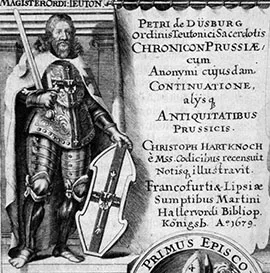
“Chronicle of the Prussian Land”
The first chronicle of events in Prussia, written by Peter of Dusburg (Duisburg), a brother of the Order, and covering the period from the founding of the Order in Palestine up to 1326 (the year of the author’s death). It is the most important historical source on the conquest of the Prussians and the Order’s wars with Lithuania.
Before going any further, it is probably worth explaining to the uninitiated reader how a medieval town worked, because the question naturally arises: what were these little towns barely a block and a half across, and why did they sit right next to one another without merging into one? The point is that a medieval town was, above all, its town law: a body of rights, liberties and duties that governed the whole of urban life. In Prussia this was Kulm Law, since agreements with towns were drawn up on the model of the charter the Teutonic Order had earlier granted to the town of Kulm (today Chełmno in Poland). It did not matter whether a town had 50 inhabitants or 5,000; what mattered was that the settlement enjoyed the right of self-government. This right applied within a strictly defined territory inside the town walls. A town could extend its boundaries only with the consent of its overlord, which in Prussia was the Teutonic Order, and such extensions were extremely rare. Within the town limits, on the other hand, the municipal council decided virtually everything, except perhaps political and religious matters. It also received most of the revenue from all manner of dues and taxes. The one thing the burghers (as full citizens of a town were called) were strictly forbidden to meddle in was politics. Here the overlord (in our case the Order) reigned supreme, acting as guarantor of the rights of the town and its citizens and providing protection against external threats. True, in the event of serious trouble the towns were obliged to field a town militia or hire a set number of professional soldiers for the Order’s army, or both. Altstadt, Löbenicht and Kneiphof had just such an occasion in 1370, when a militia was raised to repel a Lithuanian-Russian-Tatar army at the Battle of Rudau. According to legend, Hans Sagan, a shoemaker from Kneiphof, distinguished himself in that battle.
The conglomerate of Königsberg Castle, Altstadt, Löbenicht and Kneiphof existed quite prosperously for more than a hundred years, until the outbreak of the Great War of the Teutonic Order against the Kingdom of Poland and the Grand Duchy of Lithuania (1409–1411).
Over time the towns developed their own “specialisations”: crafts flourished in Altstadt, trade in Kneiphof, while Löbenicht was occupied mostly with farming the land it owned. Later a saying arose: “To Altstadt the power, to Kneiphof the splendour, to Löbenicht the fields” (German: Der Altstadt die Macht, dem Kneiphof die Pracht, dem Löbenicht der Acker). Not relying solely on the protection of the Castle walls, the towns built fortifications of their own. This was easiest for Kneiphof, which had a formidable natural water barrier in the two arms of the Pregel and the Hundegatt channel between them. A wall with towers and gates was added along the island’s shores. The gates stood opposite the bridges that gave access to the island. Altstadt and Löbenicht created a shared system of fortifications, divided along the boundary between the two towns by an inner wall.
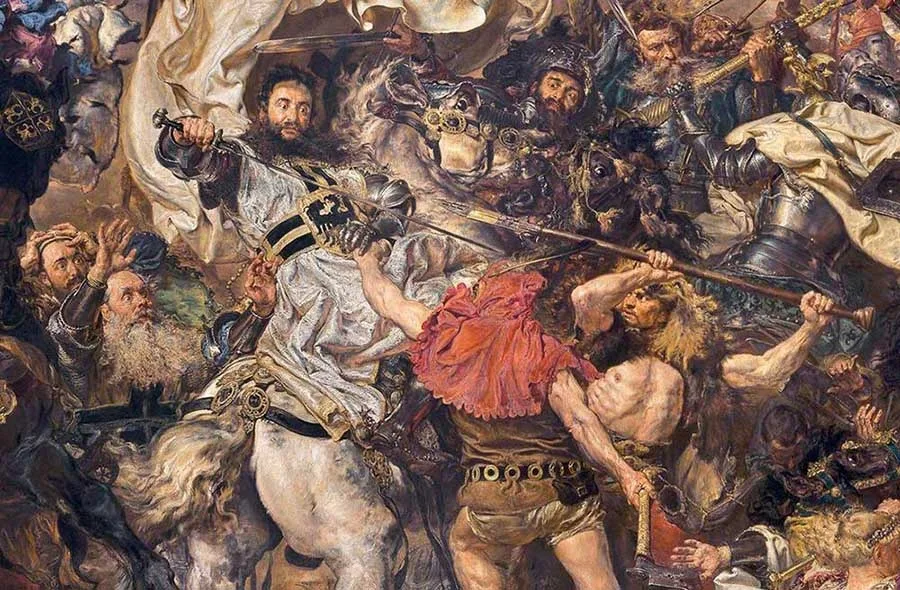 “The Battle of Grunwald”. Detail of a painting by the Polish artist Jan Matejko. The battle took place on 15 July 1410; the painting was completed in 1878. During the Second World War the canvas was hidden in Lublin. After the liberation of Poland the famous painting returned to the National Museum in Warsaw.
The First Peace of Thorn (Toruń)
The signing of the First Peace of Thorn on 1 February 1411 ended the Great War of the Teutonic Order against Poland and Lithuania. Thanks to its well-organized defence of Marienburg and other castles, the Teutonic Order managed to negotiate lenient peace terms despite its defeat in the decisive battle at Grunwald. The harshest condition was a cash indemnity of 100,000 Bohemian groschen, which later undermined the economy of the Order's state.
In May 1409 the Great War broke out between the Teutonic Order and the Kingdom of Poland and the Grand Duchy of Lithuania, which sought to regain the territories the Order had previously seized from them. The outcome of the war was decided in a pitched battle at Grunwald (15 July 1410), in which the Order was utterly routed. Later, however, through the efforts of Heinrich IV Reuss von Plauen, who became Grand Master after the death of Ulrich von Jungingen, the Order's army managed to offset the severity of the defeat at Grunwald somewhat by successfully repelling the Polish army's assault on its capital, Marienburg (today Malbork). At the subsequent negotiations in 1411 that led to the First Peace of Thorn (1 February 1411), von Plauen and his associates succeeded in securing terms for the Order that were more than lenient, both politically and in terms of territorial concessions. The one area where the Order's negotiators slipped up was the size of the indemnity to be paid to the Kingdom of Poland. Forced to pay off its debts to mercenary troops out of a treasury emptied by war at the same time as the indemnity, the Order began selling off its landholdings on a massive scale and increased the tax burden on the population and the municipalities. This provoked a backlash and led in 1440 to the founding of the Prussian Confederation, whose core consisted of the nobility and clergy of Danzig, Thorn and Elbing.
Besides frequent wars with external enemies, trade and customs wars between the towns on the Pregel were not uncommon in those days, although they never escalated into armed clashes. In 1414, for instance, the people of Altstadt entered the territory of Löbenicht and demolished the houses adjoining the inner fortress wall, claiming that the buildings posed a danger to Altstadt. The inhabitants of Löbenicht were outraged, but could do nothing against their stronger neighbour and had to resign themselves to it. Only in extreme cases did the towns turn to the Order's authorities in the Castle as an arbiter. Minor legal matters not involving rebellion or serious crimes were dealt with by the municipalities themselves.
Chronology of major events
1360–70 — Intensified pressure on Lithuania.
1370 — Battle of Rudau.
1382 — Construction of Königsberg's canal system begins.
1409–11 — Great War of the Teutonic Order against the Grand Duchy of Lithuania and the Kingdom of Poland.
15 July 1410 — The Order's army is routed at the Battle of Grunwald.
1 February 1411 — Conclusion of the First Peace of Thorn (Toruń).
1420 — The first pharmacy opens in Altstadt.
28 February 1440 — A congress of representatives of the Prussian municipalities opens in Elbing; on 14 March it results in the founding of the Prussian Confederation of towns.
THE THIRD CENTURY — SECULARIZATION
The Second Peace of Thorn (Toruń)
The signing of the Second Peace of Thorn on 19 October 1466 ended the Thirteen Years' War between the Teutonic Order and the Prussian Confederation of towns. Under the terms of the treaty, the Order lost substantial territories, including its capital Marienburg, and itself became a vassal of Poland. The Order's capital was moved to Königsberg.
The beginning of the second half of the 15th century was marked by a worsening of the economic and domestic political situation in the Order's state. The Prussian Confederation of towns was preparing for open confrontation with the Order, and emissaries of the Polish king were negotiating with town councils almost everywhere. In March 1454 the Prussian Confederation sent a high-ranking delegation to Kraków to present the Polish king with a charter declaring the towns' submission to his jurisdiction. In return, the king handed the delegates a charter incorporating the towns and the Order's lands on which they stood into the Kingdom of Poland, and orally promised military support. The agreements reached in Kraków were then ratified, which inevitably led to a war between the Order and the rebellious municipalities that swept across the Prussian lands. In fact, the burghers cannot be accused of any treason or betrayal of national interests. The reason is that the state of the Teutonic Order was not a nation state like France or England, for example, where after the Hundred Years' War the peoples were united by a national consciousness formed around the figures of hereditary monarchs. There was nothing of the kind in Prussia. The towns saw themselves as autonomous administrative units, held together by the superstructure of the Order, which, moreover, carefully kept its distance from them. That is precisely why the towns chose for themselves with whom it was more convenient and advantageous to be allied.
The Königsberg towns, which had initially joined the rebels through their representatives, changed their position under pressure from the rebellious guilds and remained loyal to the Order.
Only Kneiphof at first tried to join the pro-Polish coalition, and as a result was besieged by the troops of the Teutonic Order and of Altstadt. It never came to actual fighting: realizing that their position was hopeless, the people of Kneiphof declared their support for the Order.
In the initial stage the Order enjoyed some success in the war, but before long the militias of the towns belonging to the Prussian Confederation, the Polish troops and their mercenaries began winning one victory after another, bringing the Order to the brink of military catastrophe. The Teutonic Knights sued for peace, which was established by the Second Peace of Thorn (19 October 1466). This time the terms were extremely harsh for the Order: it lost vast territories along with its capital Marienburg (today Malbork in Poland), the towns received extended powers, and the Order itself became a vassal of the Polish king. For us, however, this episode of history is interesting above all because, as a result, the capital of the Order's state was moved to Königsberg.
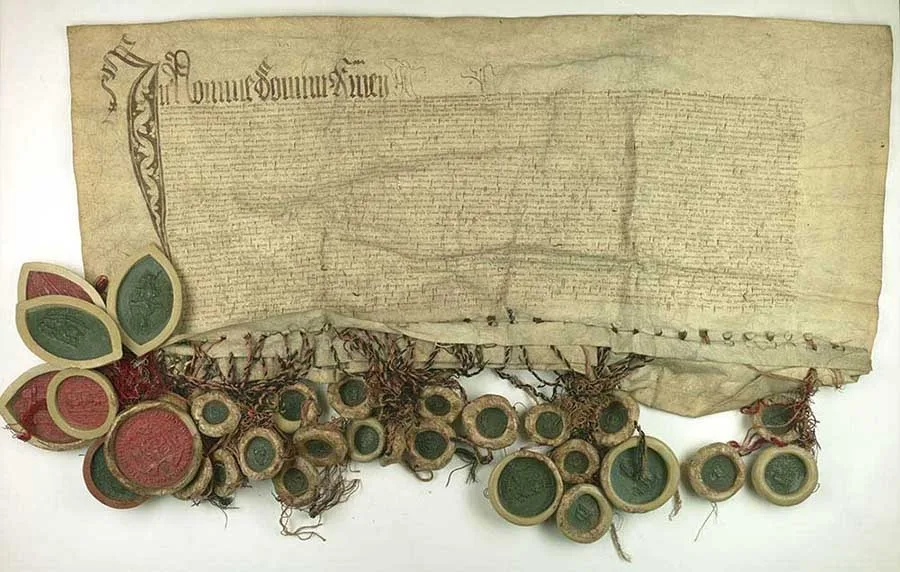 Petition of the members of the Prussian Confederation to King Casimir requesting the incorporation of Prussia into Poland. Held in Warsaw at the Central Archives of Historical Records.
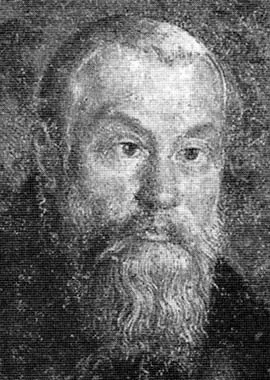
Albrecht of Brandenburg
(1490–1568)
The last (37th) Grand Master of the Teutonic Order (from 1511); in 1525, having transformed the Order's lands into a secular duchy, he became the first Duke of Prussia. In 1519–21 he waged war against the Kingdom of Poland with varying success. From 1522–23 he became an adherent of Lutheranism and thereafter promoted its spread in Prussia. On 10 April 1525, after swearing allegiance to the Polish king Sigismund I in Kraków, he secularized the Teutonic Order and proclaimed the Duchy of Prussia. He carried out a state reform, abolishing the Order's offices and introducing four councils, and divided the country into three districts (three more were added in 1560). In 1542 he issued a law on the selection of the country's highest officials (Oberräte) from among the nobility. To improve the economic and demographic situation, he invited (from 1527) persecuted followers of the Reformation to the duchy. A patron of science, the arts and education. He promoted the opening of Königsberg's first printing houses (1523, 1549, 1554). He attracted to the country many renowned European scholars, artists and architects, as well as simply educated people. He initiated the founding first of a grammar school (the Partikular, 1540) and then of the University of Königsberg (1544). He provided needy students with board and lodging at the university and established special scholarships for them. Towards the end of his life he largely withdrew from affairs of state. He is buried in Königsberg Cathedral. In Königsberg a street (now Patsayev Street), an avenue and a church in Maraunenhof (Thälmann Street, demolished c. 1975) were named after Albrecht.
From this point on, the Order went into decline. Its political and financial power had been undermined, and there was ever more talk of dissolving the Order's state altogether and incorporating its territory into Poland. In a desperate attempt to withstand this pressure, the Order began choosing its grand masters from among the high nobility, hoping that their exalted rank (birth, connections) would enable them to resist the attempts to disband the Order.
The last such figure, in 1511, was Albrecht of Brandenburg (1490–1568) of the House of Hohenzollern. Albrecht began his tenure as grand master in a very determined manner. He refused to travel to Kraków to swear the oath of fealty to the King of Poland, who, incidentally, was his uncle. Instead, in 1519, by demanding the return of Prussian lands and compensation for their use, he provoked the so-called Horsemen's War (1519–1521), a series of mutually ruinous campaigns by the Teutonic Knights and the Poles. At that time, for a whole range of reasons, the Polish side was in no position to wage decisive military operations, and so victories and defeats alternated for both sides in the course of the fighting. Nevertheless, Albrecht understood that this could not last forever. His attempts to form an alliance with the German Emperor Maximilian I and the Muscovite ruler Vasily III met with no refusal, but they did not lead to anything concrete either. What is more, the new emperor, Charles V, took an entirely neutral stance and demanded an end to the war between Christians. Under these circumstances Albrecht was already prepared to resign as grand master and even to surrender the Order to Poland, when two important events suddenly occurred in his life.
The first has been described very widely: in November 1523 Albrecht met the founding fathers of German Protestantism, Martin Luther, Philip Melanchthon and Andreas Osiander.
In private conversations, the fathers of Lutheranism persuaded Albrecht to do what had seemed impossible: to secularise the Order as such, to turn Prussia into a secular state and to adopt Protestantism as the state religion.
The second event has received far less attention: while already grand master of the Order, Albrecht made the acquaintance of the Danish princess Dorothea. There is evidently some connection between the collapse of her planned marriage to an English duke in 1523, Albrecht's acquisition of the secular title of duke, which allowed him to marry lawfully, in 1525, and the wedding of Albrecht and Dorothea in 1526.
The spread of the new religion in Prussia began in 1523, when the preacher Briesmann held the first Lutheran service in the Cathedral. Then, in 1525, Albrecht contacted King Sigismund I of Poland through intermediaries, and the king agreed to the transformation of the Order into the Duchy of Prussia, with the duke holding it as a fief of the Polish crown. A treaty to this effect was signed in Kraków that same year, 1525. All this turned the life of Königsberg a full 180 degrees: from a bastion of Catholicism in eastern Europe it became the capital of the first secular Lutheran state.
At first the reforms occasionally took an extremist turn, with Catholic monasteries being destroyed and Catholics persecuted. But dependence on the Catholic King of Poland, who demanded certain concessions from the duchy for its Catholic population, paradoxically played a positive role: Königsberg soon became one of the most religiously tolerant cities in Europe, where Lutherans, Calvinists, Catholics and even Jews lived side by side. This tolerance immediately bore fruit: people persecuted for their faith flocked to Königsberg in great numbers – French, Dutch, Jews and many others. It cannot be said that the local inhabitants, for whom the newcomers undoubtedly represented competition, were unreservedly glad to see the settlers. But there is no denying that this gave a powerful boost to the development of all kinds of crafts and trades.
The three towns on the Pregel could no longer accommodate everyone who wished to settle there, and so in these years the suburbs began to grow: the castle suburb in the area of today's Lower Pond, and the Near Vorstadt – the stretch of today's Leninsky Prospekt from the Estakadny Bridge to Krasnooktyabrskaya Street, together with the adjoining lanes.
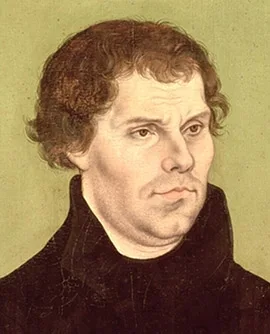
Martin Luther
(1483–1546)
Leader of the Reformation in Germany, which was set in motion by his appearance in Wittenberg (1517) with 95 theses against indulgences that rejected the fundamental dogmas of Catholicism. Founder of Lutheranism and ideologist of the conservative section of the burghers. In 1536 he established an order of worship distinct from the Catholic one. He translated the Bible into German and established the norms of the German literary language. In 1523 he addressed an open letter "To the Knights of the German [Teutonic – A.P.] Order", arguing that the Order had outlived its usefulness as both a clerical and a secular organisation. From April 1523 he negotiated (through intermediaries) with Albrecht of Brandenburg on the secularisation of the Order and the creation of a secular Protestant state, and on 29 November 1523 he met Albrecht in person. In 1544 he took part in the preparations for the opening of the University of Königsberg and recommended a number of scholars for its professorships.
It can safely be said that the reign of Albrecht of Brandenburg was the richest period of change in Königsberg's history. At the same time, due credit should be given to his wife Dorothea, who wholeheartedly encouraged the development of the arts and education in the city. Largely under her influence, the duke invited masters of painting and music to Königsberg and founded the New Library (Nova Bibliotheca, 1529), which in 1540 became the public Castle Library. After Dorothea's death, her personal books became part of the Chamber Library.
Chronology of key events
1454–66 – Thirteen Years' War between the Teutonic Order and the Prussian Confederation.
1457 – The capital of the Teutonic Order is moved to Königsberg.
19 October 1466 – Conclusion of the Second Peace of Thorn (Toruń) – the Teutonic Order becomes a vassal of the King of Poland.
1510 – Albrecht of Brandenburg is elected Grand Master of the Teutonic Order.
1521–23 – Horsemen's War between the Teutonic Order and Poland.
1525 – Dissolution of the Order's state and creation of the Duchy of Prussia.
1540 – Opening of the first public library in Königsberg Castle.
17 August 1544 – Opening of the University of Königsberg.
29 May 1549 – Hans Lufft opens the first printing house in Königsberg.
THE FOURTH AGE – UNDER THE BRANDENBURG ELECTORS
The university in Königsberg was founded first and foremost to train theologians and Protestant preachers. That is why for many years its principal (senior) faculty was theology, and later the theological and philosophical disciplines prevailed over all others in its work. Only in the 19th century would the exact and natural sciences come into their own.
How great an influence the university came to exert on the life of the city is vividly illustrated by the story of the so-called "Osiandrian heresy", when a theological dispute spilled over from the university lectern into the city at large, splitting the townspeople into two camps. It happened when Andreas Osiander, who enjoyed considerable authority thanks to his earlier services to the establishment of Protestantism, began to interpret the Christian concept of justification rather freely. The affair ended, incidentally, in a far from scholarly fashion: the townspeople opened the grave of Osiander, who had died by then, to make sure the devil had not wrung his neck, while a special commission sent to the city by the King of Poland sentenced three of Osiander's supporters – the councillor Funck and his associates Horst and Schnell – to death. This grim episode marked the beginning of the second part of Duke Albrecht's reign, which may be said to have started after the death of his first wife Dorothea in 1547. Their marriage had been happy in every respect except the birth of an heir – both their sons died in infancy.
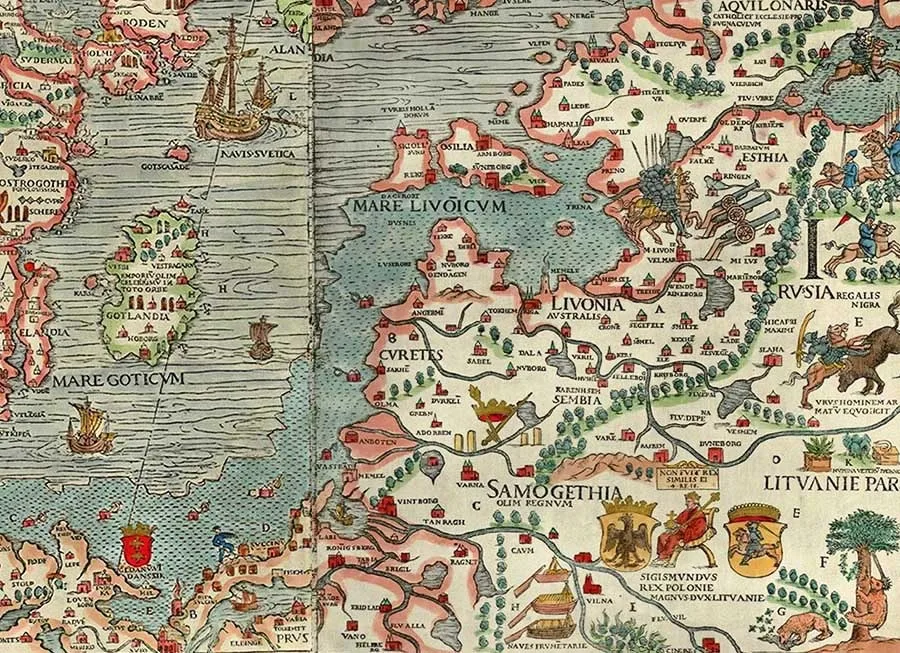 1539. Detail of a map of the Baltic Sea.
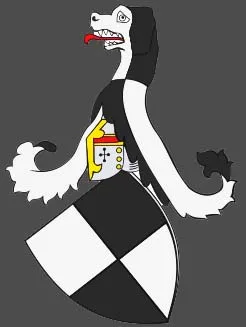
The Hohenzollerns
A dynasty with several cadet branches in German and other European states. From 1410 margraves of Brandenburg, from 1525 dukes of Prussia, from 1618 rulers of the Brandenburg-Prussian state, from 1701 kings of Prussia, from 1870 German emperors. Overthrown in 1918 in the course of the November Revolution in Germany.
Only three daughters survived from the marriage. Three years after Dorothea's death, in 1550, Albrecht married again. His new wife, Anna Maria of Brunswick, was 42 years his junior and a grandniece of the duke. This marriage was the complete opposite of the first. Anna Maria was anything but meek: she was wilful and quarrelsome and often flew into fits of hysteria. In the end, the couple came to lead separate lives, though she did give the duke another daughter and the long-awaited heir.
It should be noted that the question of an heir, important enough for any monarch, was for the Duchy of Prussia a matter of the state's very survival. Under the Treaty of Kraków with Poland, the duchy could pass only through the direct male line; should that line die out, it would revert to Poland. This ill-drafted treaty very nearly brought the state to ruin with the death of its very first ruler. But in 1553 the duchess safely gave birth to a son, and it seemed that the danger of the Hohenzollerns losing Prussia had passed. However, when the heir, Albrecht Friedrich, reached the age of 10, his tutor informed the duke that the boy was clearly lagging behind in his development, and the court physicians confirmed this. The duke was already 73, and the news broke him. A turbulent life and advanced age began to cloud Albrecht's mind. During this period there were in effect two courts in Königsberg Castle, the duke's and the duchess's, and the nobles rushed back and forth between them, weighing which allegiance would bring them greater advantage, while real power began to pass to favourites of every kind. For the time being the Polish side turned a blind eye to all this, intervening only once, when a certain adventurer from Croatia, Paul Skalich, tried to become the éminence grise while the duke was still alive. Skalich's story, moreover, became entangled with the case of Osiander's supporters mentioned above, but Paul realised in time what awaited him and fled without waiting for the trial.
On 20 March 1568 one of the most mysterious events in Prussian history took place: Duke Albrecht died at Tapiau Castle (now Gvardeysk) at the age of 78. On the same day, at Neuhausen Castle (Guryevsk), 30 km from Tapiau, his wife Anna Maria also died. She was only 38 at the time.
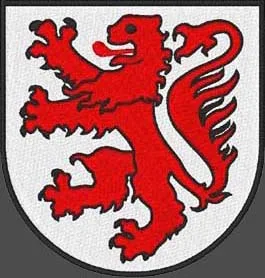
The House of Brunswick
A German dynasty whose members became rulers of various European states (including Russia). It traces its origins to the Welfs, the oldest Frankish family in Europe (7th century). Anna Maria, the second wife of Duke Albrecht, belonged to the Brunswick-Calenberg branch.
Chroniclers of the time claim that Anna Maria died of the shock she suffered on receiving the news of her husband's death. Back then this explanation satisfied everyone: the courtiers, the burghers and the Polish king. But can we believe that a young woman full of energy and plans, who had long been weary of her marriage to the aged duke, whose death, moreover, was expected, died of an excess of emotion at such news? Of course not. The duchess was killed, most likely poisoned. Widowhood opened Anna Maria's way to the regency for her ailing son, the heir, and with it opened the way to the Prussian throne for the whole influential House of Brunswick. History offers many examples of even indirect kinship leading to a crown, and only one obstacle stood in the Brunswicks' path: the Brandenburg house of Hohenzollern, which proved insurmountable. Who stood to gain from the murder is obvious. Only the details are unknown: who committed the crime; whether it was a spur-of-the-moment decision or a long-standing plan worked out to the last detail; and why Anna Maria did not foresee the possibility of being removed by force. In all likelihood, these questions will never be answered.
With the death of Duke Albrecht began what was perhaps the most interesting and mysterious period in the history of Königsberg. It is rather poorly covered in historical and local history literature and still holds many discoveries in store.
The title of Duke of Prussia passed from Albrecht to his mentally ill son, Albrecht Friedrich. At the time of his father's death he was only 15, which in itself limited his legal capacity. The heir's feeble-mindedness, however, made it necessary to appoint a regent.
The Königsberg nobility timidly put forward a candidate of its own, but he was flatly rejected, as Albrecht Friedrich's relatives from the Margraviate of Brandenburg immediately appeared on the horizon. While their right to the regency was obvious, their indirect kinship gave them no rights whatsoever to the title of Duke of Prussia itself. For this reason the appearance of the Hohenzollerns on the region's political stage raised no objections from the Polish side. The Poles could not have guessed how masterfully the Brandenburgers would steal the duchy from under their noses. But let us not get ahead of ourselves.
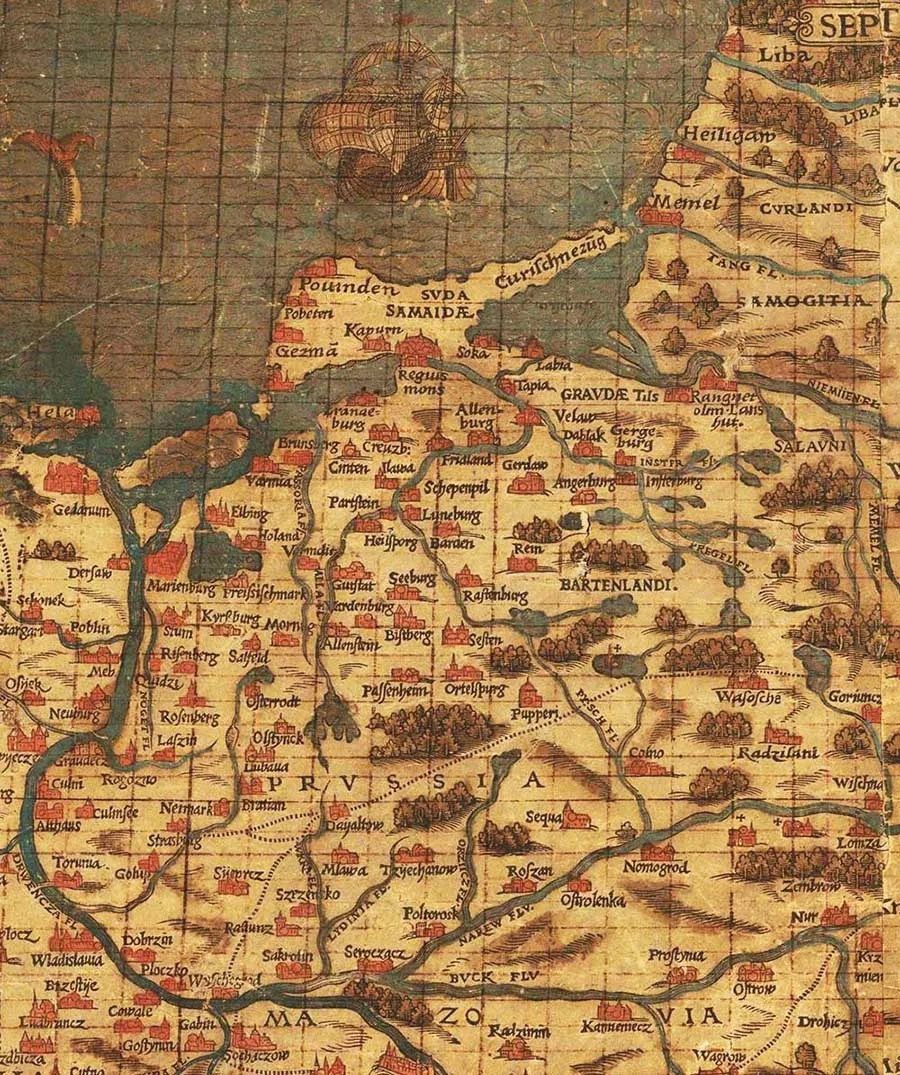 1570. Prussia (from the Vistula to the Neman) on an old Polish map.
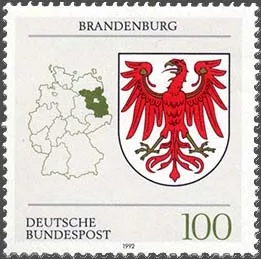
The Margraviate of Brandenburg
A German margraviate established in 1157 on the lands of the Polabian Slavs. The Elector of Brandenburg was one of the seven “prince-electors” of the Holy Roman Emperor. Ruled by the Hohenzollerns from 1415. Berlin became its capital in 1417. From 1618 it formed part of the Brandenburg-Prussian state.
Two years after ascending the ducal throne, Albrecht Friedrich was declared of age. Yet he never actually took part in governing the duchy. Over the long years of his reign, his father had managed to build a fairly sophisticated state apparatus, and the inertia built into the machinery of state allowed it to get by for some time without the head of state. In 1573 Albrecht Friedrich married Maria Eleonora, the eldest daughter of Duke Wilhelm of Jülich-Cleves-Berg. A lavish wedding was celebrated in Königsberg, but by then nothing could stir the duke to attend to affairs of state. Albrecht Friedrich's physical ailments, melancholy and apathy developed into a genuine mental disorder.
It should be noted that after long years of political and economic growth the duchy entered a natural decline. In his old age Albrecht had surrounded himself with some rather dubious characters. The struggle for influence at the ducal court, which had intensified in the last years of Albrecht's life, reached its peak after his death. Sensing weakness, the Prussian nobility made efforts to turn the duchy into a republic of nobles. Neither Albrecht Friedrich nor his wife Maria Eleonora could do anything to counter the gradual transfer of power to the noble elite. Staying out of the duchy's political life, Maria Eleonora devoted herself to caring for the duke, bringing up their daughters and marrying them off well. Meanwhile, the state of anarchy in Prussia was beginning to wear thin on everyone.
By this time Stefan Batory had already settled firmly on the Polish throne. Realising that something had to be done about his “ward” territory, Batory accommodated the wish of Georg Friedrich of Brandenburg-Ansbach to assume guardianship over his cousin.
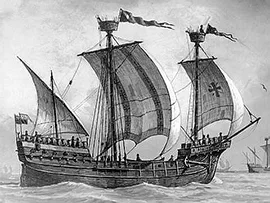
The Hanseatic League
A political and economic union of the towns of Northern Europe (above all Germany) in the 13th–17th centuries, led by the German city of Lübeck. At its height (14th–15th centuries) it included up to 160 towns, 130 of them ports. It effectively monopolised maritime trade from London to [Veliky] Novgorod. It actively intervened in European politics, even waging wars with its own forces.
On 21 May 1578, in the square in front of the castle, the people of Königsberg swore allegiance to Georg Friedrich. They swore it, let us be frank, with great reluctance. The representatives of the estates sensed in the regent a firm hand, a pro-German outlook and the backing of the Polish king. In many respects this meant curbing the local liberties that had flourished during the decade of anarchy.
Georg Friedrich's actions only confirmed the fears of the Prussian noble elite. First, he immediately put an end to the arbitrariness and high-handedness of court officials who had slipped out of proper control. Second, a new court effectively took shape in Königsberg, as Georg Friedrich brought in his fellow countrymen from Ansbach. Incidentally, it was precisely the coexistence of two courts, the more modest one of Maria Eleonora and his own, grander one, that prompted Georg Friedrich to undertake the reconstruction of Königsberg Castle.
The most unwelcome thing for the estates, however, was Georg Friedrich's determination to strengthen his position as head of the duchy. The simplest way to do this was to secure the backing of the Polish king. Báthory, for his part, was quite willing to trade his favour for tangible proof of the regent's devotion. As a result, the army of the Prussian duchy took part in the final stage of the Livonian War, and the taxes levied on the estates went towards the upkeep of the Polish army. It is said that on a couple of occasions Georg Friedrich even paid more than Stephen Báthory had asked for.
This did not go unnoticed, and as a reward for his timely service Georg Friedrich was granted full freedom to pursue his own domestic policy in the duchy.
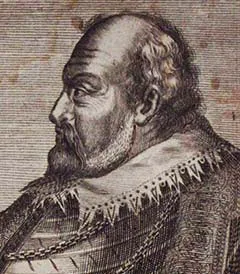
Georg Friedrich of Brandenburg-Ansbach
(1539–1603)
Duke, nephew of Albrecht of Brandenburg, Margrave of Brandenburg-Ansbach. In 1575 he secured the right of guardianship over Albrecht Friedrich. He pursued a policy that was largely independent of Poland. By drawing up the statutes of numerous guilds, he reduced conflict within the duchy and raised the standard of craft production. During his regency Prussia enjoyed relative economic prosperity. He lived in Königsberg intermittently for eight years and ruled from Ansbach the rest of the time.
Georg Friedrich's reforms were not radical and did not harm the interests of most townspeople. Rather, he simply brought order to what essentially already existed. One of the most important tasks was drafting guild statutes.
Today it seems a little strange that the head of state should concern himself with such matters. Yet if we bear in mind that guild-based craft production was the foundation of the economy of European countries at the time, it is fair to say that this was an important and rather complex task, and the decisions taken required many compromises. The results, however, were not long in coming: putting relations within and between the guilds in order very soon led to an economic upturn in the duchy. Georg Friedrich's authority as a ruler grew in every sphere. He reformed the court of justice, set church affairs in order and breathed new life into the declining university. The main achievement of Georg Friedrich's rule was a well-considered division of jurisdiction between central and municipal authorities and, as a consequence, the first signs of a turn towards an absolutist state. As a particular example of his successes, one might mention the various festivities that flourished especially at this time, mostly with a craft and guild theme – trade festivals of a sort. Georg Friedrich lived in Königsberg for about eight years in all, and during that time his energy and fairness earned him the unconditional respect of the local burghers.
Not even the terrible plague epidemic of 1601–1602 could change the view of Georg Friedrich's reign that lingered among the people. And here, perhaps, is the most important point: unlike all subsequent regents in Prussia and the rulers of the later Brandenburg-Prussian state, Georg Friedrich governed two states at once (Prussia and Ansbach) without subordinating the policy of one to the interests of the other. There could be no question of any merger. Georg Friedrich dutifully played two roles in two different plays.
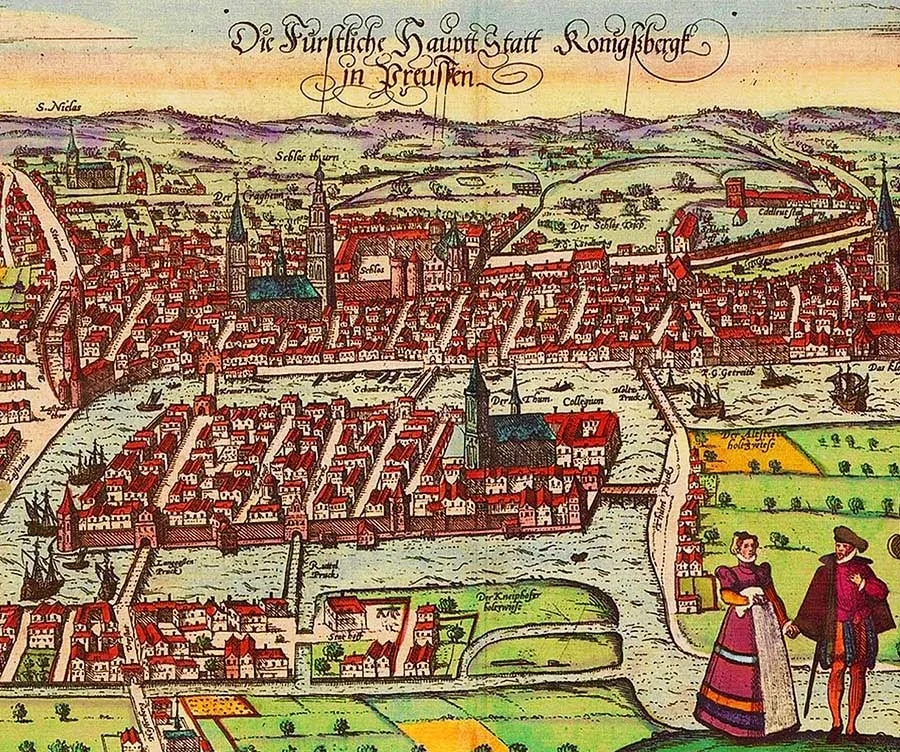 1581. Königsberg in an engraving known as the "Braun Plan".
Georg Friedrich's regency is also notable for another event. Around 1581 the oldest surviving plan of Königsberg was created, known to us as the “Braun plan” (see above). It is remarkable that Königsberg Castle, Altstadt, Löbenicht and Kneiphof are shown on it as a single entity. And although the towns can be seen still to have their own internal walls, contemporaries increasingly used the word “Königsberg” to refer to all three towns together, including the suburbs adjoining them. Incidentally, growing suburbs such as Steindamm (the area around the Hotel “Kaliningrad” and Zhitomirskaya Street), Vorstadt (around Krasnooktyabrskaya Street), Rossgarten (around Klinicheskaya Street), Tragheim (around Sommera Street) and others were themselves already beginning to lay claim to town rights. Some of them acquired their own seals, courts and other attributes of municipal self-government, but they never went so far as to be recognised as independent towns.
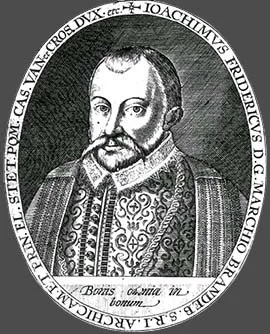
Joachim III Friedrich of Brandenburg
(1546–1606)
Elector of Brandenburg (from 1598), father of Johann Sigismund, son-in-law of Duke Albrecht Friedrich. Through various concessions he obtained the regency of Prussia in 1603, and in 1605 Poland's recognition of his rights to the Prussian throne without the right of inheritance; a few months later, however, he handed over the governance of the duchy to the Supreme Councillors. During his rule Prussia lost its political independence and became subordinate to the political interests of Brandenburg.
The death of Georg Friedrich in 1603 proved once again that the relative prosperity of the duchy had not become a lasting trend but had rested solely on the personal qualities of the regent.
The question of a new guardian for Albrecht Friedrich did not remain open for long. As early as 1594, Johann Sigismund, son of the Elector of Brandenburg, had married Albrecht Friedrich's daughter. And in 1604 the Elector Joachim Friedrich himself married Albrecht Friedrich's younger daughter, thereby greatly strengthening his family ties with the duke. And since care of the ailing Albrecht Friedrich by his relatives had by then become something of a tradition, it is no surprise that in 1605 he became the leading candidate for the regency. What followed was straightforward bribery of advisers in the Polish king's circle (Burgrave Fabian zu Dohna and the Kneiphof burgomaster Michael Friese excelled at this) along with political concessions. Moreover, the King of Poland, Sigismund III Vasa, already foresaw a coming war with Russia, and having the Brandenburgs as allies was a very tempting prospect... One way or another, the outcome of this complex game was that Joachim Friedrich became regent.
It is hard to characterise Joachim Friedrich's activity as regent – above all because, as such, there was none. After spending a few months in Prussia, the Elector simply handed the reins of the duchy to his councillors and left for his native Brandenburg. He might perhaps have come to Königsberg again, but the Polish king took advantage of a clause in the treaty and refused him permission to visit. The needle of Prussia's political barometer swung sharply towards a «noble republic». Rule from abroad, and with the help of crooked councillors to boot, has never made a ruler popular. Nor did it make Joachim Friedrich popular.
He died three years after obtaining the regency and left behind only rather hazy memories of himself in Prussia.
A natural claim to the regency was put forward by Johann Sigismund, Joachim Friedrich's son, who had become Elector of Brandenburg after his father's death. He followed the path his father had beaten: in exchange for the regency he granted substantial political and financial concessions.
The main political concession was the introduction of the Gregorian calendar. It might seem a trifle, but let us remember that Prussia was a Protestant state, and so adopting a calendar established by the Pope was a significant concession to the Catholics and strengthened the hand of the Counter-Reformation in the duchy. In addition, the future regent promised the Polish king to build a Catholic church in Königsberg. The financial side of the concessions took the form of a willingness to pay Poland an annual tribute. Previously, under the Treaty of Kraków, the duchy had been obliged only to contribute to the upkeep of the army, and even then only in the event of military action. On the eve of the anticipated war between the Catholic and Protestant leagues, these steps noticeably raised the Polish king's standing at home, but, conversely, could find no understanding among the people of Prussia. By and large, Johann Sigismund did not care. It seems he intended to rule the duchy just as his father had done, and his Calvinism spared him from troubling himself over the ethics of infringing the interests of the Lutherans. In 1609 Johann Sigismund at last received from the Polish king the right of guardianship over his father-in-law, Albrecht Friedrich. And as early as 1610 Sigismund III demanded that he supply a hundred horsemen to the Polish army.
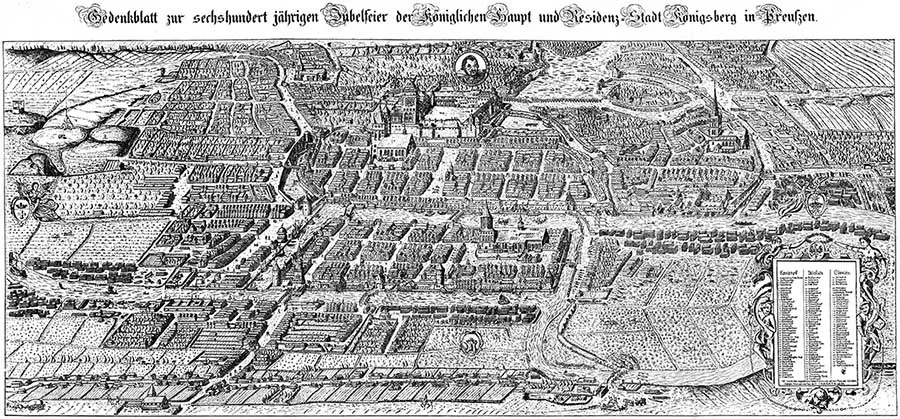 1613. Königsberg on the "Bering Plan".
In 1611 Johann Sigismund received Prussia as a fief from the Polish monarch, and on 16 October 1612 the Prussian estates swore allegiance to him. His Calvinist faith provoked open displeasure among the local clergy, since from the standpoint of Luther's teaching it counted as undisguised heresy. Yet ever since the death of Georg Friedrich, a marked apathy had settled over the duchy's subjects. A certain hopelessness, with the duchy a fief of a state of another faith, its lawful ruler incurably ill, and the regent far away governing through councillors, did nothing to encourage political engagement among its citizens. It is safe to say that from the death of Albrecht of Brandenburg (or even slightly earlier) until the days of the Great Elector Friedrich Wilhelm, Prussia sank into its own version of a “Time of Troubles”, with features peculiar to it.
The economic and political revival that had begun under Georg Friedrich, the authority of central power, and the trend away from aristocratic licence towards absolutism were all recklessly squandered by Johann Sigismund.
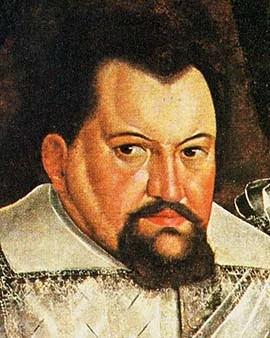
Johann III Sigismund von Brandenburg
(1572–1619)
Elector of Brandenburg (from 1608) and, from 1609, regent for Duke Albrecht Friedrich. To win the right to govern Prussia, he made concessions to Poland. Under him, on 18 July 1618, Brandenburg and Prussia were finally united on a dynastic basis.
It is hard to point to anything of interest during Johann Sigismund's regency, and harder still to find anything positive. Perhaps the thing he is best remembered for is the famous Bering Plan (see above), which depicts the three towns of Königsberg. (A colourful map of the city based on this plan can be seen in one of the museum halls in the Cathedral.) One more point: Johann Sigismund was the first of the Brandenburg electors to obtain power in Prussia (albeit as regent) by inheritance.
In 1618 Albrecht Friedrich, the lawful Duke of Prussia, died. The male line descending from Albrecht of Brandenburg came to an end. Under the terms of the Treaty of Kraków, the duchy was to pass into the full possession of the Polish king. But the outbreak of the Thirty Years' War upset all calculations. King Sigismund III had no wish to take on unnecessary trouble by annexing a Protestant duchy, and in any case he had other things on his mind. It was Johann Sigismund's moment to act. He accepted every condition the Polish side set, with a single aim: to secure his hold on the Prussian throne after Albrecht Friedrich's death. The chief condition was that ducal authority would apply only while the elector was present on Prussian territory (“Duke in Prussia”).
Johann Sigismund, Duke in Prussia, died the following year, 1619. Power passed to his son Georg Wilhelm. Once again there were certain difficulties in getting the estates to swear allegiance, but this time they were overcome somewhat more quickly. Georg Wilhelm's entire reign was overshadowed by the Thirty Years' War. And here a rather interesting question arises. Georg Wilhelm is known as a ruler weak in both health and will, an unambitious politician and a thoroughly mediocre statesman. Did this turn out for better or for worse? Would it have been better for the duchy if Georg Wilhelm had sided with the Protestant coalition or, as the feudal treaty required, with his suzerain?
Military operations on the country's territory in the first half of the 17th century could have brought total ruin, but even in victory they hardly promised economic growth or territorial gains.
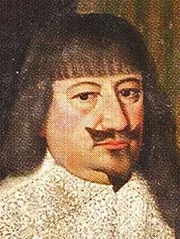
Georg Wilhelm
(1572–1619)
Elector of Brandenburg (from 1608) and, from 1609, regent for Duke Albrecht Friedrich. To win the right to govern Prussia, he made concessions to Poland. Under him, on 18 July 1618, Brandenburg and Prussia were finally united on a dynastic basis.
Armies, which by then numbered tens of thousands of soldiers, did the greatest damage not so much through the destructive force of their weapons as through the simple need to eat every day and to feed their numerous cavalry and baggage horses. Even the brief presence of the Swedish king Gustav II Adolf's army in Prussia left many areas desolate and in decline for years. The apathy of the Prussian burghers towards political events of European scale, mentioned above, combined with Georg Wilhelm's inaction, made it possible for Prussia to remain neutral in the war.
True, Georg Wilhelm took no proper part in governing the duchy; every significant event happened, if not against his will, then certainly not thanks to it. The construction of modern fortifications in Pillau and Königsberg in these years was carried out either on the initiative of the Swedish king or according to the plans of the local authorities. Even the decision to stay neutral in the pan-European carnage was taken by the municipalities on their own, albeit under pressure from the same Gustav II Adolf.
The town charter, the so-called “Transaction of 1620”, which replaced Kulm law, was likewise adopted without Georg Wilhelm's involvement. With its help, after long disputes and through the mediation of the Prussian court tribunal, the conflicts between the municipalities and the townspeople were smoothed over. Councillors and jurors were elected as in the days of the Teutonic Order. The only novelty was that the town secretary administered the oath, while the Oberburggraf merely confirmed it. Each new citizen took the oath by touching the burgomaster's hat with a raised finger. The “Transaction” for the first time distinguished between “citizens in the proper sense”, “protected kinsmen” (the latter swore the oath of protected kinsmen and were under the protection of the town police) and “outsiders”. “Protected kinsmen” had no right to run a business of their own. They included journeymen and craftsmen's apprentices, menservants and maidservants, farmhands and labourers, discharged soldiers and others.
The “outsiders” included merchants from other towns, pedlars and sailors who sold their goods straight from their ships or hawked them through the streets. They were allowed to stay in the town only during the navigation season.
In 1627 relations between the municipalities of the Königsberg towns and the elector grew tense. The cause was an agreement between the Oberburggraf and the Swedish king Gustav II Adolf on the city's neutrality (the so-called Treaty of Marienburg of 1626). Naturally, the agreement drew a protest from the Polish king Sigismund III, who had been trying all along to persuade the townspeople to join the fighting. Königsberg's neutrality was secured by a force of 300 soldiers hired by the municipality. Georg Wilhelm considered that the existence of such a force went beyond the town's rights. In February 1627 he appeared beneath the walls of the Pregel towns with an army of five hundred soldiers. The standoff did not end in bloodshed. The elector left the city without achieving his aims. Afterwards both the Polish and the Swedish kings attempted to infringe the towns' sovereignty. The latter even wanted to bring Königsberg and its surroundings under his own jurisdiction, believing that it had been “abandoned by the elector and oppressed by Poland”. Only the truce of 1629 eased the tension among the four parties.
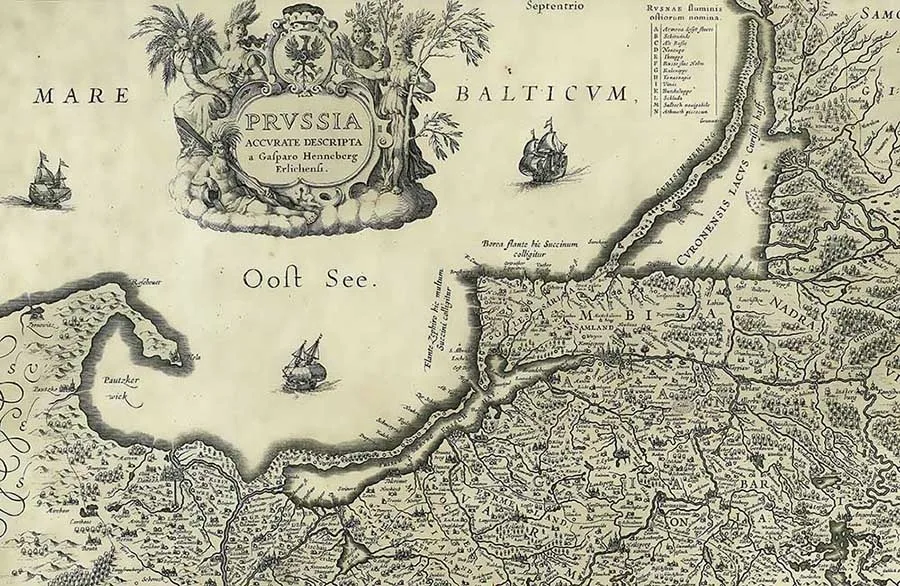 1649. Fragment of a map of Prussia.
One event already mentioned above deserves a somewhat closer look: Königsberg's first comprehensive defence system, the so-called first rampart ring. The initiative came, once again, from Gustav II Adolf. He judged that the medieval fortifications, dating back to the days of the Order, could not protect the city against even a moderately serious military intervention. That threatened the 'armed neutrality' of Königsberg in the Thirty Years' War that he so desired. Supporters of the rampart ring were easily found among the townspeople as well. The design was drawn up by a local professor of mathematics, Johann Strauss, a pupil of the famous Kepler. Construction was directed by Abraham zu Dohna, while technical supervision was in the hands of the Elector's surveyor and architect Konrad Burk. Strauss's design proved so successful that the second rampart ring, built much later (in 1843–62), largely followed the line of the old fortifications. The main work on the bastion ring was carried out in 1626–1635. The ring was a system of timber-and-earth bastions, half-bastions and gates. In practice it remained in service until 1843. It came under enemy attack only once, in June 1807, by which time it was considered hopelessly obsolete. Even so, the defences hastily prepared on it withstood a number of assaults, and the defence ended only because Bennigsen ordered L'Estocq to abandon the city and march to join the main forces.
At the time of its construction, Königsberg's bastion ring was very nearly the largest fortress in Europe. Suffice it to say that a fully manned garrison was meant to number 15,000 soldiers.
That was roughly the size of the entire army of the Brandenburg-Prussian dynastic union, and even then only at a somewhat later date. The main consequence of creating a unified defence system was that Altstadt, Löbenicht and Kneiphof grew even closer together. Besides them, the ring enclosed the settlements and suburbs of Old and New Rossgarten, Sackheim, Tragheim, Haberberg, Vorstadt, Neue Sorge and others. This set the boundaries of Königsberg for almost 300 years. Remains of these earthworks can still be found today: the mound on which Friedrich Bessel's grave lies is nothing other than an earthen bastion worn down by erosion. The ravine between it and the reduit of the Sternwarte ("Astronomical") bastion is what is left of the 17th-century moat. And finally, there are the remains of the rampart along Olshtynskaya Street.
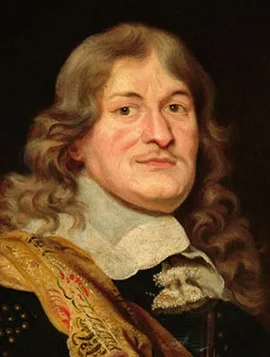
Friedrich Wilhelm
(1620–1688)
Elector of Brandenburg from 1640, known as the Great Elector, of the Hohenzollern dynasty. He took part in the Thirty Years' War (1618–48) and in the Polish-Swedish Northern War (1655–60). In 1657, by political means, he freed Prussia from its feudal dependence on Poland. He created the Brandenburg-Prussian state, to which he annexed a number of further territories. He laid the foundations of Prussian absolutism. He issued the Edict of Potsdam (1685), inviting all Europeans persecuted for their faith to settle in the Brandenburg-Prussian state.
Friedrich Wilhelm, who succeeded his father Georg Wilhelm in 1640, inherited a Brandenburg ruined by war, a Prussia dependent on Poland and hostile to the Brandenburgers, and a number of other territories that were by no means flourishing either. The chief aims of the ruler of the Brandenburg-Prussian state were to win independence for Prussia and to unite Prussia and Brandenburg geographically by seizing Western Pomerania. These tasks were complicated by the large number of pro-Polish subjects in Prussia and by burghers and nobles unwilling to submit to central authority.
Chronology of key events
1568 — Death of Duke Albrecht and his wife Anna Maria.
1575–1603 — Regency of Georg Friedrich.
1605–08 — Regency of Joachim Friedrich.
1609–18 — Regency of Johann Sigismund.
1618–40 — Reign of Georg Wilhelm.
1620 — Königsberg adopts its city charter.
1626–27 — Main construction work on Königsberg's bastion fortifications.
1641 — The first amber workshop opens in Königsberg.
1650 — The Wallenrodt Library is handed over to the Cathedral.
THE FIFTH CENTURY — ONE FRIEDRICH AFTER ANOTHER
From 1655 to 1660 the Polish-Swedish war raged. Friedrich Wilhelm decided to turn the struggle between the two powers for supremacy in the Baltic to his own advantage. At the very outset of the war it became clear that neither Sweden nor Poland could achieve all the aims they had set themselves on their own. Success depended on each side having allies. Both Poland and Sweden were ready to pay a high price for Friedrich Wilhelm's partnership as an ally. He did not keep them waiting. Unlike Poland, Sweden placed no limit on the size of the army the Elector could keep on Prussian soil, and so Friedrich Wilhelm took Sweden's side. Without taking part in any military operations of note, he gained the opportunity to strengthen the duchy's military potential considerably. In 1656, in Königsberg, he concluded a treaty with Charles X on terms even harsher than those laid down by the Kraków agreements. But this mattered little to Friedrich Wilhelm — he had no intention of honouring the treaty for long. Taking advantage of it, he increased the size of his army in Prussia fivefold, bringing it to 22,000 soldiers. Poland, especially after its defeat at the Battle of Warsaw, faced the threat of military collapse.
The Polish king John Casimir probably regretted more than once that he had not won Friedrich Wilhelm over to his side with substantial concessions. But Sweden, too, rather unexpectedly ran into a streak of bad luck.
Russia entered the war on Poland's side, and Denmark was also preparing to take up arms in support of Poland. Friedrich Wilhelm, choosing his moment, declared that a further condition of the military alliance was the abolition of Prussia's feudal dependence on Sweden. Charles X had no way out. On 20 November 1656, in Labiau, he concluded an 'eternal' treaty with the Elector against Poland, under which he recognised Prussia's full independence. In addition, Prussia was to receive Ermland (German Ermland, Polish Warmia), which had been taken from Poland. As a result of this 'two-move combination', Friedrich Wilhelm came out the undoubted winner: he now commanded the most powerful army in the Baltic region, and Prussia's feudal dependence on Poland was no longer universally recognised. Friedrich Wilhelm then embarked on a diplomatic game and secret negotiations with Poland. In return for breaking off the Prussian-Swedish agreements and going over to the camp of his former enemy, he demanded that the Polish king recognise Prussia's independence.
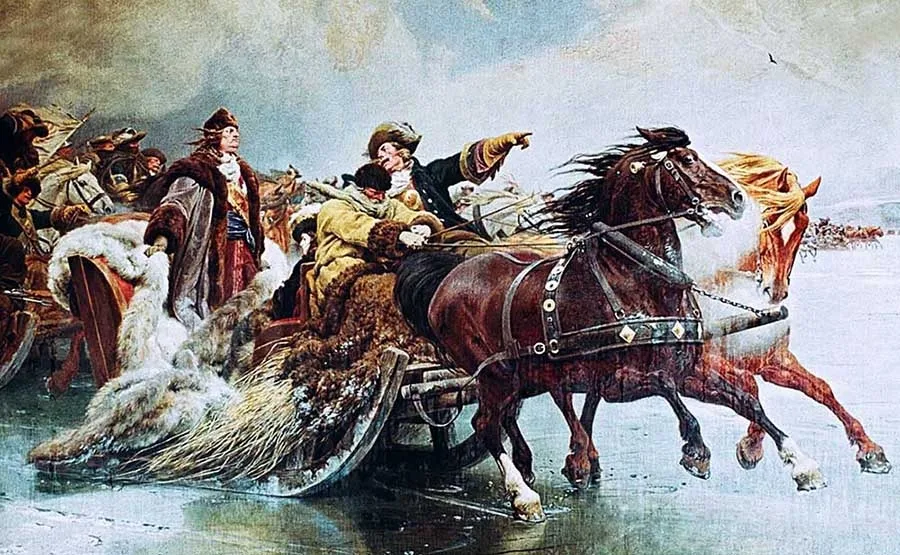 1679. Pursuing the Swedes, Friedrich Wilhelm and his army cross the Curonian Lagoon over the ice.
Treaty of Wehlau (Treaties of Wehlau and Bydgoszcz)
Agreements between Poland and Brandenburg concluded in Wehlau and Bydgoszcz during the Polish-Swedish war of 1655–60. Under them the Duchy of Prussia gained sovereignty from Poland, while Brandenburg broke off its alliance with Sweden and put an army of 6,000 men in the field on the side of the Polish forces.
John Casimir understood perfectly well that the outcome of the Polish-Swedish war depended to a great extent on which side the Brandenburg-Prussian state would take. On 13 September 1657 he arranged a secret meeting, disguised as a hunt, between the Elector and his envoy Gosiewski in Wehlau. It was there that the Treaty of Wehlau (known in Russian literature as the Wehlau-Bydgoszcz Treaties) was signed, under which Prussia gained its long-awaited independence from the Polish crown.
Frederick William then took a series of steps aimed at strengthening the ties between Brandenburg and Prussia and building a centralized state. He understood that he would never win the people's affection anyway, and that real power belongs to whoever controls the economy and the flow of money and can back that control with military might. So in 1657, downstream from Königsberg on the Pregel, Frederick William built Fort Friedrichsburg, whose guns could, if necessary, close the river and cut the city off from the outside world. Unsurprisingly, the townspeople greeted the fortress without enthusiasm. The nobility opposed its construction even more openly. The Elector's moves were clearly aimed at ending the nobles' freedom to do as they pleased. In 1661–1663 the confrontation reached its peak. The burghers and the nobility put forward their own representatives. Something reminiscent of the era of the Thirteen Years' War and the Prussian Confederation was brewing.
Representatives of the nobility began secret negotiations with the Polish side, seeking support in their struggle against the Elector of Brandenburg. But no one can step into the same river twice. The Polish king was not cynical enough to break, so simply and so openly, the Treaty of Wehlau signed only a few years earlier.
Yet the Elector also failed to restore order through his advisers Otto von Schwerin and Bogusław Radziwiłł. The situation called for Frederick William's personal presence. He did not keep anyone waiting, arriving in Königsberg in 1662 accompanied by a large military detachment. The townspeople did not dare to resist openly, and after some effort Frederick William managed to seize the leader of the rebels, Hieronymus Roth, and keep him imprisoned for the rest of his life. Feeling the Elector's firm hand and realizing that resistance was futile, the Prussian estates swore an oath of allegiance to him on 17–18 October 1663. When the nobility rose against the Elector once again in 1669, Frederick William dealt with them far more harshly. The rebel leader, Colonel Kalckstein, was arrested on the eve of planned talks with the Polish king about military aid. Frederick William regarded his actions as a breach of the oath and high treason: Kalckstein was executed. With that, the period of unrest and discord in Prussia came to an end, and together with Brandenburg it set out firmly on the path to absolutism, which, in historical perspective, can be seen as a decidedly progressive trend.
Frederick William tried to resolve the final part of the Prussian question, territorial unification with Brandenburg, in the mid-1670s. By taking part in the Franco-Dutch War, he was no doubt counting on French help in his struggle with Sweden over Pomerania. France, however, refused to fight its ally, and Frederick William, leaving the alliance with France, began military operations in Pomerania with his own forces. He reckoned that France, preoccupied with its war, would not come to Sweden's aid. After a series of minor victories in Pomerania, the Elector had to hold off the Swedes advancing from Livonia. The scales were already tipping in favour of the Brandenburg-Prussian state, but France, having concluded a truce with its adversaries, demanded the immediate and unconditional return of the captured lands to Sweden.
In the 17th century Prussia and Brandenburg were not yet able to stand up to France as equals. The matter was postponed until better times.
The time had come for Frederick William to turn from military victories to building a peaceful life in the duchy. It must be said that here, too, he achieved notable success. The occasion was a petition from the burghers, which rightly pointed out that the duchy had been deprived of his care. Attached to it was a description of the Prussian lands, a geographical and economic survey of sorts. The petition also spoke of the need to revive the duchy's economy after long years of war and internal strife.
In 1685, as part of his efforts to put Prussia in order, Frederick William signed the Edict of Potsdam, which invited Europeans persecuted for their religion, mostly French Calvinists, to settle in the duchy. In the years that followed, some 20,000 people moved to the Brandenburg-Prussian state, most of them economically active. Besides the Calvinists already mentioned, those invited included Lutherans, Catholics and Jews. The settlers were offered economic privileges to set up the production of goods. All these measures did a great deal to solve both the demographic and the economic problems of the duchy.
As a result, by the time of the Great Elector's death, the Brandenburg-Prussian state was a politically unified entity, firmly set on the path of centralization and absolutism, with an effective state bureaucracy and army.
Frederick William created a unified Brandenburg-Prussian state, but in doing so he also "switched" Prussia off from high politics, moving the capital to Berlin for good. Under his son Frederick III, Elector of Brandenburg and Duke of Prussia, life on the banks of the Pregel finally settled into a provincial rut. Only one significant event took place before the end of the 17th century: Königsberg was visited by the "Grand Embassy" led by Tsar Peter Alekseyevich, who pointedly concealed his identity under the name of Pyotr Mikhailov, a sergeant of the Preobrazhensky Regiment. The tsar's incognito, however, had been uncovered even before his arrival. Among other things, Peter inspected the fortifications and passed a firing examination with cannon and mortars at Fort Friedrichsburg, earning a diploma as a master gunner.
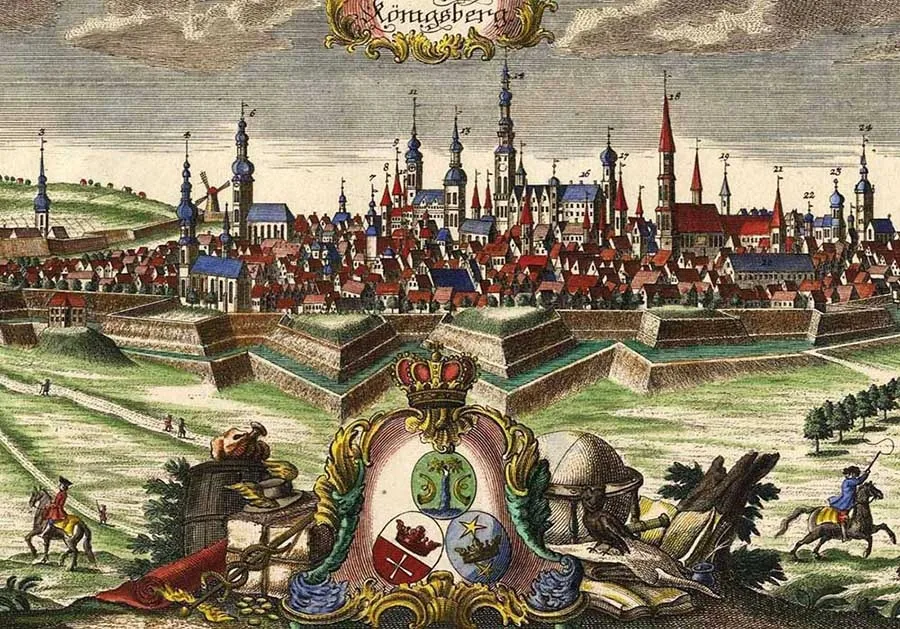 1740. The skyline of Königsberg.
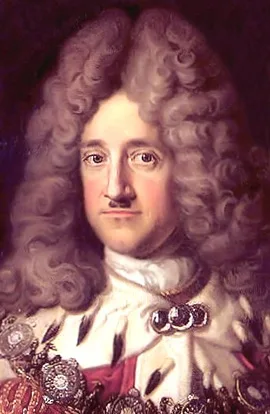
Elector Frederick III / King Frederick I
(1657–1713)
Elector of Brandenburg and "Duke in Prussia" as Frederick III (1688–1701), first "King in Prussia" (1701–1713), son of Frederick William. Crowned on 18 January 1701 in Königsberg. During his reign he tried to emulate the French court, spending considerable sums to do so. Received Peter I's Grand Embassy (1697). In the Great Northern War (1700–21) he manoeuvred between the warring sides, entering into alliances now with Russia, now with Sweden.
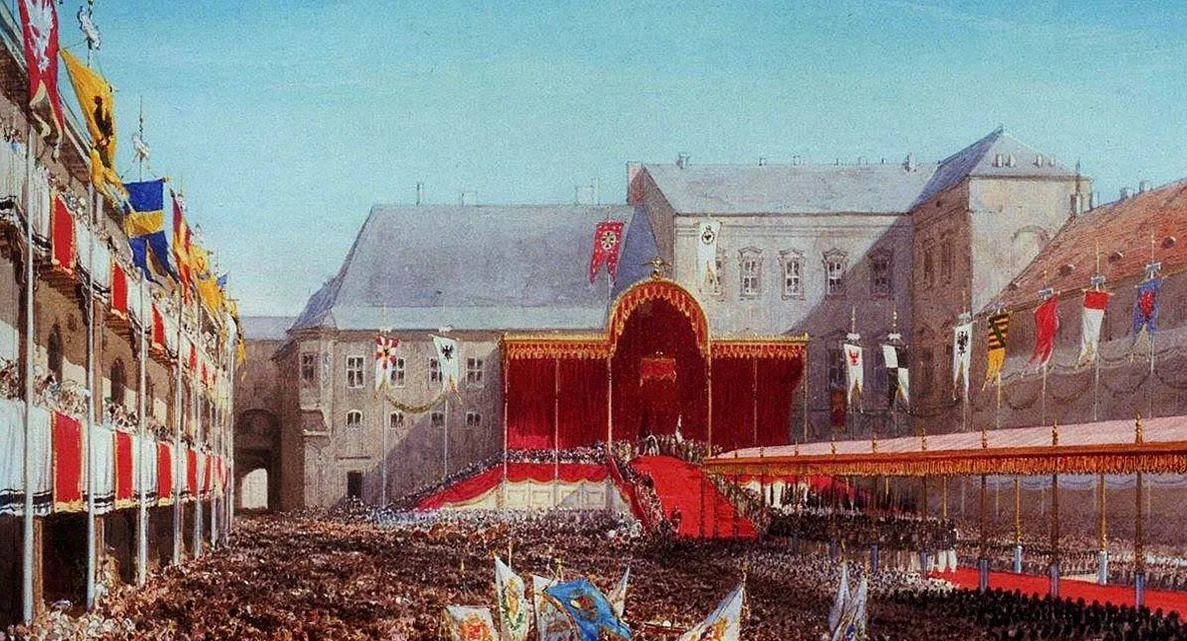
High politics returned to Königsberg Castle on 18 January 1701, when the coronation of the first Prussian king took place here. Elector Frederick III, who all his life had modelled himself on the court of Versailles, secured the support of the Holy Roman Emperor, placed the Prussian crown on his own head and took the title King Frederick I. The lavish coronation considerably depleted the Prussian treasury, but the new king had no wish to economize on such things. His entire subsequent reign passed in a ruinous succession of balls, receptions and festivities.
During the reign of Frederick I, Prussia suffered one of the greatest tragedies in the history of this land: the plague epidemic of 1709-11.
The city gates were locked, and most of the nobility managed to flee to their family estates in the countryside, where they carefully shut themselves off from the outside world. Hospitals and infirmaries were overcrowded, and plague cemeteries sprang up one after another. Of the city's 40,000 inhabitants, roughly a third died of the plague. Things were even worse in the small towns and villages: some towns were left with no more than 10% of their former population, and some villages died out entirely.
Two years after the plague ended, a king of an entirely different mindset and temperament ascended the Prussian throne: Frederick William I. The “Drill-Sergeant King”, as he was called, was extremely tight-fisted about everything except military spending. In 1713 he was crowned in Königsberg Castle, and from then on the tradition of assuming the Prussian crown there became inviolable for the Hohenzollern dynasty. Frederick William personally calculated the cost of the ceremony down to the last pfennig. On the whole, this monarch’s reign was rather beneficial for Prussia. Frederick William carried out a series of measures to restore the districts devastated by the plague, inviting settlers on favourable terms, mainly from Salzburg, Nassau and Switzerland. In 1722–24 a number of settlements on the territory of today’s Kaliningrad Region were granted town status. Finally, on 13 June 1724, came the unification of Altstadt, Löbenicht and Kneiphof, together with their numerous suburbs and outlying settlements, into a single city of Königsberg. A little earlier, on 22 April 1724, an event took place that hardly any of the townspeople noticed at the time...
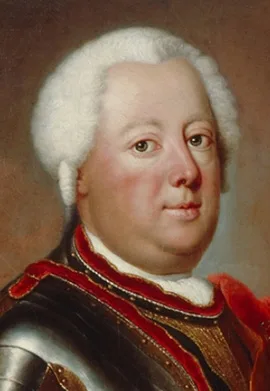
Frederick William I
(1688–1740)
King of Prussia from 1713, of the Hohenzollern dynasty. Nicknamed the “Soldier King” or the “Drill-Sergeant King”. Known as a champion of strict economy in public finances and of the militarisation of the state. He introduced a military and police regime in the country and widespread corporal punishment. During his reign the army was manned through arrests, which caused students and scholars to begin leaving the country. He helped restore East Prussia after the plague of 1709–10 through internal (6,000 people) and external (40,000 people) migration and economic incentives. Over the course of his reign he increased the Prussian army from 38,000 to 80,000 soldiers, yet at the same time the army was rife with arbitrary rule and harsh drill, resulting in mass desertion. He abolished municipal self-government and introduced magistrates appointed by the king (1716). He initiated urban development and the founding of fifteen new towns in Prussia. He united the three towns on the Pregel and their suburbs into a single Königsberg (1724). On several occasions (1713, 1716, 1717) he received the Russian Tsar Peter I and presented him with the Amber Room (1716). Frederick William I’s main contribution to Prussia’s domestic policy was the creation of the legal, social and economic foundations of the state that underpinned the country’s military foreign policy in the second half of the 18th century.
Immanuel Kant was born in Königsberg, the greatest of all the people who have ever lived in this city.
It should also be mentioned that in 1736 further work was carried out to deepen the bed of the Pregel, after which large (by the standards of the time) seagoing vessels were able to enter the port of Königsberg.
The reign of Frederick II the Great, later nicknamed “Old Fritz”, proved eventful for Königsberg. And this despite the fact that when he ascended the Prussian throne in 1740, he showed no interest whatsoever in the city, or in Prussia as a whole. True, he financed the construction of several parish churches and village schools and continued the policy of attracting settlers to the east of Prussia, but he did so almost in passing, between his main affairs.
Chronology of key events
1657 — Signing of the Treaties of Wehlau and Bromberg. The Duchy of Prussia is freed from Polish feudal suzerainty.
1657 — Construction of Fort Friedrichsburg.
23 April 1660 — Signing of the Treaty of Oliva, confirming Prussia’s sovereignty.
7 May 1697 — Arrival in Königsberg of the “Grand Embassy” led by Peter I.
18 January 1701 — Coronation of Frederick I in Königsberg Castle.
1709-11 — Plague epidemics. A third of Königsberg’s population dies.
22 April 1724 — Birth of Immanuel Kant.
13 June 1724 — Official unification of the three towns on the Pregel (Altstadt, Löbenicht and Kneiphof) into one: Königsberg.
1736 — Work to deepen the bed of the Pregel to allow seagoing vessels to pass.
20 July 1740 — Oath of allegiance to Frederick II in Königsberg Castle.
THE SIXTH CENTURY — THE AGE OF KANT AND TWO WARS
At the beginning of the Seven Years’ War (1756–63), “Old Fritz” was prepared to sacrifice the Prussian province in order to gain time in the other theatres of war. At the second attempt, the whole of Prussia was occupied by the Russian army.
On 11 January 1758 the fortress of Königsberg capitulated without firing a single shot at the enemy; on the contrary, the city authorities came to Kaymen Castle (today the village of Zarechye), where they handed the Russian command the keys to the city and to Fort Friedrichsburg.
After the city was taken, the Russian command headed by William Fermor administered the oath of allegiance to Empress Elizabeth to the townspeople. Thus began the mildest occupation in the entire history of European warfare. The rights and freedoms of the townspeople were not only preserved but even extended. Indeed, the events of 1758–62 cannot be called an occupation in the full sense of the word: Königsberg was now inhabited by subjects of the Russian Empire, and Prussia itself had become a Russian governorate.
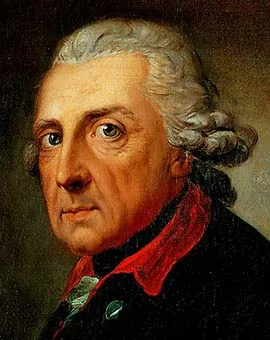
Frederick II
(1712–1786)
King of Prussia from 1740, a great military commander whom his contemporaries respectfully referred to behind his back as Frederick the Great or Old Fritz. As a result of his policy of conquest (the Silesian Wars of 1740–42 and 1744–45, participation in the Seven Years’ War of 1756–63 and in the First Partition of Poland in 1772), Prussia’s territory almost doubled, and in 1772 East Prussia was joined to the rest of the country. The years of Frederick II’s reign are regarded as the heyday of enlightened absolutism in Prussia. Some countries even tried to imitate him...
Frederick II never forgave Königsberg for this episode after the withdrawal of Russian troops in 1762, to the end of his days. The ease with which the province had accepted Russian subjecthood filled him with contempt, and so he never visited it again. The withdrawal of the Russian army and administration from Königsberg followed the accession to the Russian throne of Emperor Peter III, who not only revered Frederick II as a great statesman and a model to emulate, but also intended, in alliance with Prussia, to win back his native Schleswig from Denmark. Peter III immediately halted hostilities, after which the process of handing over power in Königsberg to Prussian officials began. The process dragged on until the next palace coup in Saint Petersburg, and everyone expected Empress Catherine II to overturn her former husband’s decision and resume the war with Prussia. No such decision came, however, and soon power in the city was peacefully returned to the Prussians, with only minor incidents. In 1763 the Seven Years’ War itself came to an end.
In Königsberg, meanwhile, the entire second half of the 18th century passed under the sign of Kant. Many enlightened Europeans came to Königsberg to converse with Kant in person or to hear his lectures. Without doubt, Kant was an outstanding phenomenon in the history of Königsberg, one that left its mark on this land forever and raised the local university to heights previously unattainable.
Kant’s spirit lived on in Königsberg’s academic circles even after his death: in his students, in the school he founded, in his colleagues and opponents. And although this land never again gave the world a figure of equal renown, many graduates of Königsberg’s Albertina university, inspired by Kant, brought fame to their native city throughout Europe.
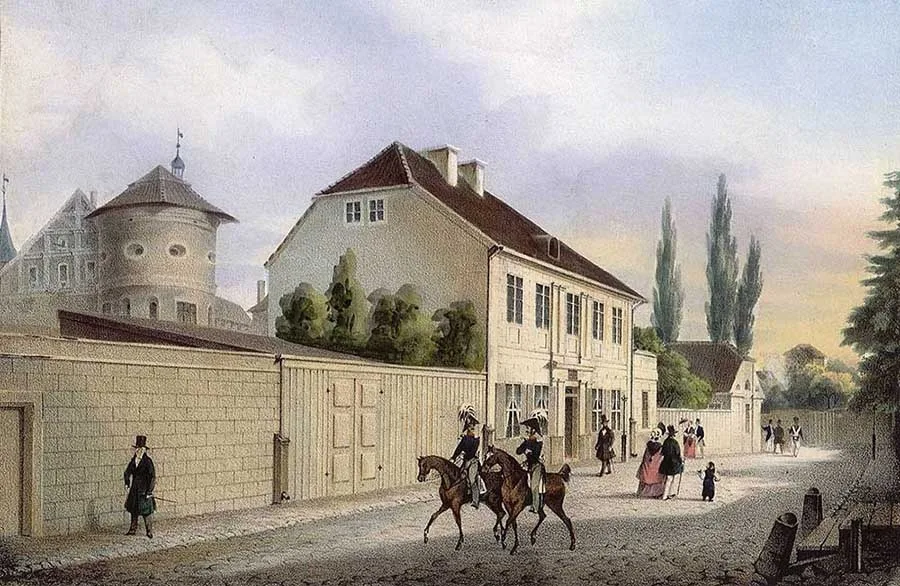 Immanuel Kant’s house in the centre of Königsberg.
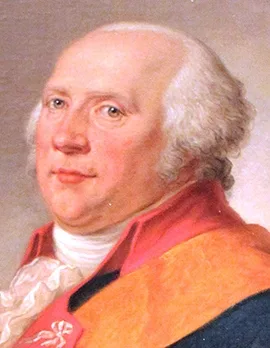
Frederick William II
(1744–1797)
King of Prussia from 1786, of the Hohenzollern dynasty. He tightened censorship in Prussia (the Edict on Religion of 1788, the Censorship Edict of 1792). In 1792 he concluded a military alliance with Austria against revolutionary France. He signed a treaty with Russia on the Second Partition of Poland (1793), and with Russia and Austria on the Third Partition of Poland (1795). He waged war against the Polish insurgents (1794).
In 1786 King Frederick II died childless. The throne passed to his nephew, King Frederick William II, whose decade-long reign brought no events of any great importance to Königsberg. The king himself is remembered for a successful foreign policy (under him the Second Partition of Poland took place, and the Kingdom of Prussia gained considerable territory), for his rejection of the French Revolution, and for amorous escapades that became the stuff of anecdotes across Europe. But all this happened far from Königsberg. The reign of the next king, Frederick William III, on the other hand, deserves a close and detailed look: far too much, both good and bad, happened in East Prussia during this period.
In historical literature and on screen, Frederick William III is portrayed as a mediocre ruler who happened to live in a great age, and this is very close to the truth. Practically his only virtue was that he was no petty tyrant: he was able to heed the advice of his capable courtiers and military men, and he did not persist in his mediocrity.
During the first years of Frederick William III's reign, Königsberg went on living its customary provincial life. In 1804 Immanuel Kant died. Everything changed at once when the alliance with France was broken off and, on 9 October 1806, war was declared on it.
Even if Frederick William had not declared war on Napoleon, it would hardly have been possible to keep the fighting off Prussian soil. In reality, however, what followed was nothing short of a public thrashing: for exactly five days after the declaration of war, the Prussian generals smugly held forth on the superiority of the Prussian army over the troops of the Corsican upstart. On 14 October 1806 the Prussian army was routed at Jena and Auerstedt.
After this, Prussian garrisons surrendered one fortress after another without a fight. On 27 October Napoleon's troops occupied Berlin, and the Prussian capital was hastily moved to Königsberg, where the royal couple had fled.
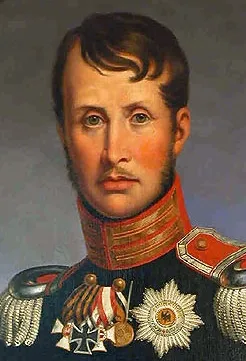
Frederick William III
(1770–1840)
King of Prussia from 1797, of the House of Hohenzollern. In 1805 he joined the anti-Napoleonic coalition. After the defeat of the Prussian forces at Jena and Auerstedt (1806) he fled to Königsberg and then to Memel. Following the Battle of Friedland, lost by the Russo-Prussian army, he ceded half of Prussia's territory to Napoleon I under the Treaty of Tilsit of 1807. His reign saw a series of progressive reforms: the October Edict (1807) granting personal freedom to the peasants; the municipal reform (1808), which introduced urban self-government; the reform of trade and industry (1810–11), which replaced the guild system with corporations; and the military reform (1808), which introduced compulsory military service and abolished corporal punishment. Under the treaty with France, in 1812 he mobilised 21,000 soldiers for the campaign against Russia. In 1813 he signed the Russo-Prussian Treaty of Kalisz, which provided for the restoration of Prussia's territory within its 1806 borders.
This, of course, is the place to speak of Queen Louise, the consort of Frederick William III. The queen, who a little later came to be revered in Königsberg much as Pallas Athena was in Athens, possessed two undeniable merits: she was beautiful, which in those days was quite enough for a woman, and she did not stand in the way of being revered, or of being regarded as the symbol of the patriotic movement. In the age of waning absolutism, patriots could rally only around the figure of the monarch. And if the monarch himself seemed to them a not entirely suitable centre of gravity, his consort was beyond reproach in this respect.
Having lost a considerable part of his country, the Prussian king, though not in the best of spirits, had not given up hope altogether. His principal ally, the Russian Emperor Alexander I, had given firm guarantees that he would defend Prussia by force of arms, regardless of the cost and the losses.
Russia undoubtedly had its own interest in driving Napoleon back within the borders of France. This interest lay above all in the empire's reliance on trade with England, for which no European market could substitute. Russia's economy depended so heavily on trade with England that even Finland, annexed later with Napoleon's backing, could not make up for the loss of the English market caused by the Continental Blockade. All this would eventually lead to the Patriotic War of 1812. For the time being, however, Russia's interests were being defended on Prussian soil. Then again, Alexander I had one more interest: Queen Louise, to whose beauty the Russian emperor was, to say the least, far from indifferent.
On the eve of the 1807 campaign, the Napoleonic army and the Russo-Prussian forces were roughly equal in numbers. The Russian troops in Prussia (some 60,000 officers and men) were commanded by General of Cavalry Levin August von Bennigsen. The Prussian corps (some 6,000 officers and men) was led by Lieutenant General Anton Wilhelm von L'Estocq. Königsberg became the supply base of the allied army, housing military and provisions depots and, later, hospitals. All the efforts of the Russo-Prussian coalition were aimed at preventing Napoleon from taking Königsberg, since once it fell, any further resistance to the Napoleonic army in East Prussia would be futile.
The royal couple left Königsberg well in advance, back in January 1807. The capital was temporarily moved from Königsberg to Memel (today the Lithuanian city of Klaipėda).
In the immediate vicinity of Königsberg, the campaign began with the Battle of Preussisch Eylau (Bagrationovsk), in which two armies of equal size, the coalition enjoying a slight advantage in artillery, inflicted heavy losses on each other in a bloody battle – a third of their men killed or wounded – yet no victor emerged. By the summer Bennigsen had brought his army back up to 65,000 men, while Napoleon had increased his military presence in the region to 80,000. The manoeuvring of both sides left Bennigsen in danger of being cut off from Königsberg, which would effectively have meant defeat. It was precisely this threat that forced the Russian commander into the fateful Battle of Friedland (Pravdinsk). Yet by the summer of 1807 the balance of forces was such that the Russian army's chances of victory were minimal. Only the theoretical possibility remained of defeating the French army piecemeal. On entering Friedland, which Marshal Lannes's French corps had begun to occupy, Bennigsen unexpectedly got just such a chance, but he lost an entire day (because he was unwell, as he claimed), with the result that he had to fight the whole French army, in an extremely unfavourable position and with his lines of retreat cut off by the River Alle (today the Lava). Although the Russian soldiers showed exemplary steadfastness up to a certain point, defeat could not be avoided.
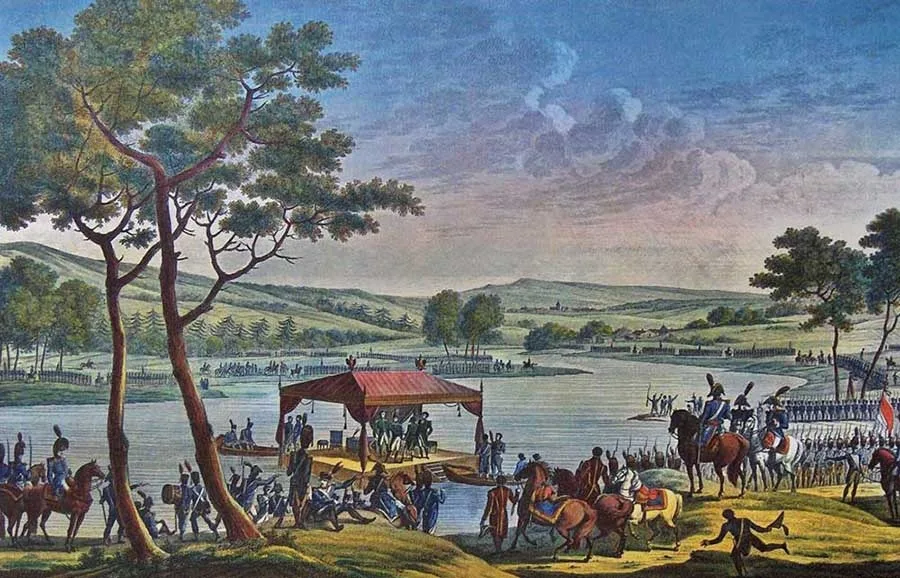 1807. Napoleon and Alexander I negotiating on the famous raft in the middle of the Neman.

Queen Louise
(1776–1810)
Luise Auguste Wilhelmine Amalie, Princess of Mecklenburg-Strelitz.
Queen of Prussia, born in Hanover, wife of Frederick William III (from 1793). She was popular among the military and stood at the head of the forces calling for Prussia to enter the war against Napoleon without delay. She was extraordinarily popular among the people of Königsberg, who quite literally made legends of her virtue. Streets, bridges, settlements, city districts, a church, Fort No. 6 and much else were named after her.
Besides suffering heavy losses, Bennigsen's army was now cut off from Königsberg for good, though the city was nonetheless preparing to resist the French. While dramatic events were unfolding at Friedland, the corps of the Marshals of France Murat and Soult approached Königsberg. The garrison of the Königsberg fortress consisted of L'Estocq's Prussian corps and Kamensky's Russian corps, which had been sent here three days before the Battle of Friedland to strengthen the city's defences. The corps covered 55 km in a single day and took up positions on the most vulnerable southern sector, between the Friedland Gate and the Brandenburg Gate. The two-hundred-year-old ramparts and bastions, worn down by the rains, heavily overgrown with shrubs and in places even taken over by ploughmen, were hastily made ready for defence and prevented the French from entering the city at the first assault.
The French troops attacked the city on the very day of the Battle of Friedland and were met with musket and cannon fire that halted their assault. The French then began preparing a serious artillery attack on the ramparts, which required time to bring up siege artillery, something the corps outside Königsberg did not have.
Soult describes the events as follows: “...there are many guns, so the rampart is well defended, the ditch is entirely filled with water and the covered way is palisaded. Tomorrow night I shall throw a few shells into the city to shake its garrison and the town, but I have few supplies, barely enough for four hours of fighting... The fear of going too far and perhaps losing many men without any certainty of success compels me to confine myself to observation...” When General Belliard proposed that he surrender the city without a fight, Kamensky gave an elegant reply: “You see me in a Russian uniform, and you dare demand surrender?” Yet the very next day the Königsberg garrison was ordered to abandon the city and join the troops retreating eastward. On 16 June 1807 the French entered Königsberg.
It is quite likely that some elderly citizens still remained in Königsberg who remembered the Russian occupation of the city and could therefore compare it with the French one. This time living conditions were far less favourable: townspeople were oppressed everywhere, their valuables were requisitioned for the needs of the army, and churches were turned into stables and field hospitals. There were, however, no outright atrocities, since Napoleon and his marshals understood perfectly well that the army had to be kept in check. After the Treaty of Tilsit was signed on 7 July 1807, the reserve corps of Victor and Augereau, totalling some 70,000 soldiers, remained in Prussia. In Königsberg itself many public buildings were taken over as hospitals, where wounded French soldiers were being treated.
The full-scale occupation of Königsberg lasted until 24 February 1812, when France and Prussia concluded a treaty of alliance directed against Russia, which had ceased to observe the terms of the Treaty of Tilsit regarding the Continental Blockade of England. After that, French troops continued to remain in the city, but now as Prussia’s allies.
Meanwhile, a movement for radical reform of the state was unfolding in Prussia itself. A considerable part of the military and civil aristocracy realised that only a profound overhaul of the stagnant Prussian order could restore the country’s independence and make Prussia one of the leading European powers. Queen Louise became the standard-bearer of the reformers. As early as 1807, while the royal couple were staying in Königsberg and Memel, Louise had become extraordinarily popular, even revered, among the inhabitants of Königsberg and the surrounding area. She hardly understood the substance of the coming reforms or how they were to be carried out, but she did the most important thing she could do: she allowed the reformers to choose her as the symbol and patron of reform. In an age of absolutism a nation tends to rally around the figure of its monarch, but Friedrich Wilhelm III hesitated, remained inactive and even resisted the patriotic mood in society, and so the nation rallied around his wife.
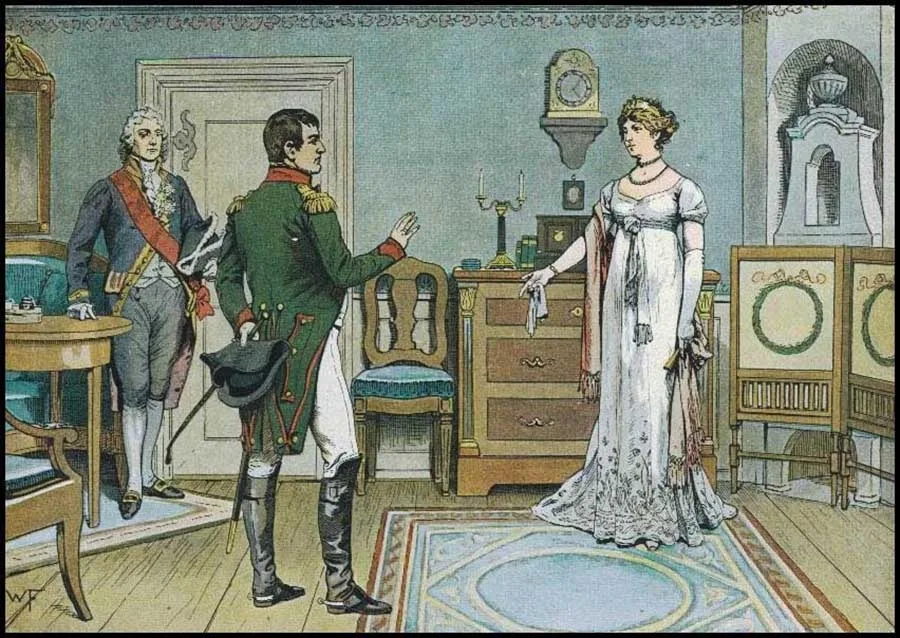 1807. Queen Louise and Napoleon at Tilsit.
The Treaty of Tilsit
The peace treaty, signed during negotiations held from 25 June to 7 July 1807 in Tilsit (Sovetsk), ended the War of the Fourth Coalition. Under its terms Russia became an ally of France, recognised all of France’s conquests and its redrawing of borders in Europe, and joined the Continental Blockade of England. The Treaty of Tilsit preserved Prussia as a state, but with considerable territorial losses.
Strange as it may seem, the years of French occupation proved highly productive for Königsberg and for Prussia as a whole. On 9 October 1807 Prussia entered a new era by abolishing the chief legacy of feudalism: serfdom, in the sense of the personal dependence of peasants on landowners. A year later, on 19 November 1808, an urban reform was carried out. From then on, municipal affairs in Königsberg were run by an elected magistracy and city council. In 1808 a municipal theatre opened in the occupied city on the Paradeplatz (today’s Universitetskaya Street). Finally, in 1809 the great German scientist, mathematician and astronomer Friedrich Bessel was invited to Königsberg to help develop the local university. Bessel was asked to establish an astronomical observatory attached to the university, and in 1811 its foundations were laid on the old earthen Butterberg bastion. Because of the payment of war indemnities and military expenses, construction dragged on somewhat. Napoleon, who came to Königsberg in 1812, was genuinely surprised that at such a critical time the Prussian king had decided to occupy himself with astronomy.
At the Königsberg Observatory, which began operating in 1813, Bessel and his colleagues and successors made outstanding scientific discoveries.
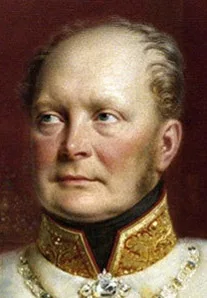
Friedrich Wilhelm IV
(1795–1861)
King of Prussia from 1840, of the Hohenzollern dynasty. During his reign the German bourgeois revolution of 1848–49 broke out. In 1849 he ostentatiously refused the title of German Emperor, thereby delaying the unification of the German states. In the same year he convened the first all-German parliament. In 1850 he was forced to introduce a moderate constitution in Prussia. In 1841 Friedrich Wilhelm IV appointed a commission to modernise the fortifications of Königsberg, and subsequently (from 1843) the greater part of the city’s second ring of ramparts was built during his reign. From 1857, as a result of a series of strokes, he withdrew from affairs of state.
First, in 1834, on the basis of observations of stars being occulted by the Moon, Bessel concluded that the Moon has no appreciable atmosphere whatsoever. Then, in 1838, the distance from the Earth to a star (61 Cygni) was determined for the second time in the world and, for the first time, with reliable accuracy. And finally, as a result of many years of studying the motion of the stars Sirius and Procyon, Bessel discovered that they had invisible companions whose gravity caused the stars to trace a path through space resembling a smooth spiral. According to Bessel’s calculations, these companions had an impressive mass, comparable to that of an ordinary star, and yet could not be seen through telescopes, which was explained by their extremely small size. Thus a new class of stars with an exceptionally high density of matter was discovered: white dwarfs. The rest of the time the observatory served practical purposes, compiling extensive and precise star catalogues that were used throughout the Northern Hemisphere by the time service and for determining the geographical coordinates of places on Earth. It was also at the Königsberg Observatory that the world’s first photograph (a daguerreotype) of a solar eclipse was taken. This happened on 28 July 1851, when Königsberg lay in the path of totality of a solar eclipse.
But let us return to 1812. This year, which in Russia is associated above all with the Patriotic War, became a year of disgrace for Prussia’s supreme authorities. Napoleon demanded that Friedrich Wilhelm III provide a Prussian corps to the Grande Armée, which was to operate in the direction of St Petersburg. The Prussian king did not dare to oppose taking part in a war against his recent and only loyal ally, who had sacrificed the lives of tens of thousands of his soldiers to preserve Prussian statehood. This decision, like the earlier policy of reconciliation with Napoleon itself, provoked protest from many Prussian military figures. From 1807 onwards Prussian officers and generals began to resign, unwilling to take part in this disgrace. Some of them (Carl von Clausewitz, Johann Karl Friedrich Anton von Diebitsch, Leopold Hermann Ludwig von Boyen, Karl von der Groeben, Ludwig von Wolzogen and others) continued their service in the Russian army. Nevertheless, the Prussian auxiliary corps under the command of General Yorck set out on campaign in the northern (St Petersburg) direction, where it won no particular glory. Königsberg, for its part, served throughout 1812 as a transit supply base for the French army.
That is, until the war, together with the remnants of the Grande Armée, rolled back to the Prussian borders. From then on, events moved swiftly. As early as 21 December 1812 the advance Cossack detachments crossed the Prussian border.
On 23 December Russian units entered Tilsit (Sovetsk), and on 26 December Gumbinnen and Insterburg (today the Russian towns of Gusev and Chernyakhovsk respectively). On 27 December Cossack squadrons were operating near Allenburg (Druzhba) and Kreuzburg (Slavskoye). On 30 December 1812 Diebitsch, a Prussian general in Russian service, signed the Convention of Tauroggen with the Prussian general Yorck, under which the Prussian auxiliary corps withdrew from the war and declared its neutrality. Concluded without the Prussian king's knowledge, the convention effectively put an end to any hope of an effective defence of East Prussia, since the French defence plan had assigned to the Prussian corps some three quarters of the manpower and artillery set aside for the task. The French began a rapid retreat from East Prussia. During the night of 5 January 1813 they left Königsberg, and by two o'clock that same night Russian troops were already entering the city.
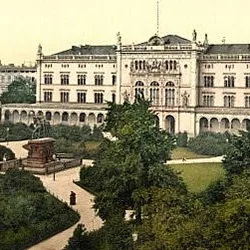
Albertina
This was the name of the University of Königsberg, founded in 1544. The university was originally located in the north-east of Kneiphof Island, next to the Cathedral. In the 19th century its main building opened on Paradeplatz (today's Universitetskaya Street, see above). By the early 20th century the university comprised a number of institutes whose buildings were scattered all over the city centre. Its best-known professors included Immanuel Kant, Friedrich Bessel, Andreas Osiander, Karl Gottfried Hagen, David Hilbert, Karl Ernst von Baer and others.
Syn Otechestva (Son of the Fatherland) magazine, No. 3, 1813
“Königsberg. Upon the entry of the Imperial Russian troops into this city, the local magistracy published the following proclamation: ‘The Russian warriors are in our midst. They strike no terror into the peace-loving citizen, having publicly declared that they respect the personal liberty, safety and property of the inhabitants. Many towns of Prussia have already learned by experience how sacredly they honour their promise, and we, sensible of our good fortune and filled with wonder, shall exclaim: “The Russians deal nobly in peace and with the peaceable.” Worthy inhabitants of this city! Let us strive to deserve this goodwill by our conduct! Let us show our gratitude by offering them friendship, affection and true respect, and by endeavouring to turn our modest means to their benefit. Peace and safety shall then protect us.’ In consequence of an order issued by Marshal Berthier at Gumbinnen on 18 December, the fortresses of Danzig and Marienburg, as well as the bridgehead defences at Marienwerder and Thorn, have been declared in a state of siege, and their commandants have been instructed to put them at once into proper condition. Time and means will not permit them to be made capable of withstanding a siege. It is said that the Danzig garrison has blown up many of the outworks of its fortress, feeling itself too weak to defend such extensive fortifications. The King of Prussia is at Potsdam with his Guard. Augereau, with the remnants of his corps, 10,000 men in all, stands in Berlin. The fortress of Spandau was taken by the French by deceit as early as the summer. Graudenz is in the hands of the Prussians. Up to 30,000 Prussian troops have gathered in the vicinity of that town.”
After the end of the Napoleonic Wars, the political situation in Prussia was shaped by the struggle between liberal and conservative forces. The burghers, the intelligentsia and some of the officers believed that the reforms begun during the war should be continued, that the monarchy should become constitutional, that Prussia itself should take the lead in uniting the German lands, and that legislative power should be handed over to an all-German parliament.
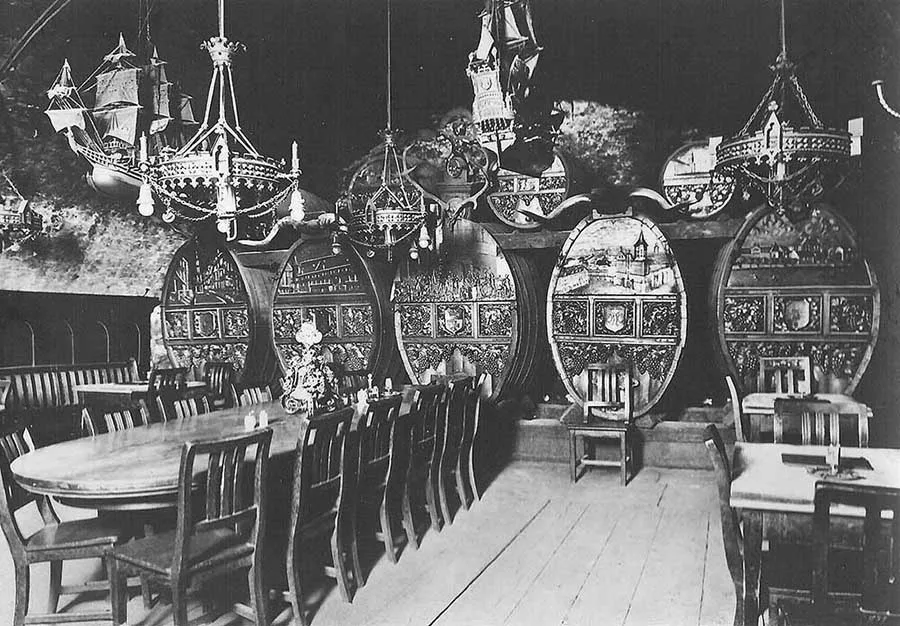 1827. Interior of the Blutgericht restaurant in the cellar of the Royal Castle.
The aristocratic elite, by contrast, held that the state had already become liberal enough and that a united German state should come into being without the participation of the revolutionary-minded strata of society, that is, purely on the initiative of those at the top. These disagreements eventually erupted in the bourgeois revolution of 1848–49, which in Königsberg passed without barricades or bloodshed. To avoid confrontation and provocation, the commander of the Königsberg garrison withdrew the troops under his command from the city, leaving the police to prove their worth. First the “insurgents” smashed the windows of the city magistracy. Then a rumour spread that the Prussian king had sent the Russian Emperor Nicholas I a dispatch asking for the Russian army's help in restoring order in the neighbouring state.
The crowd burst into the post office building and forced the postmaster to hand over the state letter. After brief resistance the revolutionaries obtained the letter, but no one had the nerve to open the royal envelope.
Its contents remained a mystery, but according to some accounts it contained a description of the latest European fashions for the Russian Empress. And with that, the main revolutionary events in Königsberg effectively came to an end.
If the revolution in Königsberg was, to put it mildly, a lacklustre affair, the city's cultural, scientific and public life in 1815–1850 was far more significant and eventful. In 1830 the city's water supply system went into operation. In the same year the industrialist Steinfurt founded a machine-building works in Königsberg, the future railway carriage factory. In 1849 the Königsberg Hospital of Mercy (Krankenhaus der Barmherzigkeit) was opened.
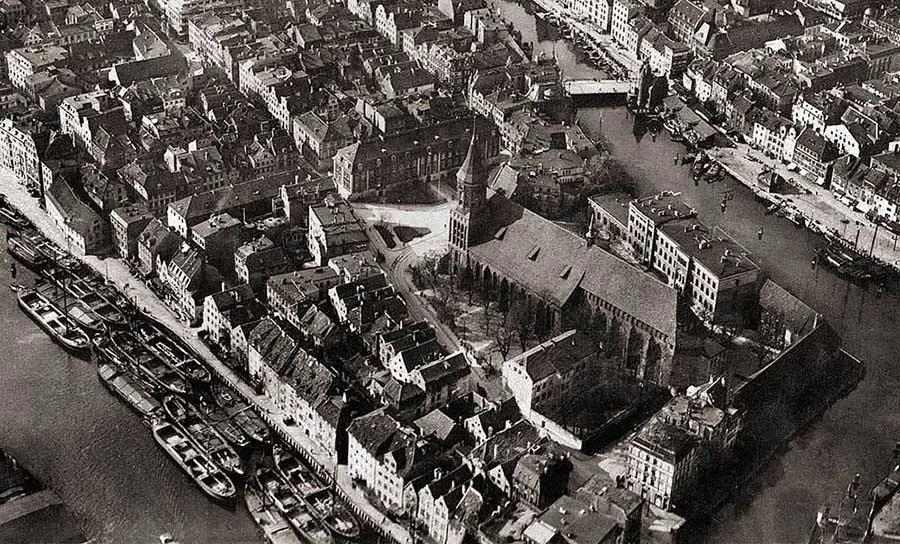 The old Albertina next to the Cathedral (bottom right).
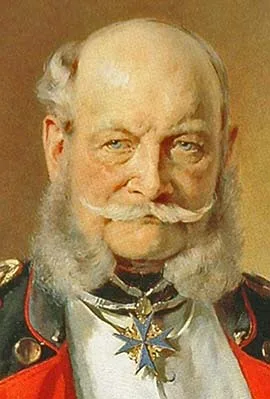
Wilhelm I
(1797–1888)
Regent for Friedrich Wilhelm IV (from 1857). King of Prussia from 1861 and German Emperor from 1871. Of the Hohenzollern dynasty. In 1862 he appointed Bismarck head of the Prussian government. His reign saw the unification of the German states, first in the North German Confederation (1867) and then in the German Empire (1871). Prussia took part in the Danish-Prussian (1864), Austro-Prussian (1866) and Franco-Prussian (1870–71) wars. In 1882 it joined the Triple Alliance, which later became one of the coalitions that fought in the First World War. A monument to Wilhelm I was erected at the south-western corner of Königsberg Castle in 1884.
In these years the University of Königsberg was enjoying its heyday. The Albertina was then home to many scholars of world renown: the mathematician and astronomer Friedrich Bessel, the physiologist and anatomist Friedrich Burdach, the biologist and anthropologist Karl von Baer, the chemist and botanist Karl Hagen, the philosophers Johann Herbart and Christian Lobeck, and many others. The university also fostered the study of Lithuanian ethnography and literature, whose outstanding researchers included Georg Nesselmann, Liudvikas Rėza and Friedrich Kurschat. Provincial theatre life also revived, and during this period it was associated with the theatre director and great German composer Richard Wagner and his wife, the actress Minna Planer.
Finally, in 1843, through the efforts of the military and civil authorities, construction began in the city of the second rampart ring, or, as it is sometimes called, the second bastion ring.
The need to renovate Königsberg's fortifications had long been under discussion. In 1834 a specially established commission concluded that the fortifications would have to be built anew, since the old ones were beyond any modernisation. Design work began that same year under the direction of Lieutenant General Ernst Ludwig von Aster, a veteran of the Napoleonic Wars and chief of the Prussian Corps of Engineers. In 1843 the foundations were laid for the Kronprinz defensive barracks and the King's Gate. In the space of 23 years, nine main city gates, ten bastions, two towers and three ravelins were built. The Kronprinz barracks and the renovated Friedrichsburg fort also became part of the rampart ring. In Napoleon's day these fortifications would undoubtedly have been able to withstand an assault for quite some time. But by the time construction was completed, owing to the rapid advances in artillery in the mid-19th century, the fortifications no longer met the demands of the age.
Chronology of key events
1756–63 — The Seven Years' War.
11 January 1758 — The Russian army enters Königsberg.
1758–62 — Königsberg as part of the Russian Empire.
1764, 1769, 1775, 1783, 1811 — Great fires in Königsberg.
12 February 1804 — Death of Immanuel Kant.
27 October 1806 — After the French army captures Berlin, Königsberg temporarily becomes the capital.
16 June 1807 — Napoleon's army captures Königsberg.
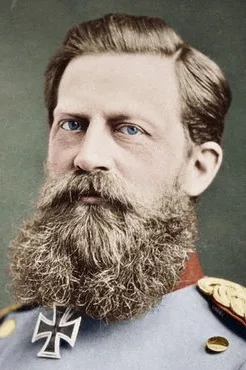
Frederick III
(1831–88)
German Emperor from 1888, of the House of Hohenzollern. A supporter of democratic reform. As heir to the throne, while Crown Prince, he proved himself a level-headed politician and a talented military commander. He took a direct part in the Franco-Prussian War of 1870–71. Terminally ill, he reigned as emperor for only three months in 1888.
7–9 July 1807 — Negotiations leading to the signing of the Peace of Tilsit.
1811–13 — Construction of the Königsberg Observatory.
5 January 1813 — The Russian army takes Königsberg for the second time.
1830 — Königsberg's first water supply system opens.
1830 — The Steinfurt engineering works opens (today the Kaliningrad Railway Car Building Plant).
1849 — The Krankenhaus der Barmherzigkeit (Hospital of Mercy) opens in Königsberg.
THE SEVENTH CENTURY — THE END OF HISTORY
The Franco-Prussian War of 1870–71 made it abundantly clear that defending the city would require entirely different fortifications. By winning that war, Prussia completed the unification of the German states into a single whole, and the Prussian king, Wilhelm I, proclaimed himself Emperor of the German Empire. At the same time, the German General Staff began to draw up plans for a possible war on two fronts. Germany's dramatic rise in power alarmed the leading European powers, and Russo-German relations began to cool markedly; as a result, the east became a potentially dangerous direction for Königsberg in military terms. To strengthen the city's defences, construction of a ring of forts 5–7 km from the centre therefore began in 1874. In addition, by 1873 barracks and a riding hall had been built for the 1st Cuirassier Regiment (today the building of the Oktavia factory and the Central Market).
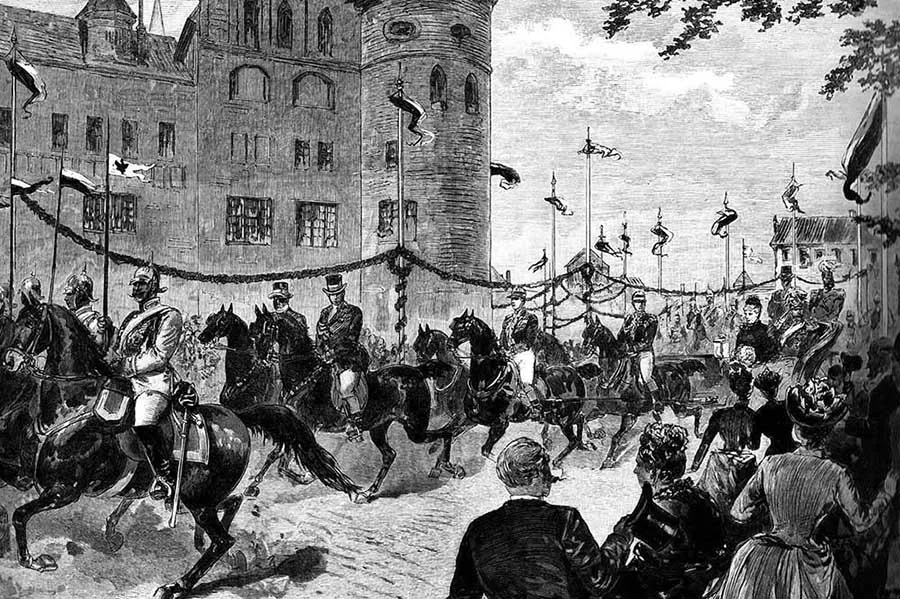 1890. Engraving "The Imperial Couple Setting Out".
German Empire
The unified German state of 1871–1918. The German Empire was proclaimed on 18 January 1871, following Prussia's victory in the Franco-Prussian War of 1870–71. The leading role in founding the empire was played by the Prussian chancellor Otto von Bismarck. The German states (4 kingdoms, 6 grand duchies, 6 duchies, 7 principalities and 3 free cities) were united around Prussia, and the Prussian king simultaneously became German Emperor while retaining his royal title. Almost immediately after its founding, the German Empire found itself in opposition to Britain and France, which were later joined by Russia. In 1914–18 the German Empire was one of the main belligerents of the First World War, and after its defeat it was abolished in the course of the November Revolution of 1918.
Civilian construction, of course, continued as well. In 1873 a new municipal water supply system went into operation, and in the same year the university clinic on Lange Reihe (today Barnaulskaya Street) opened. In 1875 a new stock exchange building — the fourth in succession — was built. Beyond the city's official boundary, the bastioned ring, the suburbs, made up largely of villas, continued to spread. Yet major public facilities also appeared there: the Walter-Simon-Platz stadium (1892) and the Zoo (1896).
Finally, the most important element of the city's infrastructure became the horse-drawn tram, opened in 1881. By 1895 the first electric tram line had been launched, running from the Pillauer Bahnhof (near today's Museum of the World Ocean) to the Neuer Markt (around today's Zarayskaya Street). For a time this line operated alongside five horse-drawn routes.
At the turn of the 20th century a paradoxical situation arose: some districts of Königsberg that had spread far beyond the city limits were legally still suburbs, and traffic to and from them was interrupted by checkpoints at the city gates. Everyone had long understood that the ramparts no longer served any military purpose — that if an enemy reached the line of the bastioned ring, modern siege artillery would be powerful enough to fire straight through the city, leaving not a single safe place in it, so any successful defence along that line was out of the question. Nevertheless, it took another ten years for the military authorities to accept this and abolish Königsberg's bastioned ring as a fortification. At last, in 1911, the city officially stepped out of the "armour" that had long constrained it. Sadly, the rapid expansion of Königsberg at this time led to the loss of many architectural and fortification structures. Three city gates were demolished — the Steindamm Gate, the Tragheim Gate and the Holländerbaum — all the bastions except Grolman were partly or completely levelled, and the city rampart survived intact only along today's Litovsky Val Street.
On 3 May 1908 a momentous event took place at Königsberg's Walter-Simon-Platz stadium (today the Baltika): the local football club Königsberg made its debut in the German championship. The premiere was not entirely successful — or, to be more precise, it was entirely unsuccessful. Königsberg lost 0:7 to Viktoria 89 of Berlin, the oldest German club. And since the competition was played on a knockout basis at the time, Königsberg's first match of the season was also its last.
The story repeated itself the following season: Königsberg played its first match away against the same Viktoria 89 and this time lost by an even more crushing 1:12. Later the city was represented in the championship by the club Prussia-Samland, but it too failed to achieve any notable results.
The rapid growth this provincial city had begun to enjoy was cut short by the outbreak of the First World War. It was here, in East Prussia, that Germany first felt its destructive force.
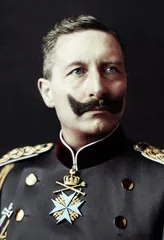
Wilhelm II
(1859–1941)
King of Prussia and German Emperor in 1888-1918, of the House of Hohenzollern, grandson of Wilhelm I. He dismissed Bismarck (1890). One of the instigators of and active participants in the First World War (1914–18). In 1917 he issued the "Easter Message" announcing his intention to democratise the electoral system. He was overthrown by the November Revolution in 1918.
Surprisingly, by 1914 Russia and Germany had no irreconcilable differences that would inevitably have led to war. However, the mutual distrust that had been growing since the 1850s, which first cooled Russian–German relations and then drove the two countries into opposing military blocs, made the threat of war more than real. Indeed, it was ultimately Russia's alliance with the Entente and Germany's with Austria-Hungary that led to the opening of the Russian–German front. In East Prussia, which would be highly vulnerable in the event of war, preparations for possible hostilities began long before the Russian army's East Prussian Operation of 1914. In Königsberg itself, the fort fortifications were modernised. The casemates received an additional sand cushion and concrete reinforcement, and the main-calibre artillery was moved out of the forts to adjacent field positions. But the main thrust of the preparations lay elsewhere. In line with German military doctrine, the emphasis was placed not on building defensive structures but on developing a network of railways and roads that allowed troops to be moved rapidly along the front line, creating local numerical superiority in the directions of the main attacks. It is worth recalling here that the famous Schlieffen Plan of 1905 envisaged an asymmetric war on two fronts. The main events of the first phase of the war were to take place in France, with 42 days allotted for its defeat and capitulation. It was assumed that by then Russia would only just have completed its mobilisation, and that its offensive, once begun, would be held back by quite small forces through manoeuvre. The plan provided for the surrender of some territory on the Eastern Front. However, after France's capitulation and the transfer of the German army's main forces to the east, the Russian army too was to be defeated. In 1906 the new chief of the German General Staff, Helmuth von Moltke the Elder, modified the Schlieffen Plan somewhat, strengthening the eastern army group.
In the view of most military historians, these changes worsened the Schlieffen Plan and rendered it completely unworkable. What we should take from this, however, is that the Russian army's initial successes had been anticipated by the German General Staff and did not spell military disaster for the Germans.
Unlike the German plan, the Russian plan of operations in August 1914 was drawn up rather spontaneously. On the whole, it was summed up by a saying of the time: “You head for Paris, and we'll head for Berlin”. The assumption was that the Russian army would easily break the resistance of the forces defending East Prussia, defeat them in a few battles and reach the capital of the German Empire before the German troops were freed up after fighting the French. This plan would have been a good one had Russia possessed a highly mobile army, the transport to move it and a powerful navy. Reaching Berlin practically on foot in so short a time, however, was simply not feasible.
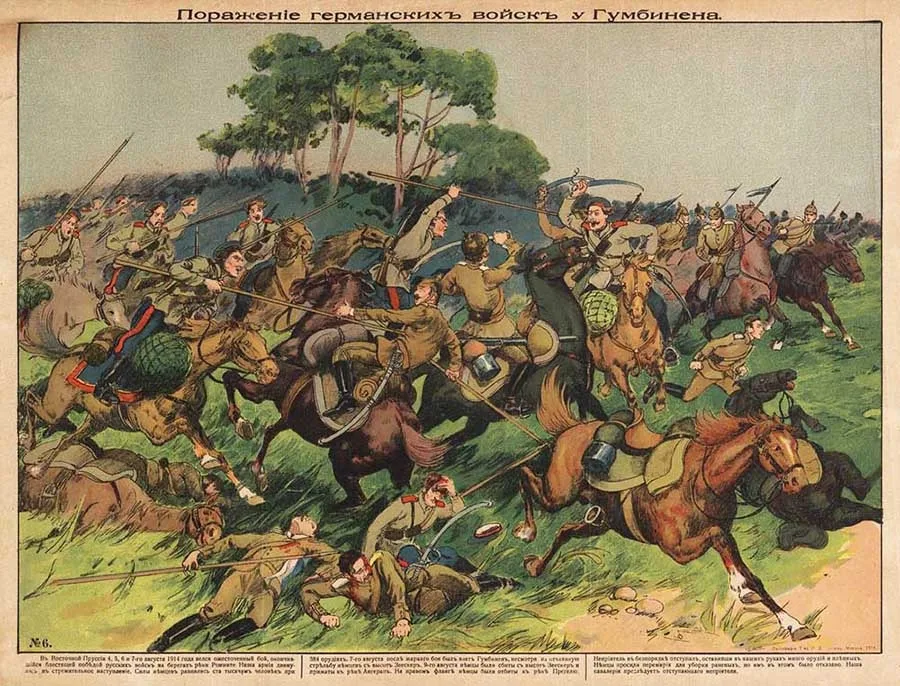 1914. A Russian propaganda poster.
Paul von Hindenburg
(1847–1934)
President of Germany from 1925, honorary doctor of all four faculties of the Albertina. Field Marshal. In the First World War he commanded the troops of the Eastern Front from November 1914. Together with his chief of staff Ludendorff, he turned the tide of the fighting in East Prussia in Germany's favour, which made Hindenburg a national hero. From August 1916 he was Chief of the General Staff and effectively commander-in-chief. As president, on 30 January 1933 he handed power to the Nazis, charging Hitler with forming a government.
This brief excursion into military history goes a long way towards explaining the entire course of the Russian army's East Prussian Operation. Russia launched its offensive with two armies under the command of experienced generals who had fought in the Russo-Japanese War: Rennenkampf (1st Army) and Samsonov (2nd Army). The two armies advanced on almost parallel courses, separated by the Masurian Lakes. Together they outnumbered the German 8th Army (250,000 soldiers and officers against 173,000), though each was weaker than it on its own. On 20 August, after border skirmishes, the 1st Army reached the town of Gumbinnen (Gusev), where it forced battle on the German troops on terms unfavourable to them. The German 8th Army had to enter the battle piecemeal and, despite some local successes, was defeated in the direction of the main attack at the centre of the front, after which it was forced to retreat. At the same time, Rennenkampf, failing to see the opportunity to exploit his success and turn the Battle of Gumbinnen into a general and decisive engagement, made no attempt to catch up with the retreating enemy and to encircle and completely destroy the units of the German 8th Army defending East Prussia. Nevertheless, the commander of the 8th Army, Prittwitz, reported to the German General Staff that there was a risk of encirclement and that he had therefore decided to abandon East Prussia and withdraw behind the Vistula.
Faced with the threat of occupation, roughly half of the German civilian population in the path of the Russian advance began to evacuate westwards, above all towards Königsberg. On 21 August Helmuth von Moltke relieved Prittwitz and his chief of staff Waldersee of their command and appointed in their place the future “saviours of Prussia” and national heroes Paul von Hindenburg and Erich von Ludendorff.
On arriving at the front, Hindenburg and Ludendorff decided to put into practice a local version of the Schlieffen Plan. A small group of troops was left facing the Russian 1st Army, tasked with pinning down its advance through constant fire and manoeuvre. The main forces, meanwhile, were hastily transferred against Samsonov's army, which had in no way expected attacks from an enemy that had just been routed. By a cruel irony of fate, Rennenkampf failed to recognise in this hurried redeployment of troops a threat to Samsonov's army, and concluded instead that the German troops were withdrawing behind the Vistula. He reported this to Zhilinsky, commander of the North-Western Front, and in reply received orders to cut off the German group's route to Königsberg. As a result, the direction of the Russian 1st Army's advance was changed from one converging with Samsonov's army to a diverging one.
Erich Ludendorff
(1865–1937)
German infantry general. A close associate of Paul von Hindenburg during the First World War, he later became one of the ideologues of German militarism. In 1914, after a series of setbacks for the German army in East Prussia, he was appointed chief of staff. With his direct involvement in the command of the troops, the Germans inflicted a series of defeats on the Russian armies and forced them to withdraw from East Prussia. He subsequently served as deputy to Field Marshal Hindenburg, effectively directing military operations on the Eastern Front in 1914–16, and all of Germany's armed forces in 1916–18. He took part in the Kapp Putsch (1920). Together with Hitler, he led the Nazi putsch in Munich (1923). In 1924–28 he was a member of the German Reichstag for the NSDAP. An ardent advocate of unleashing a new world war as revenge for defeat in the previous one, he was the author of the concept of “total war”.
On 26 and 27 August the German corps routed first the right and then the left flank of Samsonov's army. The main body of Russian troops, meanwhile, kept moving in its original direction, straight into the looming encirclement. The commander did not have full information about the situation on his flanks. He never received the order from front headquarters to withdraw immediately, and so it was only on the evening of 28 August that he gave the order to retreat, by which time the destruction of the army could no longer be avoided. On 29 August the Germans struck at the army's main forces, and the group in which Samsonov and his staff found themselves was encircled.
On 30 August General Samsonov shot himself, which completely disorganised the command of the troops. Some six thousand soldiers and officers were killed, and 50,000 men (including the wounded) were taken prisoner. The remnants of the army reached the border of the Russian Empire near the town of Mława (now in Poland).
Now the threat of defeat loomed over Rennenkampf's army, which had already reached the distant approaches to Königsberg. An order came from front headquarters to withdraw immediately. Rennenkampf organised the retreat by the book, covering the likely points of a German breakthrough with rearguards, and so managed to avoid encirclement. The East Prussian Operation ended on 15 September 1914. For the rest of the First World War, Königsberg never again faced a real threat of siege or assault, although right up to 1918 it remained a frontline city and the German army's most important supply base.
The capitulation of the German Empire in November 1918 and the November Revolution of 1918–19 that followed had little impact on East Prussia. All the major events took place hundreds of kilometres from Königsberg. Here, people tried to heal the wounds of war as quickly as possible and return to peaceful life. However, the economic situation in the newly created Weimar Republic did little to help restore farms and businesses or bring production back to pre-war levels. Even so, funds were found to commemorate the province's fallen and to assist towns destroyed during the fighting, which during this period were taken under the patronage of cities in Germany's central regions.
Under the Treaty of Versailles, East Prussia was now cut off from the rest of Germany by the "Danzig Corridor", which created additional difficulties. To revive trade with the rest of the country, the German Eastern Fair (German: Deutsche Ostmesse) was established in 1920. In its first year it was held in the grounds of the zoo, but at the same time construction of trade pavilions began on Hansaplatz (today's Victory Square) and Wallring (today's Professora Baranova Street). The fair attracted interest from the Baltic states, as well as Hungary and Turkey. From 1922 Soviet Russia, and later the USSR, also took part. The Eastern Fair soon became one of the largest in Germany, second only to the Leipzig Fair in turnover. The growth of trade spurred the development of transport infrastructure: roads, railways and Devau Airport, which had opened in 1919 and, incidentally, became one of the first civil airports in the world.
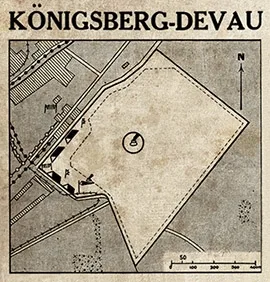
Devau Airport
The first civil airport in Europe and one of the first in the world. Opened in 1919 on the site of a military airfield. A terminal building was erected in 1922, and regular flights on the Königsberg–Riga–Moscow route began the same year. There were also air links with Berlin and Leningrad. After the war it served local airlines until the 1970s, after which it became a DOSAAF airfield.
In 1922 an air service to Moscow was launched, and it was from there that Yesenin and Mayakovsky, at the height of their fame, flew in to Königsberg.
As for the railway, the Main Railway Station (now the Southern Station) was built in 1929, followed in 1930 by the North Station. Nevertheless, the situation in Germany as a whole during these years could hardly be called rosy. The global economic crisis, huge reparation payments and the harsh terms of the Treaty of Versailles plunged the country into economic crisis, impoverishing a large part of the population and bringing inflation and unemployment. Citizens increasingly sympathised with the extreme ends of the political spectrum — communists and the far left on one side, revanchists and Nazis on the other. A vast number of extremist groups and movements, large and small, sprang up across the country. Clashes between communists and Nazis broke out from time to time, along with riots involving the seizure of administrative buildings, uprisings, marches and other actions. The wave of confrontation and violence reached East Prussia too, but on the whole support for the left and the right was lower here than the German average. In 1925 a local branch of the NSDAP was founded in Königsberg and a small SA unit was formed; Goebbels, the Nazis' chief propagandist, visited the city twice, yet over two years party membership did not exceed 80.
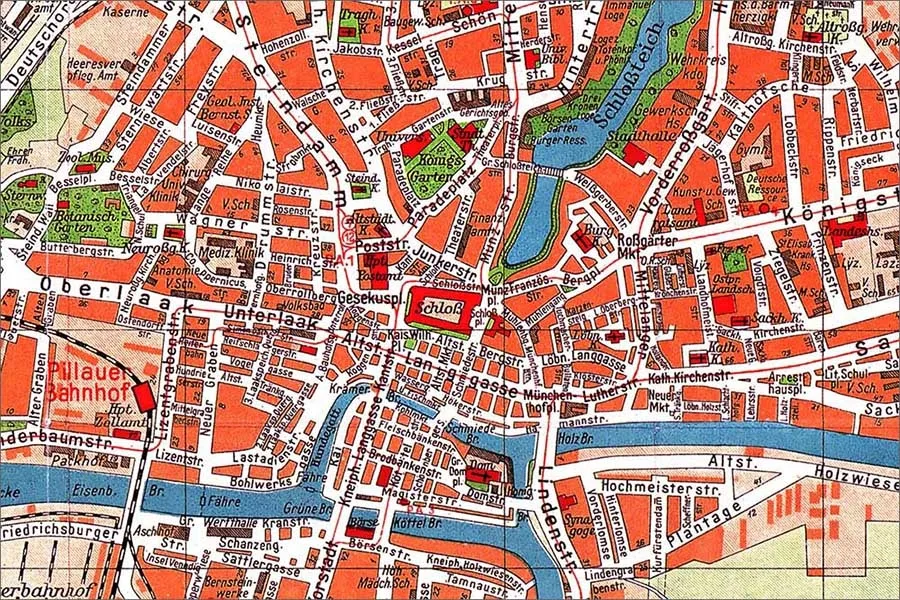 1928. Central Königsberg on a map from the Weimar Republic era.
NSDAP
The National Socialist German Workers' Party, founded in 1920. It united supporters of ideas of racial superiority, antisemitism, anti-communism and revanchism. The party's first chairman was Karl Harrer; from 1921 it was led by Adolf Hitler. In May 1933 it won the parliamentary elections, and from July 1933 until 1945 it was the only political party permitted in Germany. Party functionaries effectively became the heads of the Reich's regional and municipal authorities. It was dissolved by the Allied Control Council for Germany in 1945. At the Nuremberg trials it was declared a criminal organisation, chiefly responsible for unleashing the world war and for crimes against humanity.
In 1928, Erich Koch, an NSDAP activist who longed to emulate the Führer in every way, was appointed Gauleiter of East Prussia. Koch saw his main task as popularising Nazi ideas in a province that lagged far behind other German regions in its support for Hitler. However, the economic crisis in East Prussia played into the hands of the local Nazis. Between 1929 and 1931, 513 enterprises closed in Königsberg, leaving some 33,000 people out of work. Nazi propaganda blamed all the troubles on the Jews and the Communists, as well as on the democratic government that was unable to stand up to them. In 1929 the Führer himself came to Königsberg to give a series of speeches, and a year later a local Nazi newspaper, the Preußische Zeitung, began publication. As a result, by May 1933, in the elections to the Königsberg State Assembly, the National Socialists won 43.73% of the vote (compared with 32.85% in 1932). This was slightly below the German average, but the Führer "made up" the votes needed for a majority after banning the Communist Party and annulling the votes cast for its representatives.
From then on, everything unfolded as in other German cities: National Socialist ideology became mandatory for all administrative bodies, all opposition newspapers were shut down, and local branches of the SS, the Hitler Youth, the Labour Front and other Nazi organisations were set up.
The Gauleiter, meanwhile, went from being a party leader to head of the administration of the province entrusted to him, while also serving as its Oberpräsident. Thus from 1933 Erich Koch became the ruler of East Prussia, and all subsequent events there took place under his direct leadership.
The apotheosis of National Socialism's triumph in Königsberg came with Kristallnacht on 9–10 November 1938, when pogroms left several dozen Jews dead, their homes and businesses ransacked, and the synagogue on Lomse Island burned down. That same year, many of Königsberg's streets and squares were renamed, losing their historical names in favour of new ones honouring the leaders of the Third Reich and NSDAP members who had fallen in the struggle against the communists. During the first five years of National Socialist rule, the number of students at the University of Königsberg halved: the country needed soldiers more, and Hitler's ideologues frowned on higher education for women altogether.
At first, the great war Hitler unleashed in Europe brought no radical changes to the lives of Königsbergers. True, there were more soldiers on the streets, including wounded men convalescing, and death notices arrived for the families of young men who had gone to the front, but on the whole the war was somewhere far away. Everything changed after 22 June 1941. East Prussia was one of the staging grounds from which the aggression against the USSR was launched.
At the same time, Königsberg was practically the only major German city that the Red Army's long-range aviation could reach with fully loaded bomb bays. It bombed the city for the first time on 23 June 1941.
The aim of this raid was to exert psychological pressure on the enemy rather than to achieve any military objective, and neither its nature nor its intensity could have any effect on the situation at the front. At five in the morning, 15 DB-3 bombers carried out a rather scattered bombing of the area around Hornstraße (Serzhanta Koloskova Street), Hindenburgstraße (Kosmonavta Leonova Street), Tiergartenstraße (Zoologicheskaya Street), Wagnerstraße (Vagnera Street), Schillerstraße (Shillera Street), Luisenallee (Komsomolskaya Street) and Hufenallee (Prospekt Mira). Eight buildings were destroyed, 23 damaged, and 16 civilians killed.
The next raid came twenty-four hours later, but the bombs fell on undeveloped areas, and on the evening of 24 June another attack followed. It too was not particularly successful: the bombs destroyed 3 houses and killed 3 people. In addition, fighters that took to the air intercepted the Russian aircraft near Gross Skaisgirren (now Bolshakovo) and shot down three of them. After that, Soviet bombers appeared over Königsberg only sporadically, mostly dropping leaflets. Combat reports of bombing raids kept coming in throughout July, August and September 1941, and each time the pilots reported hits and isolated fires, but German sources do not confirm that any targets were struck. Only on 13 November 1941 are bombs confirmed to have fallen within the city, when a lone Pe-8 dropped its load, killing one person and wounding six.
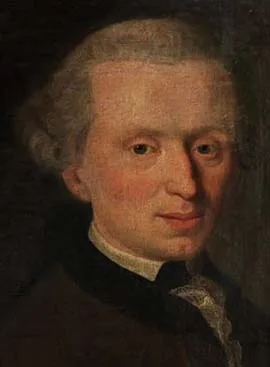
Immanuel Kant
(1724–1804)
German philosopher and mathematician, founder of German classical philosophy. Privatdozent (from 1756), professor at the Albertina (from 1770), foreign honorary member of the St. Petersburg Academy of Sciences (from 1794). Born in Königsberg into the family of a harness maker. From 1732 to 1740 he studied at the Collegium Fridericianum gymnasium. In 1740 he entered the University of Königsberg. In 1746, after his father's death, he left the university without taking his examinations or defending his master's degree. From 1746 to 1755 he worked as a private tutor, while developing a cosmogonic theory of the origin of the solar system from a primordial nebula (Universal Natural History and Theory of the Heavens, 1755). In 1755 he returned to the university and defended his master's degree (with the dissertation "On Fire"). Dean of the Faculty of Philosophy (from 1776). In his "critical philosophy" he opposed both the dogmatism of speculative metaphysics and scepticism with a dualist doctrine of unknowable "things in themselves" (the objective source of sensations) and knowable phenomena, which form the sphere of infinite possible experience. The central principle of Kant's ethics, founded on the concept of duty, is the categorical imperative. Kant's doctrine of the antinomies of theoretical reason played a major role in the development of dialectics. In 1796 he gave his last lecture at the university. He is buried by the walls of the Cathedral. A street in Königsberg was named after Kant (on the site of today's Central Square), and today the university in Kaliningrad bears his name.
The real nightmare for Königsberg, however, began at the end of August 1944. Although at first it was merely a dress rehearsal.
On 27 August 1944, 174 British bombers appeared over Königsberg, but several of them strayed off course and dropped their bombs on the sparsely populated eastern districts of the city. Just three days later, all hell broke loose. On 30 August, 189 Lancasters dropped their bombs in a broad swathe right across the central districts of Königsberg.
Fires ravaged the Vorstadt (the area around today's Serpukhovskaya and Polotskaya streets), the Lastadie (the area of the Yunost sports complex), the Kneiphof (Kant Island), the Altstadt (the area between the castle and the Pregolya), Königsberg Castle itself and the surrounding blocks, the Löbenicht (the area of Zarayskaya Street), the Tragheim (the area of Proletarskaya and Sergeyeva streets) and the Rossgarten (the area of Klinicheskaya Street). In the two raids, 350 tonnes of bombs were dropped in total; 840 residents were killed, around 1,000 went missing, and another 120,000–150,000 were left homeless — in effect, a third of the population lost the roof over their heads. It should be noted here that the bombing of Königsberg was not in itself an exceptional operation: other German cities suffered air attacks that were both heavier and more frequent. Yet even so, the British raid proved a catastrophe for the city. The relatively small number of deaths is explained by the fact that in the spring and summer of 1944 air defences had been reinforced, air-raid shelters had been built in large numbers, and a public warning system was in operation. After the raids, the municipal services managed fairly quickly to restore electricity and water supply, followed by tram services. But by then most of the population already understood that this was only the beginning...
When the Red Army reached the borders of East Prussia in the autumn of 1944, the propaganda machines on both sides of the front went into full swing.
Soviet soldiers were told that the Red Army stood at the gates of the enemy's lair, the source of centuries of aggression against the East, the citadel of German militarism, where German arrogance was to be strangled once and for all. At the same time, Nazi propaganda proclaimed that the enemy would break its teeth on East Prussia, that the valiant German army would not let the Bolsheviks set foot on Reich territory, and even that from here the war would roll back eastward. On the whole, neither claim had much to do with reality. True, the Germans managed to concentrate a fairly strong force on the East Prussian border, and true, several defensive lines had been built on the approaches to Königsberg, but the Red Army's superiority in manpower and weaponry was indisputable, while the German defensive lines had gaps and weak spots that were not particularly difficult to find. After a failed attempt to cross the border on the move, a thorough plan for the East Prussian Operation had been drawn up by January 1945, and the Red Army broke through the enemy's defences in less than a week. It took our troops another week to reach the outskirts of Königsberg. A week for all those vaunted defensive lines! It can safely be said that the Red Army's offensive power at this stage far exceeded the enemy's defensive capabilities.
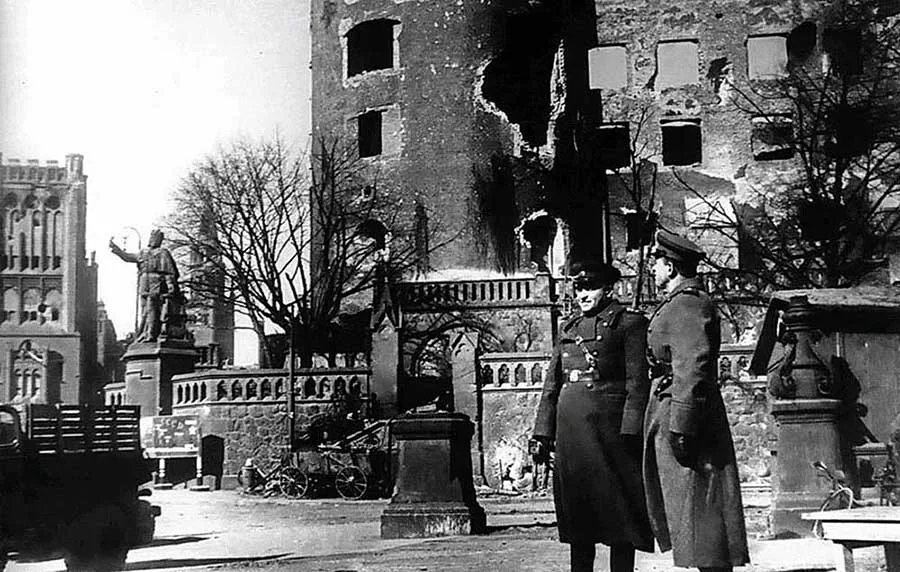 1945. Red Army officers in the centre of fallen Königsberg.
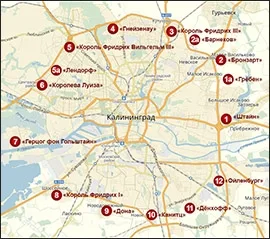
The Königsberg Ring of Forts
A defensive belt of twelve large (standard-design) and three small forts built around Königsberg in 1873–78 at a distance of 5–7 km from the city centre. The construction of the forts reflected the then-prevailing concept of the fortress with a ring of detached forts: the forts' artillery was meant to keep besieging troops at a distance that would prevent them from shelling the city's neighbourhoods. However, owing to advances in artillery, the ring of forts had ceased to meet contemporary requirements as early as the 1890s and, despite being modernised twice, had become completely obsolete by the outbreak of the First World War. The Königsberg forts served as strongpoints in the defence of the city during the Red Army's assault in April 1945, although their heavy artillery had been removed because of its vulnerability in the fort courtyards. The forts have survived to the present day in varying states of preservation. Forts 5 and 11, and partly Fort 1, are used as museums; Forts 6, 7 and 12 are occupied by facilities of the Russian Ministry of Defence.
According to Otto Lasch, commandant of the Königsberg fortress garrison, on 27–28 January 1945 he had practically no troops to defend the city, so the forces of the 3rd Belorussian Front could have entered it on the move, and there would have been no one to stop them. Lasch's memoirs, however, must be treated with great caution, since their leitmotif is self-justification and the idea that he, Otto Lasch, was a very good and experienced soldier who had been put in a hopeless position and surrounded by amateurs such as Erich Koch and Kreisleiter Wagner — and that, but for these two circumstances, it was far from certain who would have prevailed.
By the end of January, the armies of the 3rd Belorussian and 1st Baltic Fronts reached Königsberg utterly exhausted, with their supply lines lagging behind, short of ammunition and even shorter of men. South of Königsberg, fierce fighting was still under way against the encircled Heilsberg group of enemy forces.
Having reached Königsberg on 30 January, the armies were able to blockade it completely with relative ease, which made defending the city an utterly hopeless undertaking. On 19 February 1945, however, the Germans managed to improve their position considerably by launching simultaneous attacks from the besieged city and from the group of forces cut off from it on the Samland Peninsula. The operation, which cost both sides heavy losses, broke the encirclement and restored the link between Königsberg and Pillau (Baltiysk), making it possible to reinforce the garrison with men, weapons and ammunition. It also opened up the possibility of evacuating the civilian population from the besieged city.
This situation lasted for a month and a half, until early April 1945, while preparations were under way for the final assault on the fortress city. The assault was scheduled for 5 April but was postponed by a day because the weather ruled out the use of aircraft. As early as 30 March the artillery began ranging in on targets, and from 2 April a massive artillery offensive got under way. By day, heavy, high-power and special-power guns (up to 305 mm) kept up continuous fire; by night, medium-calibre artillery delivered so-called “harassing fire”, which prevented sappers from repairing damaged fortifications. In all, some 350,000 tonnes (!) of shells and mortar bombs were fired. According to Lasch, by the third day of the assault even local residents could no longer find their way around the city, so extensive was the destruction.
The assault on Königsberg itself began on 6 April 1945. It is often referred to in the literature as a “model assault”. The tactics chosen — small assault groups supported by a couple of tanks or self-propelled guns — made it possible to take the city quickly and with losses that were small for an operation of such magnitude.
The advancing armies bypassed the Königsberg forts, assigning one or two battalions to blockade each fort, while the rest of their forces pressed on with the assault. Meanwhile, the 39th Army cut the highway to Pillau. The city proper was stormed by the 11th Guards Army (from the south) and the 43rd and 50th Armies (from the north). Taking control block by block, the Soviet troops tightened the ring of encirclement. On the night of 8–9 April the German garrison attempted to break out westwards towards Pillau, but the attempt was repulsed by Soviet forces. After that even the faintest hopes of a successful defence evaporated, although some enemy groups preferred to fight to the death, to the last bullet, rather than surrender. On 9 April, after negotiations by radio, a delegation of Soviet envoys made its way to General Lasch’s bunker and reached an agreement on the capitulation of Königsberg. On the morning of 10 April the remnants of the garrison began to surrender. And although the city bore the name Königsberg for a little over a year longer, its German history ended there.
Medal “For the Capture of Königsberg”
A state decoration of the USSR, instituted on 9 July 1945. It was awarded to Red Army soldiers who took part in the East Prussian Operation, including the assault on Königsberg. In total, 760,000 people received the medal.
Chronology of Key Events
2 August 1853 — Opening of the Königsberg–Berlin railway connection.
1858 — Establishment of a fire service in Königsberg.
1873 — Construction of the university hospital complex on Lange Reihe (today Barnaulskaya Street).
1873 — Completion of the city water supply system.
1874-91 — Construction of the Königsberg ring of forts, followed almost immediately by its reconstruction.
31 May 1895 — The first electric tram line goes into service.
1898 — Königsberg’s sewerage system is put into operation.
1901 — Dredging of the sea canal leading to the port of Königsberg.
17 August – 15 September 1914 — East Prussian Operation of the Russian Army.
26 September 1920 — Opening of the first Deutsche Ostmesse (German Eastern Fair).
1926 — Archaeological excavations on the site of Königsberg Castle led by Friedrich Larass.
9–10 November 1938 — “Kristallnacht”: anti-Jewish pogroms in Königsberg.
27 and 30 August 1944 — British bombing raids on Königsberg.
6-9 April 1945 — Storming of the city during the Great Patriotic War.
IN LIEU OF A CONCLUSION
Twelve years of Nazism and five and a half years of war are but a drop in the ocean compared with the long road Königsberg had travelled. Yet it was this poisonous drop that tainted almost 700 years of glorious history, during which the city had grown from a tiny village at the edge of the world into one of Europe’s leading capitals. It destroyed the fruits of the labour of dozens of generations of Königsbergers. It burned books and archives, ruined architecture and monuments, scattered beauty to the winds and left behind a heap of ashes. It allowed the cradle of German statehood and classical philosophy to be branded a “citadel of aggression and Prussian militarism”. The old Königsberg cannot be brought back, just as the tens of millions of people who perished in the Second World War cannot be brought back to life. But we must take this lesson of history to heart as fully as we can. For any one of us could become part of a similar drop, one that wipes from the face of the earth everything our ancestors created. And that means each of us must strive to prevent it.
BIBLIOGRAPHY
- Авторский коллектив под рук. Щегловой Г. И. Восточная Пруссия с древнейших времен до конца Второй Мировой войны. Калининградское книжное издательство. 1996.
- Авторский коллектив под рук. Кретинина Г. В. Очерки истории Восточной Пруссии. Калининград. Янтарный сказ. 2002.
- Бахтин А. П. Замки и укрепления Немецкого ордена в северной части Восточной Пруссии. Калининград. Terra Baltica. 2005.
- Зорин В. Н. Альбрехт I Прусский. Калининград. Янтарный сказ. 2000.
- Масловский Д. Ф. Русская apmiя в Семилѣтнюю войну. М. Tиnorpaфiя Окружнаго штаба. 1886.
- Хлебников Н. М. Под грохот сотен батарей. М. Воениздат. 1979.
- Эрхардт Т. История крепости Кёнигсберг в Восточной Пруссии. М. 1997.
- Петр из Дусбурга. Хроника земли Прусской.
- Вартберг Г. Ливонская хроника.
- Лависс Э. Очерки по истории Пруссии. М. URSS. 2011.
- Ляш О. Так пал Кёнигсберг. Электронная версия.
- Гаузе Ф. Кёнигсберг в Пруссии. История одного европейского города.
- Торнский анналист. Электронная версия.
Translated from Russian with the help of AI (Claude, Anthropic), October 2026.